
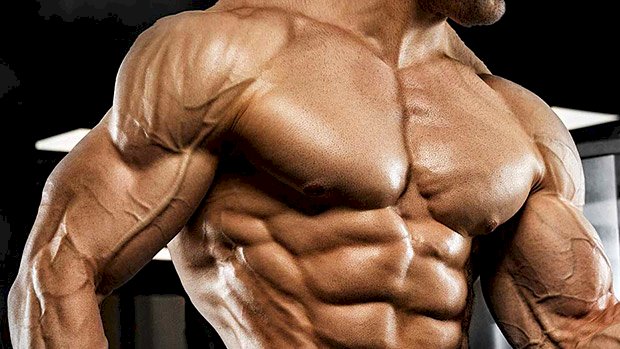
 Still eating the same food, following the same diet, and doing basically the same workouts? Sure, consistency is important, but if you’re not making progress anymore it may be time to do the opposite, at least for a while. If You Always Eat Low Carb… Raise your carbs for a week or so. Eating more will serve as an “anabolic switch” of sorts allowing you to bust through the muscle-building plateau you’re likely experiencing if you’ve been a low-carber for a while. The increase in anabolism will occur primarily because of the subsequent insulin secretion (thanks to the bump in carbs) and an activation of mTOR (2). Likewise, your training performance will be better because of the increased glycogen your muscles will store (2). Your ability to get more reps with a given weight will improve, especially on subsequent sets of an exercise or other exercises for the same body part. Getting more reps will lead to muscular hypertrophy as an adaptive response to an increase in time under tension and metabolic stress (4). You’ll also get to enjoy some skin-stretching pumps like you haven’t felt in a while. Even if you don’t compare a good pump to climaxing, like Arnold did, it still feels good to get your swole on. Another, often overlooked, benefit to eating carbs is ingesting the nutrients contained in them, particularly via fruit and vegetables. Don’t use your period of increased carb consumption as an excuse to eat junk. Choose healthy, nutrient-dense carb sources, including those that are high in fiber. Expect to gain a few pounds relatively quickly, largely from increased glycogen storage. And make sure to maximize your time consuming copious carbs by training hard with a higher training volume than normal. This will maximize the amount of lean muscle mass gained during this insulin/mTOR-mediated period of increased anabolism. If You Always Eat High Carb… Try a low-carb diet. Although you’re likely to lose some excess water weight, that’s just the beginning. Your body will be forced to burn fat for fuel and will get more efficient at this process (1). This is also called beta oxidation of fatty acids, which occurs in the mitochondria within cells. Speaking of mitochondria, another adaptation to a low-carb diet is increased mitochondrial biogenesis (2). This simply means the mitochondria will grow in size and/or number. Given that the mitochondria produce energy (i.e. burn fat), this is a huge benefit. Taking a break from carbs may also help reduce inflammation (3). When available, carbs are the preferred source of quick energy production for your body and brain. So be prepared for it to take about three days for your body to run out of stored carbs and get reacquainted with the fat-burning byproduct, ketones, for energy. However, if you get to that point, you’ll likely notice that your overall energy is stable, and your hunger and cravings are reduced. This is confirmation that your effort was well spent. After all, you want your body to be metabolically flexible – ready, willing, and able to efficiently use fat for energy. In my experience (supported by research), occasionally doing a low-carb or ketogenic diet makes your body more efficient at burning fat regardless of what type of diet you use most of the time. This makes fat loss easier, both physically and mentally. That’s metabolic flexibility in action! That’s why I recommend implementing a low-carb diet fairly regularly – to make sure your body’s ready to oxidize fat. Like Snoop Dogg says, “If you stay ready, you ain’t gotta get ready.” If You Always Train Like A Bodybuilder… Try exercising like an athlete. After long periods of training with a traditional body part split, moderate rep speed, and the typical 8-15 reps, your body could really benefit from a change. So instead of looking at training through the lens of muscle groups, shift your focus to a movement-based, athletic approach. Work out like an MMA fighter, football player, or do some CrossFit-style training, all of which focus more on doing explosive, athletic-type exercises that train a particular movement as opposed to a certain muscle. Box jumps, clapping push-ups, medicine ball throws, kettlebell swings, ladder and cone drills, Olympic lifts, as well as sledgehammering and/or flipping a big-ass tire are exercises that practically never make it into a bodybuilding routine. That’s precisely why they’ll be of such benefit. Explosive exercises will increase your power output and cause positive neuromuscular adaptations. For example, an increase high-threshold motor unit recruitment and rate coding, as well as hypertrophy of fast twitch, type-II muscle fibers (which happen to have the highest potential for growth) occur as a result of training for power (5). Simply put, fast-twitch muscle fibers and the nerves that innervate them become more efficient via training explosively, leading to muscle growth. Performing unique, dynamic movements that you don’t typically do will
Origin: Flip Side Physique Development
Tag: Development
Tip: 6 Quick Tips for Complete Pec Development
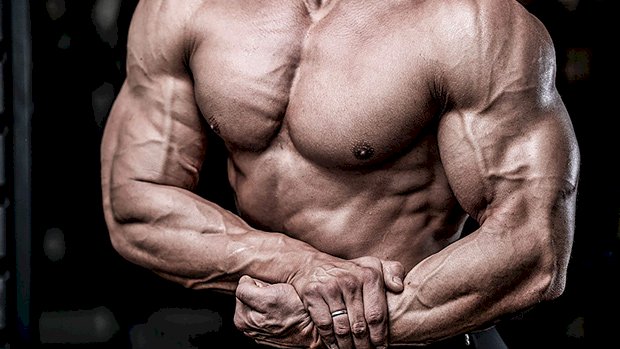 Building a Complete Chest I naturally had great shoulder strength early on, and that translated over into virtually all of my pressing (flat, incline, overhead, etc). The drawback? Because I was delt-dominant, my chest lagged behind. There’s always going to be some muscle groups that will be subpar compared to others, no matter how much specialization you do for them. But I do believe in giving everything the ol’ college try. So let’s talk about some principles you should be adding to go from being bird-chested to pectacular. (Totally cheesy, but I’m rolling with it.) 1. Train chest early in the week or whenever you’re fresh. This shouldn’t be an issue with most gym bros. Monday is International Chest Day, after all. 2. Get the chest out in front. With all pressing and flye movements you need to set the scapula deep into retraction and depression. Think about getting the shoulders down into your back pockets, and keeping the sternum high. When you look at this from the side, you’ll see that the pecs get into a deeper stretch, which will increase their activation, and you’ll reduce the involvement of the anterior delts. A little “hack” here is to use a rolled up towel in the middle of your back to facilitate a deeper setting of retraction. The towel is a pretty strong reminder to hold it there as well. 3. Push to the centerline of the body. This can be an internal cue to help establish better mind-muscle connection for the pecs as well. In all of your pressing, think about moving the arms to the centerline of the body to maximize pec activation and shortening. For a lot of guys who press in order to “train the movement” for strength, they simply press straight up. But if you want to get the pecs to contract as hard as possible during a press – and you do for hypertrophy purposes – then think about driving the hands towards the center of your torso. The external cue for this, if you’re pressing with a bar, is to think about bending the bar in half so that it would end up in a “U” shape. Just make sure you hold that deep scapula retraction and depression to bias the pecs in the pressing. Don’t let the shoulders roll forward at any time. 4. Know that leanness matters. There’s no “inner pecs” really. That’d be the sternal area of the pecs. And here’s the real reason why a lot of guys think they need more mass in there: they carry too much body fat to see the separation between the pec muscles. If you want that bad-ass pectoral “split” that runs down the middle, then don’t be fat. 5. Understand arm angles for complete pec development. The pecs have three different areas: the clavicular pec or upper chest where the fibers are attached to the clavicle; the sternal or middle portion of the pecs that attach to the sternum; the abdominal head of the pectorals which originates from the external oblique, often called the lower chest. If you want to bias a certain area of the pecs, you need to be aware of the angle of the humerus to the pecs themselves. This, and not the angle of the bench, will dictate what area of the pecs is the most activated and doing the brunt of the work. Sternal Pecs You hit this area more when the arms drive from the side of the body to the centerline of the torso. Upper Pecs You hit this area more when the arms drive at a 45-degree angle upwards, towards the centerline, in relation to the torso. Lower Pecs You hit this area more when the arms drive towards the hips and the centerline in relation to the torso. Prioritize movements based on what area of the pecs you’re trying to bias over the others. 6. Stress the pecs at different lengths. Not all movements stress the pecs equally in the range of motion. An incline press or flat press stresses the pecs maximally at the mid-point in the range of motion. A dumbbell flye places the greatest amount of torque on them in the bottom position where they’re maximally lengthened. And a pec-deck or cable crossover tends to stress them more in the fully shortened position. It’s a good idea to stress the pecs through all of these different ranges so that no fiber is left behind. So how would this look in program design? Day 1 Hit the sternal pec area: Do the dumbbell bench press for two drop sets of 8/8/8. Take the first 8 reps to failure Reduce the weight Take another 8 reps to failure Reduce the weight Take another 8 reps to failure Repeat one more time Hit the upper and lower pecs: Superset the low-to-high cable crossover with dips. Do 8-10 reps on cable crossovers to failure Do as many reps as you can on dips with bodyweight Repeat one more time Day 2 Hit the upper pecs: Use an incline dumbbell press, barbell press, or Hammer Strength incline press (shown in video). Do 10-12 reps to failure Rest 60 seconds Then try to get half the number of reps you achieved on the first set Rest 3 minutes Repeat one more time (technically this ends up being 4 total sets) Hit the sternal and lower-pecs:
Origin: Tip: 6 Quick Tips for Complete Pec Development
 All about sport xlsport.club