
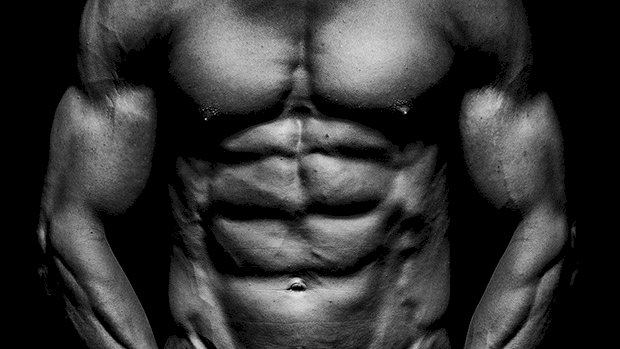
 Adding an extra rep to your max bench press is exciting. Adding more reps to your max number of sit-ups? Not so much. After you’ve achieved a certain level of fitness, that’s just boring and unproductive. So how can you make your core training more challenging? Try these. They’ll not only make your abs look better, they’ll also teach you to develop full-body tension that translates over to your big lifts. Plank Plate Shuffle Grab three 2.5 or 5-pound plates. Stack them on top of each other. With your opposite hand, bring the plates over one at a time to the opposite side of your body. Work on not moving your hips at all. TRX Body Saw Set up the TRX so that when your legs are “in” you’re parallel to the ground. Push your legs back as far as you can without going into low-back extension. Sandbag Pull-Through This can be done in the push-up position or the bear crawl position. Pull the sandbag to the other side of your body without rotating your hips. Put a weight on your back to make this even more challenging. Plank Push-Pull In the plank position, instruct your partner to provide resistance as you push out, then again provide resist as you row in. No partner? You can use a cable station. Wall Plank Find a spot on the wall where you can put your feet up. Make sure your body is parallel to the ground and hold the plank position. Deadbug with Plate Grab a 25-pound plate and assume the deadbug position. Flex at your shoulders so the weight goes over your head. The further back the harder this will be. Make sure your low back stays in contact with the ground the entire time. Bring one leg out and hold. Try putting both legs out or strapping on leg weights to make this more challenging. Earthquake Bar Offset Isohold Attach a kettlebell to one side of the bar. Be careful that it doesn’t tip. Unrack the weight and resist side bending. This can be done with a regular bar as
Origin: Tip: 7 New Ways to Attack Your Core
Tag: Core
Tip: Two Rotational Exercises for a Powerful Core
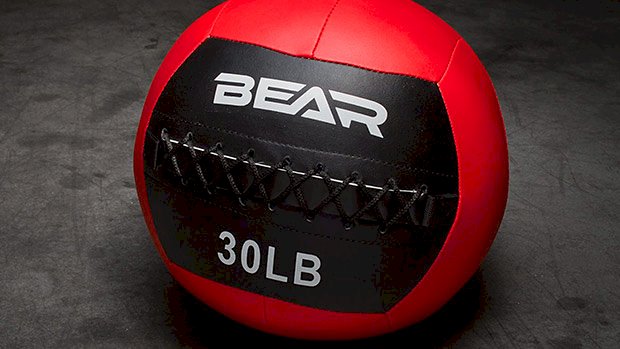 Photo Credit: Bear Fitness Rotational power is the forgotten component of most training programs. Whether you’re hitting, throwing, punching, or kicking, almost every sport requires some sort of rotational explosive ability. Use these medicine ball drills to develop a more powerful midsection. Partner Rotational Throw The person performing this drill should kneel with the knee closest to their partner on the ground and be turned sideways to their partner. Have your buddy perform a medicine ball chest pass to your outstretched arms. Brace your core and resist the rotation as you catch the medicine ball. Use your core to twist your body (keeping your arms relatively straight) and fire the medicine ball back at your partner. Bonus points if you knock him over. Don’t have friends? Try this one: Rotational Wall Throw Place your body to the side of a wall. Using your core, powerfully rotate and throw the ball into the wall. Brace your core and catch the ball as it comes back, resisting rotation. Pro Tip: Make sure the wall is reinforced and not drywall so you don’t piss off your local gym owner. Although these drills can be performed at any point during your workout, I’d recommend doing them before strength training. The force production will get your nervous system fired up and ready to lift
Origin: Tip: Two Rotational Exercises for a Powerful Core
5 Violent Core Exercises
 To build a strong, athletic body you can’t skip out on core training. It may be the one thing that’s holding back your progress. But to train the core for performance, you need to address its main functions. The 3 Main Functions of the Core: Transfer force between the feet and hands Transfer force where you want the force to go Transfer force without energy leaks When you’ve trained the core the way it’s meant to be trained, you’ll run faster, jump longer and higher, throw further, strike harder, and simply be a strong, resilient beast in your sport. A strong core will also keep your spine and body healthier. It’s vital for both performance and health. The Top Exercises You can perform thousands of different ab and core exercises. But I’m a strong proponent of keeping the spine rigid while the hips, legs, and arms move. This doesn’t mean that I’m against spinal flexion, sit-up variations, etc. I simply see more direct carryover to performance from training the ability to let the hips, shoulders and arms do the movement while the spine stays mostly rigid. 1 – The Athletic Plank The regular plank is a fine exercise to teach core stability and the ability to generate full body tension. (If you’re going to do them, look up the RKC version.) Once you’ve mastered the regular plank, it’s time to introduce a more reactive version. During functional movements and sports, the core has to respond, not simply work in and from a passive position. This exercise will teach you to respond and react by creating stability and stiffness. To do it, start by moving the hips up and down slowly. Then “jump” up so the feet lift from the floor. When you land, you instantly want to stick the landing in a regular tight plank position. When you’ve got this down, jump and land in a rotated position, switching sides from rep to rep. To be explosive you have to be able to go from ON to OFF and back to ON again. The faster you can go from active to relaxed, and from relaxed to tight, the better it is for your athletic ability. Master this and your performance will increase. 2 – The Bulletproof Side Plank This is the plank’s forgotten sidekick. That’s not good because too much focus on the front side of the body (by doing only regular planks) will lead to a big gap in your core strength. Without directly loading the sides, you’ll leave a hole in your performance. You’ve probably never done REAL side planks. I can say this because I’ve watched hundred of athletes do them and they all compensate, rotate, and/or flex their hips. Why? Because their core muscles are weak in this area. Most people struggle with the bulletproof side plank in the beginning because it forces you to use the right muscles. It’s simply hard to cheat this exercise! With the bulletproof side plank, your heels, butt, and shoulders must be touching the wall. Your elbow can be placed a bit out from the wall for stability. The head will preferably touch, but if you have neck issues it can remain wherever it’s most comfortable. The first step is to be able to hold the position for at least 30 seconds. When this is mastered, add lateral movement as shown in the video. This is a great way to train the lateral core and hip strength and stability. 3 – Dumbbell Core Rotation Once you’ve mastered the moves above, you’re ready for rotations. Rotation – and the ability to be its master – is the foundation for athletic performance and a healthy body. Most injuries and compensations happen because force is “leaking out” in movements. This leaking is often a result of training mainly in the sagittal and frontal plane. For example, if you only train squats, deadlifts, lunges and side lunges, you set yourself up for failure. These are all good, but without a strong focus on rotation you self-sabotage your performance. Training rotation will automatically train and teach anti-rotation as well, especially if you’re turning up the volume (the speed of execution). To do the exercise, stand upright with a dumbbell in each hand, placed in a neutral hammer, curl-like position. From here, start to swing the dumbbells from side to side in a circular motion. The point is to accelerate, decelerate, and re-accelerate with the whole body and core engaged. The great thing about it? It instantly teaches the importance of where the rotation force is coming from – the feet. A common cause of many problems is a lack of proper “rooting” of the feet. This exercise will reveal it. You can either do this exercise with a “core” focus, which means you’ll mainly focus on the abs/low back area, or you can integrate more hips in the movement. In the former version, the feet are locked on the ground at all times. In the latter version, you allow your heels to come off the ground, creating movement throughout the balls of your feet. Obviously your whole body is working in both versions, but you can direct the focus where you need it. Start with feet locked in. 4 – The Athletic Landmine
Origin: 5 Violent Core Exercises
Tip: The Russian Core Exercise
 Do the Twist, Comrade! The Russian twist is a forgotten gem of an exercise. It’s one of the best anti-rotational core exercises on the planet when performed correctly. Bonus: Its progression capacity is limitless. This core exercise requires your glutes to contract to provide stability from which to rotate. It also helps improve end-range hip extension. It teaches you how to disassociate your chest and arms from your hips (and even your low back to a small degree) to rotate effectively and safely. If you aren’t in constant control while performing the movement you’ll immediately fall off the ball, so the design keeps you on high alert and provides instantaneous feedback about where your body is and how you’re moving – great for motor learning. The movement reinforces systemic whole-body tension. This skill can’t be discussed enough. If you’re trying to build a monster deadlift, squat, or bench press (or even run faster) then you’ll need to quickly generate high degrees of tension to create more strength. The Russian twist will help you do that.
Origin: Tip: The Russian Core Exercise
Tip: The Core Squat
 Take two groups of guys and have them do back squats. Both groups will use the same weight, bar position, foot position, and do the same number of reps. Now, how can you make one group get much greater activation in the core musculature? Answer: Change how the weight is loaded. This leads to drastically different training stimuli. Unstable loading is getting more popular. It’s usually accomplished by hanging weight on the bar with bands (see video below with Joel Seedman) or by using a specialized “wobbly” bar. Let’s take a look at a new study on unstable loading. The Study Fifteen resistance-trained men performed 3 sets of 10 back squats at 60% of their 1RM under two conditions: stable and unstable load. The stable load was a just a normal barbell load. The unstable load had the weights suspended by elastic bands from the barbell. Subjects were able to freely choose their stance. EMG of the biceps femoris, rectus abdominis, erector spinae, external oblique, rectus femoris, soleus, vastus lateralis, and vastus medialis were recorded. (EMG records the activity produced by muscles.) Peak ground reaction forces were also recorded. The Results EMG of the biceps femoris, erector spinae, rectus femoris, vastus lateralis, vastus medialis were not significantly different between stable and unstable loading. So your back and quads won’t see any activation differences. But the EMG of the rectus abdominis, external oblique, and soleus were significantly greater in the unstable group. The peak ground reaction forces generated were significantly lower in the unstable load compared to the stable load. What This Means Unstable loading produced far greater core activation at the same level of submaximal loading. An increase of 85.7% in the rectus abdominis and 13.1% in the external oblique was seen. Also, a 72.2% increase in muscle activation in the soleus (the calf muscle used for balance and stability along with plantarflexion) was observed in the unstable loading trial. If you want to increase core activation, try loading the weights on the bar with bands, but be very conservative when choosing a starting weight. The unstable loading adds a significant level of difficulty. Note: Because of the mild decrease in peak ground reaction force, unstable loading shouldn’t be used for explosive work because it decreases peak force generated. On top of that, common sense tells us that rapid movements of heavy weights swinging from elastic bands is an injury waiting to
Origin: Tip: The Core Squat
Tip: The Full-Body Core Exercise
 Dr. Stuart McGill changed the game with his outlook on core training to save the spine. He provides a great blueprint on bracing the core and all of the muscles that help stabilize your spine from just about every direction, which can improve performance. The “stir the pot” exercise is great for learning to brace the core: Now let’s ramp it up a notch. Try this variation: Grab a suspension gadget (TRX, rings, Blast Straps, etc.) with your body in the plank position – body straight from neck to toes and core braced tight. Make half circles with your forearms/elbows so the suspension device goes around your head, from shoulder to shoulder. Try not to move your body. (You can’t complete the circle because your head will be in the way, obviously.) This exercise is tougher than it looks. You’ll feel it all over your body. As you get accustomed to it, focus on limiting the speed of the movement and making larger circles with more tension throughout the body. This advanced exercise will improve your strength and stability, and it’ll have a big impact on your shoulders and
Origin: Tip: The Full-Body Core Exercise
 All about sport xlsport.club