
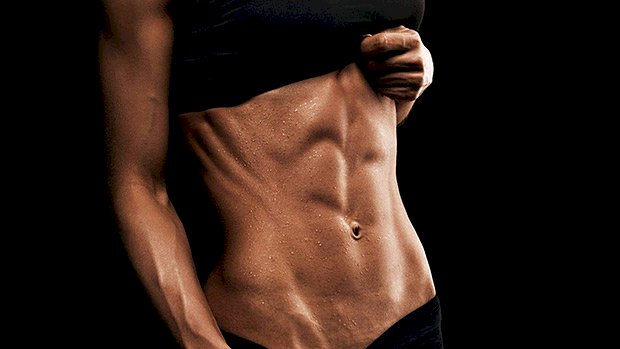
 “Butt scratchers” are named after how a dog looks when trying to wipe its butt on your carpet. If yours does this frequently, you may want to consult a vet. For humans though, mimicking this butt drag (except going backwards) is a surefire way to pummel your abs. Here’s what they look like: The idea is to tuck your pelvis under, behind your arms. Your butt isn’t touching the floor though; it should be as far off the floor as your arm length will allow. This “drag” movement makes these particularly useful at working your abdominals through both spinal flexion and posterior pelvic tilt. This combo means that butt scratchers are effective at working your superficial abs in their fully-shortened position. There’s zero abdominal load through most of the movement, but as soon as your butt drags behind you you’ll be lucky if your abs don’t cramp from the intense contraction. Try to hold it there for a brief second before letting your abs up for a breather. Awareness of your superficial abs can often be an issue when trying to develop them. You need to actually find them before you can target them with more loaded ab exercises that’ll make them grow. Butt scratchers will help you find your abs with very little load and have them wrecked after just a few sets. If you’re the type that feels abdominal crunches in your neck, or leg raises in your hip flexors or lower back, then butt scratchers are a novel alternative that’ll get the job done. No Sliders or Space? No Problem! If you don’t have a pair of sliders, don’t worry. For a fraction of the cost, a pair of furniture sliders will do the same thing and will slide on most surfaces. You’ll find these in many hardware stores or any gigantic online retailer named after a rainforest. An old towel will also slide comfortably on a wooden lifting platform or gym floor. As an alternative, butt scratchers can also be performed statically. Your hands stay in one position on the floor and you’ll rock back and forth. Again, the focus should be on tucking your pelvis under and behind your forearms. Statically, these can be done with your heels in a suspension trainer (TRX, etc.), on a foam roller, or with a Sorinex glute-ham roller or similar. If T-Rex arms let you down, an easy workaround would be to have something by your sides to elevate you higher. Push-up handles, yoga blocks, a few hex dumbbells, or step boxes will
Origin: Tip: Pummel Your Abs with Butt Scratchers
Tag: Butt
Tip: How to Build a Professional Butt
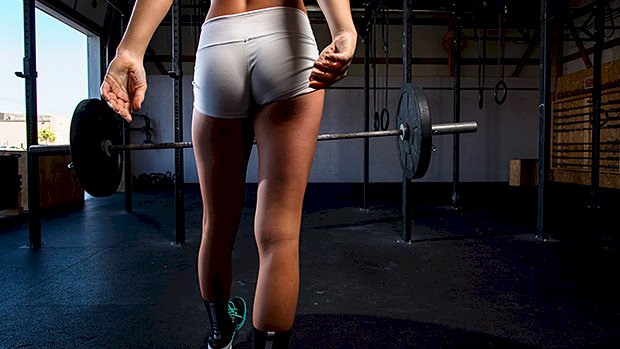 If standard hip thrusts have lost their oomph, here’s something you should try: isometronics. Isometronics combine the principles of isometric and isotonic muscle contractions to reap the rewards of both. Performing hip thrusts using this technique would look like this: Pick a weight you can barbell hip thrust for 12 reps (your 12RM). Do 10 full reps. On the tenth rep, pause at the top for 10 seconds. Finish with as many partial reps as you can in the bottom position. If you’ve selected the right weight, this will be no more than 4-8 partial reps. Tip: To get the most from it, initiate each rep with a tightening of your glutes and abs before each movement. Now, there are no rules saying you need to use the rep ranges above. At their heart, isometronics are simply a form of drop set. Just work within a rep range that’s in line with your training approach. If you want to go heavy, then drop down to 5-6 reps. If you’re a volume junkie, go for 15-20. It’ll all help build an impressive backside. Not Just for Glutes Isometronics are nothing new. You’ll find evidence of them being used since the 1960s. Classically, isometronics are performed using more of an “overcoming” isometric rather than “yielding” isometric. You’d set up in a squat rack and fire the bar against some pins, pressing as hard as you can. For hip thrusts, I’m sharing a more accessible version, and one that won’t have the gym police bust your ass for being in the squat rack. Isometronics can be done for any muscle you’re looking to get bigger or stronger. Just do your full reps, follow that with an isometric hold in the muscle’s shortened position (where you get the biggest squeeze), and finish with a few partials. These are particularly sadistic for any biceps or hamstring curl variation. Why Isometronics Work You shouldn’t need to be convinced that drop sets are a useful tool for increasing training volume. They also allow you to do more of those “important” reps where you’re able to fatigue the last remaining muscle fibers at the back end of each set. Your glutes need some volume to grow. They also require you to tap into both fast and slow-twitch fibers. It varies depending on what you read, but your gluteus maximus has a 50/50 split in terms of fast versus slow-twitch muscle fibers. As a form of mechanical drop set, isometronics begin with your weakest portion (full range of motion), drop to an isometric hold, then drop again to partial reps in your strongest position. The reason why an isometric hold is stronger than when you’re moving is because your muscles can find an extra 10-15% more force here. This isometric hold alone adds a big dose of intensity to any exercise. You’ll get extra fast-twitch fiber engagement, lots of mechanical tension, and you’ll stimulate hypertrophy. You’d do well finishing each set with the isometric alone, but adding some partial reps will increase time under tension, fatigue even more motor units, and further stimulate muscle growth. Use this technique sparingly. To shock your glutes into growth, do it at the very start of your workout as your key lift, then follow up with some basic sets of deep squats, deadlifts, and the
Origin: Tip: How to Build a Professional Butt
Tip: The Evil Butt Workout of Doom
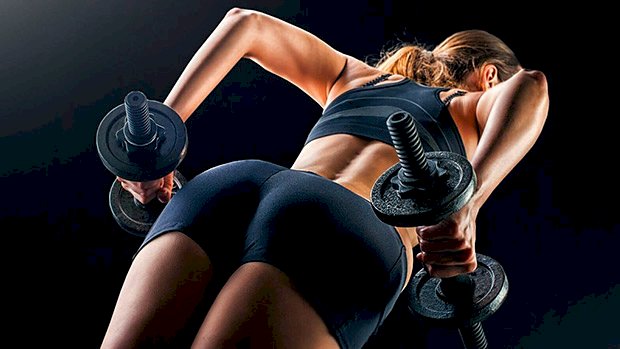 I’m a fan of big supersets, especially for people who can only train a few days a week. If you’re getting plenty of recovery time then it’s okay to push harder in your sessions. When it comes to leg training, there are a few aspects we can play with: Strength (Heavy, low rep) Endurance (Light, high rep) Explosiveness (Plyometric, fast movements) Normally you’d train each of these separately, either on different days or in different sets. For example, working on a heavy squat set, moving to some higher-rep work, then possibly finishing up with something more explosive. But what if you combine all three into one amazing giant set? Well, you’re in for a whole world of gains! On your next leg day, try this combination. I apologize in advance if you need to use any stairs the day after. Complete 5 sets of: 5 x Back Squats:At 70% of 1RM 20 x Step Back Lunges:Moderate weight (unbroken reps) 20 x Jumping Lunges:Unbroken reps Take a three-minute break after set one and two, then a four-minute break after set three, and a five-minute break after set four. Trust me, you’ll need it! The rest allows you to keep the intensity high during each set. (You can also attempt this workout with lighter weights and less rest. You’ll get a totally different kind of stimulus.) If it’s your first time doing this workout, err on the side of caution and go a bit lighter. Later, use weights that are challenging. Add this workout to your training once a week for 8-12 weeks. Progressively load the back squat and lunge each time and you’ll really get the benefits of strength, muscle growth, endurance, and mental fortitude. This is a character-building workout, and not everyone can get through the full five rounds. The butt DOMS after this can be laughable, so make sure you don’t have to be at an important, formal event the next
Origin: Tip: The Evil Butt Workout of Doom
Tip: The No-Eye-Contact Butt Exercise You Need
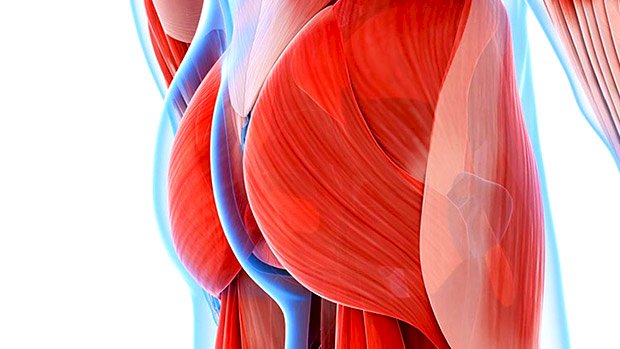 You’ve heard it before: Don’t make eye contact with anyone when using the abductor machine or doing the hip thrust. It’s just… awkward. Well, here’s another glute exercise where you might want to limit eye contact. It might come across a little “suggestive” but the kneeling thrust is a great high-rep backside builder. You’ll need a high-strength resistance band for this one, or double up some lighter ones. Attach your band to the bottom of a rack or anything that’s sturdy. Use a pad for your knees. Set the bench as far away as you need, depending on your band length and resistance. Once you’re in position, the execution is like a barbell hip thrust, but you’ll be kneeling. You’ll be driving your knees down into the pad while pulling down on the bench – a little like a straight-arm pulldown. The pulling-down part works twofold, both to offer support in front and to engage your anterior core. This affects what happens at your hips and further enhances the glute contraction. The bench assists somewhat. The support from the bench also encourages more of a bowing (hinging) movement. Additionally, you seem to get more “cock up” (posterior pelvic tilt) when there’s something to aim for… another reason to limit eye contact. Because band tension increases as it’s stretched, using a strong resistance band will help load your glutes in their fully shortened position. Here’s another way to do them with a band set inside a power rack: The benefits are the same, but this setup will allow you to double up your resistance band and get more load through your hips. Being positioned like this in a rack might provide you with more support. Where there’s more support, there’s more output. One final way to perform this glute exercise is with a set of cables and a dipping belt: The advantage of using the cable is in the constant load throughout the movement (as opposed to a band where the load is varied). There are merits to both forms of resistance, as well as drawbacks. If you’ve already got a monster-strong ass, the heaviest band available might not suffice. Using a dipping belt in the cables might be more uncomfortable or limit range of motion on the way back (if the belt is too thick). Experiment with different setups and see which one feels best. Programming High reps work best. Do 2-3 sets of 20-30 reps for an intense butt pump towards the backend of your workout. It’s no replacement for the big-daddy, barbell hip thrust, but it’s a great
Origin: Tip: The No-Eye-Contact Butt Exercise You Need
 All about sport xlsport.club