
 The handstand walk is a long-term skill to acquire, but it’s definitely worth learning. The progressions are quite attainable and provide a unique pump that’ll make your triceps and shoulders burn like nothing else. An added bonus is the open shoulder position, which helps with thoracic mobility. Plus, having your weight on your hands builds a crazy amount of shoulder stability that you just don’t get with barbells. Mastering the Handstand Walk All you need is something to elevate your feet. This could be a box, bench, sofa, bed, chair, etc. Then you have five different exercises: Holding the handstand position, aiming for a vertical torso Shoulder taps Walking from side to side Feet elevated push-ups Pike push-ups Which exercises you use will be based on your individual level and skillset. I recommend practicing each exercise individually until you’re confident. Set markers to hit for each exercise such as: 30 second holds 20 shoulder taps unbroken A 360-degree walk around (both directions) 10 elevated push-ups 5 pike push-ups If you can do these easily then you can start having fun. For example, try using a set of 20-30 shoulder taps as a drop set after heavy presses! The Descending Ladder Workout One of my favorite rep schemes for these movements is a five-round descending ladder: Round 1 10 shoulder taps Walk halfway around the box 5 pike push-ups or elevated push-ups Walk back to where you started (if you initially walked to the right, walk left to go back) Round 2 8 shoulder taps Walk halfway 4 pike push-ups or elevated push-ups Walk back Round 3 6 shoulder taps Walk halfway 3 pike push-ups or elevated push-ups Walk back Round 4 4 shoulder taps Walk halfway 2 pike push-ups or elevated push-ups Walk back Round 5 2 shoulder taps Walk halfway 1 pike push-up or elevated push-up Walk back Aim to break up your sets as little as possible. If you can do all five rounds unbroken – without coming down between the sets – you win! The prize is shoulder gains and a massive
Origin: Tip: Build Big Shoulders With Bodyweight
Tag: Bodyweight
Tip: The Bodyweight Superset for Big Arms
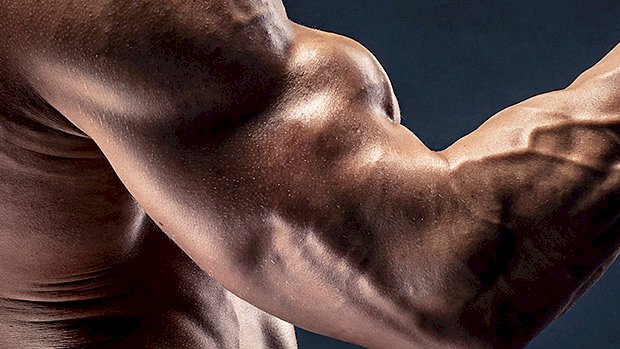 When most people want to build their arms, they head straight to the EZ-curl bar and the rope pulldown machine. That’s a mistake. For most lifters, chin-ups and dips should form the foundation of their arm training. Here’s a superset that’ll get the job done. Chin-Up and Dip Superset A1 Chin-Up – 4 sets to near failure A2 Dip – 4 sets to near failure No rest between A1 and A2. Rest approximately 2-3 minutes between supersets. This means that you’ll do a set of chin-ups, then immediately do a set of dips without rest. That’s one round and you’ll do three more, resting a couple of minutes between supersets. Perform these exercises to near but not absolute failure. Consistent absolute failure on all sets adds disproportionate fatigue to the training effect. For the chin-ups: Choose a partial or fully underhand grip to emphasize biceps recruitment. Fully extend your elbows at the bottom with control and then reverse direction. Your scapula should move with you and not remain locked in place. Use full available range of motion at the top and bottom under control to avoid needless injury risk. Squeeze at the top and then repeat. For the dips: Use caution as they can put your shoulder in a compromised position and aren’t suitable for those with injured shoulders or poor joint mobility. Ensure the ball of the joint doesn’t glide forward from the socket in the bottom of your dip, which would result in the ball pushing repeatedly against your biceps and rotator cuff tendons. Descend to a depth you can control and then extend elbows to lockout. Some trainers emphasize remaining upright for more triceps focus, but more forward torso lean may allow more shoulder comfort and will still smash triceps while engaging more chest. Remember, classic-era bodybuilders used bodyweight compounds as the foundation of arm training. Though prominent bodybuilders of the ’60s and ’70s lacked the sheer mass (and abdominal distention) of modern pros, Arnold and his contemporaries never lacked for world-class
Origin: Tip: The Bodyweight Superset for Big Arms
Tip: Build Your Back With Bodyweight
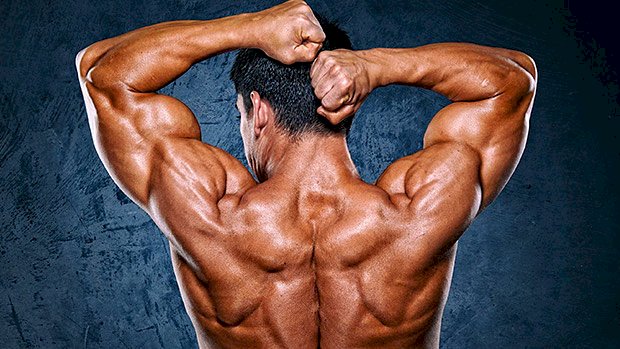
 Mechanical drop sets (unlike regular ones where you just reduce the weight as you fatigue) allow you to switch to an easier modification of the movement, usually with the same weight. This helps you to increase metabolic stress and time under tension, both of which will stimulate hypertrophy. If you use this during the main part of the workout, shoot for 3-4 mechanical drop sets. If you use this as a finisher, then one set is more than enough. Do as many standard wide-grip pull-ups as you can. Use a weight vest or hang additional weight from a belt if you can do more than 15. Next, go to volitional failure on eccentric (negative) pull-ups. Jump up to the top position, then lower yourself as slowly as possible. Drop down under a suspension trainer or a bar and perform as many horizontal rows as you can (feet on the ground or elevated, depending on your level of fatigue). The suspension trainer is preferable as it allows your hands to rotate to maintain optimal shoulder position and to better engage the back muscles.
Origin: Tip: Build Your Back With Bodyweight
 All about sport xlsport.club