
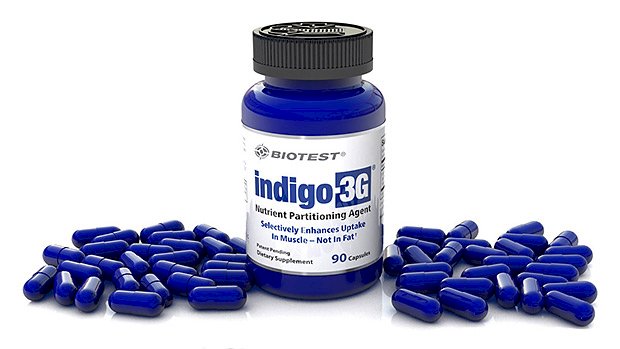
 C3G (cyanidin 3-glucoside), the main ingredient in Biotest’s Indigo-3G®, is both a marketer’s dream and a marketer’s nightmare. It’s a dream in that it’s a naturally-occurring substance (an anthocyanin) found in blueberries, blackberries, acai berries and all kinds of other dark-colored fruits and vegetables under God’s sun. There’s absolutely nothing scary about it. You can’t take too much of it, it doesn’t have any negative side effects, it won’t cause anyone to fail a drug test, and mothers won’t panic when they see it in a medicine cabinet or gym bag. But like I said, it’s also a marketer’s nightmare. That’s because C3G represents an embarrassment of nutritional and physique-enhancing riches. It has so many beneficial effects on the human condition that it’s hard to know which one(s) to focus on. You risk confusing people, or worse yet, causing a certain degree of skepticism. Take a look at the following list of research-backed C3G benefits. Which ones would you choose to highlight if you had to choose? C3G enhances the uptake of glucose by myotubes, causing calories to be preferentially used by muscle fibers instead of being stored as fat. C3G raises levels of adipokinectin, which regulates glucose levels and increases fatty acid breakdown. C3G decreases levels of leptin, a hormone directly connected to body fat and obesity. C3G improves endurance by increasing the production of chemical intermediates involved in the production of ATP, the cell’s energy currency. C3G increases insulin sensitivity. C3G limits fat gain. C3G, taken before a workout, helps shuttle energy from pre-workout nutrition directly to muscle cells. C3G enhances the activity of brown adipose tissue (which is metabolically active and calorie-burning). C3G induces the transformation of white adipose tissue to brown adipose tissue. C3G increases mitochondrial number and function. C3G prevents mitochondrial dysfunction. C3G limits abdominal obesity. C3G reduces systemic inflammation. C3G reduces triglycerides. C3G lowers blood sugar. C3G reduces cholesterol. C3G reduces chances of developing cancer. C3G improves survival rates of cancer. C3G improves skeletal muscle endurance by increasing levels of ATP. C3G improves night vision and helps prevent eye fatigue. C3G promotes liver health and fortifies it against damage from alcohol. C3G reduces risk of heart attack. C3G mimics the life-extending benefits seen in calorie restriction diets. C3G reduces inflammation in fat cells, causing them to shrink. C3G compares favorably in laboratory experiments with acarbose, a prescription glucose-disposal drug. C3G sews and makes all its own clothes, speaks fluent Latvian, and took second prize in the tango division of the ballroom dancing championships. Okay, not so much with the last one, but see what I mean by an embarrassment of riches? The list of C3G’s actual biochemical pathways that allow it to do all the things that it does is also diverse, but each has broad health implications – hence the long list of benefits. C3G and the Cellular Master Switch First and perhaps foremost, C3G has profound effects on a chemical called adenosine monophosphate kinase, or AMPK. It’s found in every cell in the body and serves as the body’s master regulating switch, determining in large part how fat you are, how muscular you are, and even how long you’ll live. According to at least one study involving human types, ingesting C3G increases the production of AMPK by a factor of 2.88. In turn, these increased levels of AMPK cause a huge up-regulation of a “transcriptional activator” known as PGC-1 alpha, which then increases exercise capacity, fatigue resistance, and oxygen uptake, which all contribute to additional muscle mass (assuming all other factors are copacetic). Oh yeah, in addition to being a metabolic switch, AMPK can make cancer cells stop sucking on the energy teat. Once it’s activated, cancer cells end up starving themselves because the energy lifeline’s been cut. C3G Mimics the Actions of the Most Powerful Hormone Insulin is the most powerful hormone we make. C3G has insulin-like properties in that it activates insulin receptor substrates, which in turn activate insulin-signaling proteins. These signaling proteins then stimulate glucose uptake by skeletal muscle tissue. The take-home point here is that you could – assuming you’ve got your exercise and lifestyle ducks in order – actually eat more food than what’s required for maintenance and have any weight gain go to muscle instead of fat. But C3G’s insulin-like properties don’t stop there. One of several laboratory experiments involving C3G showed two dosage-related drops in blood sugar of 33% and 51%, prompting the authors of the study to remark how favorably it compared with Acarbose, a powerful pharmaceutical glucose-disposal agent. C3G Sends Fat Cells to Fat Camp As mentioned above in the list of C3G’s effects, it also activates adipokinectin, which acts directly on fat cells.
Origin: The Ultimate Body Transformation Agent
Tag: Body
This Stuff is Rocket Fuel for the Mind & Body
 Increased muscle-fiber recruitment and strength Enhanced neural recovery Heightened and focused concentration Accelerated training progress and muscular gains Boosted motivation and mood Higher and sustained energy levels A mental edge during competition Enhanced performance in studies or exams A reduction in social anxiety And all that is exactly what Power Drive® was designed for. How Does Power Drive® Do All These Things? Power Drive®’s active ingredients are known as nootropics – substances that give cognitive benefits to the brain that often translate to physical benefits. In order to qualify as a nootropic, a substance has to meet five criteria set by Dr. Corneliu E. Giurgea, the man who coined the term: It has to enhance memory and the ability to learn. It has to increase the efficacy of neuronal firing mechanisms (which is where the physical benefits of nootropics kick in). It has to help the brain function under stressful or disruptive conditions. It has to protect the brain from chemical or physical assaults. It has to have few or no side effects and be virtually non-toxic. There are about 85 known nootropics, each of which has slightly different capabilities, mechanisms of action, and strengths. Three of them were chosen to form the backbone of the Power Drive® formulation. They are: L-Tyrosine Phosphatidylcholine DMAE Here’s a short rundown of the attributes of each: L-Tyrosine This amino acid is known as the “master precursor” because it’s required to form the stimulatory neurotransmitters dopamine, norepinephrine, and epinephrine, known collectively as catecholamines. Back in early 1980’s, an MIT scientist named Richard Wurtman discovered that when combined with a catalyst, tyrosine “Enhances performance, improves subjective vigor, decreases fatigue, diminishes subjective confusion, and decreases anxiety and tension.” And a little over a decade later, Dr. Jeffrey Stout, then of the University of Nebraska, found that tyrosine, when given an hour before exercise, increased peak bench press torque by 283% during a set of 15 reps. L-tyrosine, along with boosting cognitive function, also stimulates the production of the fat-burning thyroid hormones T3 and T4. Phosphatidylcholine Forbes magazine called this nootropic a “wonder drug.” They’re not wrong. The mag was mostly intrigued by its potential in slowing down mental decline and staving off Alzhemer’s because it’s been shown to stimulate the growth of new brain cells and neural connections – a process once thought to be impossible. But phosphatidylcholine also leads to an increase in another vital neurotransmitter known as acetylcholine, which helps control motor unit recruitment, along with reflexes and reaction times. Here’s the thing: Muscles are made of individual motor units and if you can recruit more of them, courtesy of acetylcholine, you experience an almost immediate gain in strength, power, and endurance. Over the long run, this enhanced ability to kick in more motor units will likely result in more muscle mass. DMAE Dimethylaminoethanol, or DMAE, is an amino acid naturally produced in the brain, but supplying additional amounts through the diet has some interesting effects. It, like phosphatidylcholine, helps increase levels of the neurotransmitter acetylcholine, but it’s also thought to increase blood flow to the brain, which results in improved oxygen and glucose uptake and manifests itself through increased focus and increased mental stamina. It also has some unique abilities to elevate mood, address certain symptoms of depression, and increase athletic performance. (It may even have some life extension effects as one early study showed that mice lived an unheard of 50% longer when they were given DMAE.) Does Power Drive® Have Any Negative Side Effects? Power Drive® is remarkably free of any negative side effects. Perhaps paradoxically, it doesn’t even seem to effect sleep patterns negatively. While it brings you mentally up, it’s not the skin-on-fire type of energy enhancement sometimes felt with cruder stimulants. It just makes the brain work better at everything it does, and if the brain decides it’s time to go to sleep, it actually helps with that too. Neither is Power Drive® addictive, at least not in any clinical sense. However, it might be “addictive” in the way that any pleasurable experience is, in that you’ll likely want to try it again and again when circumstances call for it. How Do I Use Power Drive®? Power Drive® is an orange-flavored, pleasant tasting powder that mixes easily in your protein drink or water. Take 1 scoop 30 to 60 minutes before workouts, athletic events, exams, or any event where you want to think or perform better, or even just to feel more mentally alert and even
Origin: This Stuff is Rocket Fuel for the Mind & Body
Tip: The 5-Minute Upper Body Finisher
 Hit this quick workout for a super pump at the end of your training sessions. Yes, it’s short, but aim for controlled reps with minimal rest. The routine consists of these three simple exercises: 1. TRX Bicep Curl Lean back away from the anchor point and have your elbows about shoulder height, palms facing up. Keep your shoulders back and down and curl from the elbow. Just pull to beside your head without letting the elbows drop. Avoid lifting from the shoulders and pulling behind yourself. Keep these slow and controlled and really focus on isolating the biceps while maintaining posture. 2. TRX Row Turn your palms so they face each other. Fully lock out the arms and think about engaging the lats before you pull. When you reach your chest to the handles, squeeze your shoulder blades together as much as you can before slowly returning to the start position. 3. The Push-Up Move to the floor. Place your hands shoulder distance apart, keep your belly tight, and push your feet into the ground. Fully extend the elbows at the top – no half reps. If you need to regress to your knees that would be better to maintain a full range of motion. The Rep Scheme 5 TRX bicep curls 8 TRX rows 10 push-ups Do 5 full rounds If don’t struggle with the exercises and your form stays strong throughout, then aim to go unbroken (no resting) between all five rounds. If you’re fairly new and your arms burn out quickly, take 30 seconds of rest between rounds. Remember the aim is quality movement with good tension. If you feel like you’re able to relax too much at the top of the rows or curls then walk your feet forward to put yourself more toward horizontal. This workout should take you around five minutes. If you can do it in 3 or 4 minutes, you’ve performed the exercises too
Origin: Tip: The 5-Minute Upper Body Finisher
15 Exercises for a Powerful Upper Body
 The Need for Speed Speed work is most often used by those wanting to build power and explosiveness. When it comes to upper-body power training with bands (dynamic effort) a lot of non-powerlifters copy what they see powerlifters doing – attaching Superbands to each side of a bar and doing fast bench presses. That’s fine. However, you don’t need to just use a barbell to do power training with bands. In fact, it makes more sense to do multi-angled speed work for both pushing and pulling actions. Here are a variety of banded power training exercises for non-powerlifters: 1 – Speed Press These are JC Bands, but you can do these exercises by anchoring regular bands or bands with handles to a stable piece of equipment. This allows you to keep the bands longer, which creates a smoother, less drastic resistance change as they lengthen. Using a split-stance provides a better base of support so you’ll be able to generate maximum force. Press until just before your elbows fully extend, and allow your elbows to travel just beyond your torso on each rep. Sets and reps: 3-5 x 8-12 seconds of as many reps as possible (AMRAP) Use a band tension and stand at a distance that allows you to move at a pace of at least 3 reps per second. 2 – Alternate-Arm Speed Press Press until just before your elbow fully extends, and allow your elbow on your back arm to travel just beyond your torso. Be athletic by using a little rotation at your torso and even your lower body. Make sure they work together in a smooth and coordinated manner. Sets and reps: 3-4 x 6-8 seconds AMRAP, per stance Move at a pace of at least 3 reps per second. 3 – Speed One-Arm Press If you’re pressing with your right arm, stand in a split-stance with your left leg in front. Be athletic by using a little rotation, shifting weight at your torso and lower body to work together in a coordinated manner. Sets and reps: 3-4 x 8-12 seconds AMRAP, each side Perform at least 2 reps per second. 4 – Speed Incline Press Keep the bands in contact with the top of your arms. You want the pressing action of your arms to be in line with the angle of the bands, which should be set at roughly 45-degrees. Switch lead legs on each set, but it doesn’t matter if you end up doing one more set on one stance versus the other. (That goes for most of these exercises.) The lower body is doing less than when doing the alternate-arm versions because there’s no rotational element involved. Sets and reps: 3-4 x 8-12 seconds AMRAP Move at a pace of at least 3 reps per second. 5 – Speed Incline Alternate-Arm Press Press each arm at the same angle as the band. Press until just before your elbow fully extends, and allow the elbow of your back arm to travel just past your torso. Sets and reps: 3-4 x 6-8 seconds AMRAP, per stance Do at least 3 reps per second. 6 – Angled Barbell Speed One-Arm Press In my Ultimate Guide to Landmine Presses, I talked about using a band to perform presses. You can also use the band for dynamic effort reps by performing angled barbell presses as fast as you can. Sets and reps: 3-4 x 8-12 seconds AMRAP, each side Use a band for tension and stand at a distance that allows you to move at a pace of at least 2 reps per second. 7 – Angled Barbell Speed Leaning One-Arm Press This variation is more like an incline pressing action, whereas this leaning torso version is more like an overhead press. For both versions, make sure the band is anchored on your same-side foot directly underneath your pressing arm. Same sets and reps as above. 8 – Speed One-Arm Overhead Press You can use a Superband for this but here I’m using an NT Loop because I designed it to be a far more comfortable and stable band to place around your limbs, waist, or hips. Sets and reps: 3-4 x 8-12 seconds AMRAP, each side Move at a pace of at least 2 reps per second. 9 – Speed Row Make sure not to alligator-arm this. Using a split-stance provides a better base of support. Pull until your elbows travel just beyond your torso, and extend your arms just before your elbows fully extend on each rep. Switch lead legs on each set. Sets and reps: 3-5 x 8-12 seconds, AMRAP Do at least 3 reps per second. 10 – Speed Alternate-Arm Row Pull until your elbows travel just beyond your torso, and extend your arms just before your elbows fully extend on each rep. Use a little rotation at your torso and even your lower body so they work together in a smooth manner. Sets and reps: 3-4 x 6-8 seconds AMRAP, per stance Do at least 3 reps per second. 11 – Speed One-Arm Row If you’re pulling with your left arm, stand in a split-stance with your right leg in front. Sets and reps: 3-4 x 8-12 seconds AMRAP, each side Do at least 2 reps per second. 12 – Speed Overhead Pull Anchor the bands at around bellybutton height and hinge forward at your hips so your torso is roughly parallel to the ground. This allows you to use a vertical pulling action like a lat pulldown. On all of
Origin: 15 Exercises for a Powerful Upper Body
Tip: The Fastest Full Body Stretch
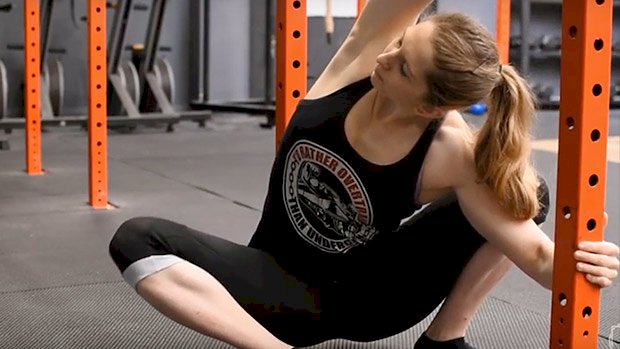 The One Stretch Your Warm-Up Needs Trying to get stronger, bigger, or leaner? Doesn’t matter what your goals are, you need to have a good level of full body mobility to stay injury free in the gym… and to just move well through life. It’s always tempting to skip the warm-ups and stretching, especially when you’re short on time. But at the very least, make sure you address the most commonly stiff/tight areas of the body: Lats Lower Back Hips Knees Ankles This assisted squat stretch hits all of these. And the best thing about it? It takes no energy to do – you don’t even have to hold yourself up! Lats:The crossover reach hits your lats, which is great for your overhead position and overall shoulder mobility. Low Back, Hips, Knees:This is combined with the deep squat which is a great relaxer for the lower back and really helps to open up the hips and knees, especially with the added prying motion. Ankles:Because you’re holding on to a support, you’re also able to focus on dorsiflexion of one ankle at a time. This is crucial for improving your deep squats. Spend 1-2 minutes using this as a warm-up or cooldown stretch with some deep relaxed breathing and you’ll feel
Origin: Tip: The Fastest Full Body Stretch
Tip: The Body Fat Percentage Factor
 Don’t Bulk Until You’re Ripped Ideally, you’d want to start a bulking cycle when you’re incredibly lean – single digit body fat. Working from an environment with less adipose tissue means less inflammation and usually a better hormonal profile – better nutrient partitioning due to insulin sensitivity and less estrogen (fat cells are highly estrogenic). But most people don’t want to do that in the real world. Guys get a hint of upper abs first thing in the morning, swear they’re at 9% body fat, and want to start “packing on the gainz!” Well, gear down there, big rig. The difference in being kinda lean and being truly peeled is like the difference between whizzing around the local go-kart track and being on the Nuburgring in a Viper ACR. Yeah, you’re on a track in both, and technically in a “race car,” but it’s just not the same. Since most guys never truly get ripped, they often end up in Skinny-Fat Land. This is where the majority of confusion about whether to bulk or cut comes from. When you’re skinny-fat, the scale usually says “runt” but the mirror says “doughnuts.” If you’re a total newbie (or have less than a year of really intelligent training experience) and you’re more than 18-20% body fat, then you’re in luck. No really, you are. Because then you’re in that rare period of time where you can lose fat while building a decent amount of muscle at the same time. Get into a minor caloric deficit and focus on banging out rep PR’s on the big lifts. If you’re skinny-fat but in the 12-15% body fat range, then focus on eating a maintenance intake of calories or a very slight surplus, and then bang out the rep PR’s. The common denominator? Getting stronger in the growth-producing rep ranges (8-20), and putting on more muscle. The underlying problem with looking skinny-fat really isn’t the degree of body fat. It’s the lack of muscle underneath it. A guy that’s 16% body fat who has a lot of quality muscle underneath will look fairly jacked. And that’s the difference between him and the guy suffering from skinny-fat disease who weighs 177 who’s also 16% body fat. Muscle cures a lot of
Origin: Tip: The Body Fat Percentage Factor
Tip: The Most Neglected Body Part in the Gym
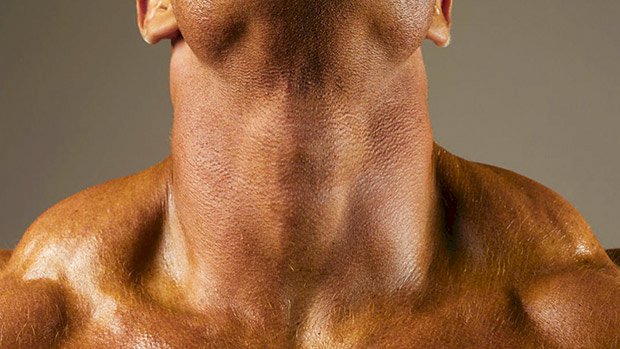 Strengthening your neck will benefit your posture and the overall look of your physique. But not many people do any sort of direct neck training. Sometimes it’s just a time issue. Here’s an exercise that gets the job done quickly: banded bent-over neck extensions. You’ll need a light to moderate band, an unweighted barbell set up in a rack just below knee height, and a bar bad. Stay strict with the slow negatives and let the bar pad stretch your neck at the bottom of the movement. Be careful not to overextend when you’re in full extension. Get a 1 second squeeze at the top and use the barbell to support your body enough to keep your spine relatively neutral. Do 4 sets of 8-10 reps at a 5101 tempo. However, if this is your first time directly targeting your neck, I’d be modest with the volume and stick to only 3 sets. You’re going to be
Origin: Tip: The Most Neglected Body Part in the Gym
Hard Body Training for Women
 Here’s what you need to know… Women tend to have a higher pain tolerance when it comes to training, can recover faster between sets, and are able to sustain a higher volume of work. Men are welcome to try the program, but they may not be able to hang! This program has you training the same muscles two days in a row: heavy lifting the first day and pump work for the same muscles the next day. Training the same muscles two days in a row facilitates recovery and lengthens the duration of the anabolic phase. The workout plan calls for five mandatory training days per week with an optional sixth day. That extra day will help you get leaner super fast, but you’ll get amazing results with just the five main workouts. What To Expect This program will be uncomfortable at times, painful at others. It will force you to focus on performance. You’ll get stronger, faster, more powerful, and more resilient. The end result will be fat loss, more muscle in the right places, and a strong body. This is the type of training I used with one of my clients who won her first two physique competitions this year, training without drugs, while having two kids and a full time job working construction. Can Men Do It? Maybe, If They’re Woman Enough Can guys do this program? Sure, they can try. Muscle is muscle and we’re all the same species, but women don’t have the same needs when it comes to building an aesthetic physique. They don’t need to emphasize building the pecs. Instead, they need more focus on the glutes. And since they need muscular but not massive arms, tons of direct arm work isn’t necessary. Women also tend to have a higher pain tolerance when it comes to training. Females can recover faster between sets, and are able to sustain a higher volume of work during a session. So if you’re a guy, you’re welcome to try the program, but it will be even more uncomfortable for you! The Basic Structure The program calls for five mandatory training days per week with an optional sixth day. That extra day will help you get lean faster, but you’ll get amazing results with just the five main workouts. This program uses a cool concept: train the same muscles two days in a row. You hit them hard with heavy lifting the first day and then you do pump work for the same muscles the next day. This actually facilitates recovery and lengthens the duration of the anabolic phase. Protein synthesis stays elevated for 24 hours post-training, but by having a second session the next day that’s less traumatic, you extend protein synthesis significantly, thus building more muscle. It’s important that the second session is pump work and not heavy lifting, though. We don’t want to cause any muscle damage on that second day. We only want to activate the cell signaling responsible for stimulating hypertrophy and pumping nutrients into the muscles. I also include metabolic conditioning (metcon) to get you lean fast without risking the loss of muscle mass. The metcon will actually help you build more muscle while getting leaner. Explosive work also plays a big role in the program. It increases the insulin sensitivity of muscle, making you more prone to storing ingested nutrients in the muscles instead of the fat cells. Additionally, explosive work gives the body a harder, more sculpted look by improving myogenic tone. The schedule looks like this: Monday: Lower body strength/hypertrophy work Tuesday: Lower body pump complex/lower body metcon Wednesday: Upper body strength/hypertrophy work Thursday: Upper body pump complex/upper body metcon Friday: Optional sprint/energy systems session Saturday: Whole body explosive work Sunday: OFF Load Progression The program uses two main systems of progression: programmed progression and double progression. Programmed progression refers to a cycle where the weights are planned in advance based on your 1RM. So you’ll need to establish your maximum load for one technically solid rep on the back squat, push press, and power clean from the hang. The percentages used during this whole program are all based on that 1RM. Double progression is a system where you have a target rep range instead of a precise number of reps to do, 6 to 8, for example. You will use the same weight for all your work sets. The goal is to be able to do all the work sets with the upper limit of the range (8 in our example) with the same weight. When you’re able to do that, you increase the weight at your next session. If you can’t get 8 reps for all of your work sets, that’s fine, but it means that you’ll keep the same weight during next week’s workout. So when you see a percentage given for an exercise below, it uses the planned progression. When you don’t see a percentage, it means you’ll use the double progression approach. The Program Monday Exercise Wk Sets x Reps %1RM Rest A Box Jump 3 x 10 B Back Squat 1 2 3 4 5 6 7 8 9 10 5 x 4 5 x 5 5 x 6 3 x 3 5 x 3 6 x 3 3 x 3 3 x 2 3 x 3 Test Max 80% 80% 80% 90% 90% 90% 95%
Origin: Hard Body Training for Women
 All about sport xlsport.club