
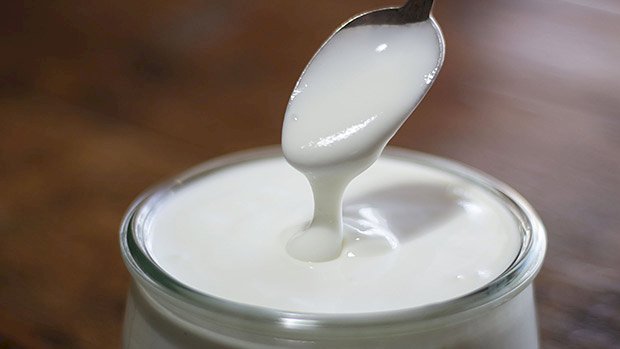
 Yogurt’s been using me for years. She seduced me with her smooth, milky white body and delectably fruity bottom, whispering in my ear how good it’s gonna be, baby, when she fills me up with all her beneficial bacteria. I always end up letting her have her way with me and when I wake up in the morning, she’s gone. No note, nothing. I feel so cheap. And what’s worse, the bacteria she gave me are all gone too. That’s the thing with yogurt. Her supposedly beneficial bacteria are more or less transient. They hit our gut, hang around a bit, and then get bored. Then they take the next poop-Uber out of colon town. That’s why I’ve dumped yogurt’s fermented ass and found someone more faithful, someone who gives me a lot more beneficial bacteria than she ever did; bacteria that are faithful and are more likely to stick around. Her name is kefir, and I want to introduce her to both mom and you, in that order. What the Hell is Kefir? Kefir is a milk product made from starter grains of bacteria and yeast. The end product is a slightly sour, slightly fermented beverage that even most lactose intolerant people can drink. While it’s traditionally made from cow, goat, or sheep milk, you can make it from any type of plant-based milk (soy, rice). It can even be made from coconut milk or water to make coconut kefir, which should not be confused with the name of the stripper who lives below you in apartment 2B. The word itself comes from a Turkish word that means “feeling good,” and was traditionally made in skin bags and hung above doorways. Every time someone came through the doorway, they’d make like the bag was an annoying striker from an opposing soccer team and they’d throw a shoulder into it, thereby jostling the contents of the bag and ensuring efficient fermentation. What’s particularly cool about kefir is that it contains between 10 and 34 strains of probiotic, “good” bacteria, whereas yogurt contains only 2 to 7 strains. More importantly, as mentioned, some studies have shown that the kefir bacteria attach to the lining of the gut and form colonies instead of dying off or being excreted. That allows the kefir to change your microbiome for the better and affect all kinds of beneficial changes to your digestion and overall health. What Kefir Can Do For You While kefir doesn’t have a standardized nutritional profile, it’s safe to say that any kefir product is going to be high in calcium, magnesium, potassium, vitamin B12, vitamin A, biotin, folate, and lots of enzymes. Macronutrient-wise, a typical 8-ounce serving contains roughly the following: 160 calories 10 grams of protein 12 grams of carbs 8 grams of fat This is essentially the same as you’d find in an 8-ounce glass of whole milk, although kefir has a little bit more protein (about 2 grams). Aside from providing you with those nutrients and populating your gut with beneficial bacteria, kefir has the following superpowers: It builds a stronger immune system:Kefir contains an insoluble polysaccharide called kefiran that’s been shown to have antimicrobial properties, in addition to supposedly lowering cholesterol and blood pressure. It builds stronger bones:Okay, any milk product will do this as they all provide calcium and vitamin K2 (which aids in calcium absorption), but it’s worth noting nonetheless. It fights bowel problems and supports digestion in general:Kefir’s friendly and helpful bacteria have been shown to combat Crohn’s disease and irritable bowel syndrome (IBS). Likewise, taking it during and after antibiotic therapy can go a long way in preventing the gastrointestinal havoc the drugs often cause. It can fight cancer:Admittedly, it seems that nearly everything falls into one of two camps: Either something causes cancer or it fights cancer, so it probably becomes hard nowadays to accept something as a cancer fighter. Even so, kefir appears to have some special gifts in this area. A study conducted at the School of Dietetics and Human Nutrition at McGill University found that kefir reduced breast cancer cells by 56 percent as opposed to yogurt’s meager 14 percent. What’s It Taste Like? Kefir, like most anything else nowadays, comes in a variety of fruit flavors sweetened with a metric f-ton of cane sugar, but drinking anything else but the plain, unsweetened stuff is for kefir sissies. Besides, you can sweeten it up at home with artificial sweeteners, but the plain, unsweetened kind is by no means unappealing. It’s sour, I’ll give you that, but I think any adult palate can handle it, if not downright appreciate it. When you drink it, it gives the sensation of coating your entire stomach in a soothing embrace. It kind of reminds me of the time Homer Simpson drank melted candle wax to coat his mouth, esophagus, and stomach so that he could win a chili-pepper eating contest, but more nutritious and a lot less dangerous. How to Best Use Kefir I drink one 8-ounce glass of kefir a day, either divided into two servings or all at once. I sometimes
Origin: Tip: Forget Yogurt – This Stuff is Better and Badder
 All about sport xlsport.club