
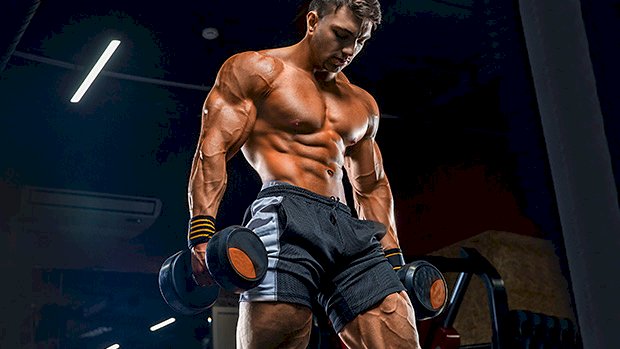
 Combination exercises have a bad reputation among serious lifters, but not all of them suck. The good ones hit more muscles, make you train at a higher heart rate, and force you to expend more calories. Why Most Combos Don’t Work Think of the lunge with a bicep curl: a popular combination exercise featured in every mommy-blogger routine. Sure, it’ll help burn some calories, but since when should the weight you use for bicep curls be the same as it is for a lunge? Common combination exercises attempt to kill two birds with one stone. But in reality, all they do is kill one bird and partially wound another. Effective combo exercises do a better job at matching exercises so that each one is more evenly stimulated by the same weight. They also add variety and help you build some athleticism while keeping your heart rate up. Hit your muscles efficiently and burn more body fat with these smart combination exercises: 1 – Deficit Reverse Lunge + Single-Leg RDL If your single-leg strength and stability need some work, then combining reverse lunges with a single-leg RDL would be a great way to start. Adding a deficit to the reverse lunge upgrades the difficulty, but you can always start without one. You can also go the other route and use the deficit for the deadlift component too, if you have the range of motion. The horizontal nature of this exercise can help you develop athletic speed and help you prevent hamstring injuries. If you’re just after aesthetics though, this has you covered too. Develop that glute and upper hamstring area (some call it the “glute-ham tie in”) and get a great butt pump with this killer exercise. 2 – Landmine Lawnmower This one has many names, but we’ll call it a “lawnmower” since it loosely resembles starting up an old lawnmower… albeit one that needs some forceful encouragement to get it going. The combo is highly transferable to athletic movements too, teaching an efficient lower to upper body power transfer. You’ll recognize the hip snap on the back leg in many power-based sports. To nail this lift, think of it kind of like a sumo deadlift mixed with a high-pull that goes into a rotational press. You’ll burn a ton of calories while satisfying your inner athlete. 3 – Split Squat + Iso Split Squat Row Both reverse lunges and split squats work similar muscles, but the joint loading mechanics differ. During reverse lunges, the hamstring of the lead leg also contributes to a “braking” effect. In general, split squats are a regression of reverse lunges, since you have a better opportunity to reinforce hip, knee, and ankle mechanics in a more controllable position. Combining a split squat with a cable or band row increases the quad loading on the lead leg since the force is pulling you forward. The row is also a good opportunity to hit your back without adding too much complexity. You can add the row in at the top of the movement or, for more difficulty, add it while holding the bottom position. You’ll get a lot out of these if your job requires you to sit all day. While the split squat will help open your tight hips, the row will combat hunched-over shoulders. Try these to combat your gorilla posture while smoking your quads. 4 – Reaching Rear-Foot Elevated Split Squat + Row Split squats can be progressed into rear-foot elevated split squats (RFESS), emphasizing greater load on the lead leg. Kind of like in the previous exercise, you simply add a horizontal row. But on this one, you reach forward and add more load through the hips, which is somewhat of a deadlift-squat hybrid. The reach forward will also load your lats more in their lengthened position. So as you hit the bottom and reach, you’ll be emphasizing hip engagement and a stretch of the lats. As you come up, you’ll be targeting mid-back and quads. The height of the cable can change the feel of the exercise too, so feel free to play with it. This exercise is the definition of “bang for your buck.” It’s got a moderate-high complexity, but with a high return. If you’re looking to hit it all, then grab a cable or band and give them a go. 5 – Rear-Foot Elevated Split Squat + Foot-Elevated RDL Staying with the RFESS theme, here’s another way to use them to hit your entire lower body. This one is starting to make its rounds in corrective exercise circles as a more complex rehab progression. As a combination exercise to hit your quads and hamstrings, it’ll really light up some weaknesses. 6 – Box Step-Off + Deficit Reverse Lunge Box step-offs are a good way to load a squat pattern while moving in the frontal plane. There are many options too. You can use a landmine, dumbbells, kettlebells, or a goblet position. And, of course, you can use them to build big legs. Combining box step-offs with another deficit exercise – a reverse lunge – will hammer your lower body even harder. Granted, in our “killing two birds” analogy you’re really just killing the same bird twice here. But if you’re looking to add
Origin: 10 Combo Exercises That Aren’t Stupid
Tag: Aren’t
Tip: 4 Exercises You Aren’t Doing (But Should)
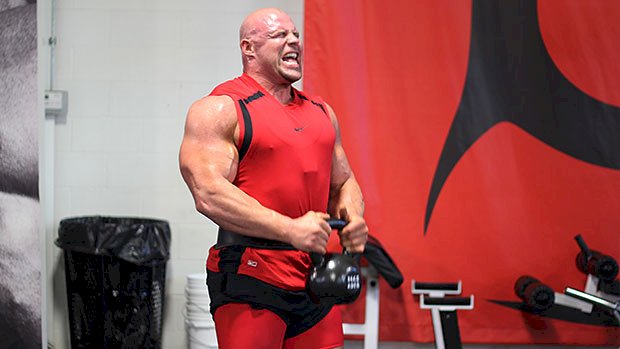 If you have a decent training program, you’re likely doing some variation of the squat, deadlift, overhead press, and pull-up or row. What’s missing? The exercises that help you become more proficient at these lifts. Here are four exercise that’ll increase your mobility, improve your balance, and strengthen your underused muscles. 1 – The Dumbbell Sumo Plié Squat How To Do It Get in a wide stance with your toes pointed out and heels planted firmly into the ground. Hold a dumbbell at crotch height and squeeze your shoulder blades tightly together to establish a strong, flat back. As you squat down, drive your knees out and back. At no point should your knees roll forward, nor should there be any space between your crotch and the dumbbell. Come to a full pause at the bottom and focus on the stretch through the inner thigh. Maintain tightness as you straighten your knees and come back to a standing position. Why You Need It The sumo plié squat is an excellent way to gain mobility in your squat and train your glutes and adductors to fire simultaneously. The relationship between the adductors (inner thigh muscles) and glutes play a huge role in stabilizing the knee when squatting. Your adductors pull your leg in toward the body and your glutes are responsible for hip extension, abduction, and external rotation. When your adductors are overly tight or weak and your glutes aren’t firing properly, your knees will cave in under a heavy load. This generally happens when these muscle groups aren’t in sync and you have improper timing when recruiting the glutes or adductors. 2 – The One-Arm, One-Leg RDL How To Do It Start with both feet together and shoulder blades tightly squeezed. Hinge at the hips by bringing one leg back. This should be the leg on the same side as the arm that’s holding the weight. Maintain a neutral head position by keeping your chin tucked and focusing on a spot on the floor about a foot away from your grounded leg. Stop the movement when your hand is even with the knee of your grounded leg. Use your glutes to drive your hips forward and come back to a standing position. At no point should there be any rounding in your lower back. Why You Need It This will help prevent your hips from shifting during the deadlift, which is common. Most of us have one leg that’s stronger than the other, so compensation will naturally occur under a heavy load. If you’re not sure what this hip shifting this looks like, here it is: To avoid a hip shift, strengthen your hinge pattern unilaterally to reduce muscular imbalances. The one-arm, one-leg RDL not only strengthens your glutes, hamstrings, and spinal erectors, but also improves pelvic stability and balance. 3 – Pike Push-Up How To Do It Begin on all fours with your legs straight, hips elevated, and palms slightly turned in. Bend at the elbows and lower your head down toward the floor as you keep your hips high. Once the top of your head reaches the floor, “scrape” your nose along the ground and continue moving forward. Pause when you feel yourself about to fall forward. Drive back to the starting position by keeping your nose right next to the floor for as long as possible. The goal is to drive yourself directly backward creating upward rotation through your shoulder blades. For shoulder health, drive your elbows out when lowering and tuck them in towards the body as you become more parallel with the ground. Why You Need It It’ll help your overhead press. The overhead press requires lots of mobility through the thoracic spine to get the bar into a proper finishing position. You drive the bar up and backward, then fully lock out the elbows with the bar above the head. Many people can’t get into this position because they lack the mobility or kinesthetic awareness to create upward rotation and elevation of their shoulder blades. The pike push-up addresses a lack of mobility because you have to press yourself back toward your legs to complete a rep. This forces your shoulder blades to upwardly rotate and elevate when completing the press. 4 – The 45-Degree Inverted Row How To Do It Set a bar up a little above waist height. Hold it using an underhand grip and position your body at about a 45-degree angle in relation to the bar. Use a supinated grip (palms up) so that your elbows are forced into your sides when pulling. Pull yourself up towards the bar so that your upper abdomen/ribcage comes into contact with it. Lower yourself down slowly, focusing on maintaining tightness through your core. Why You Need It The mid-back is often neglected during pulling exercises. Too often, people overuse their upper traps when rowing or their biceps when doing chin-ups. This decreases the amount of strength they could actually get out of their lower traps, rhomboids, and lats. To get your back to grow, you need to make the line of pull easier and work your muscles from a different angle. The 45-degree inverted row allows you to focus on
Origin: Tip: 4 Exercises You Aren’t Doing (But Should)
Tip: Your Lateral Raises Aren’t Working
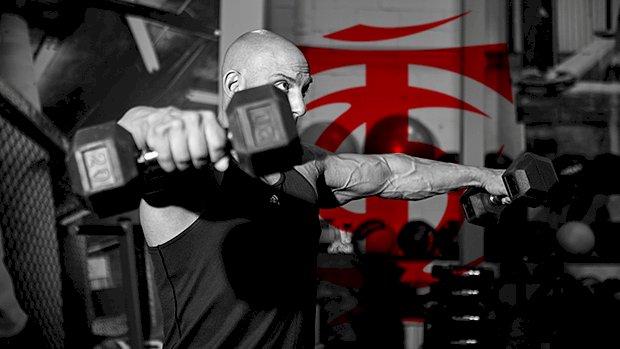 To make the lateral raise effective at recruiting the delts (and not just the traps) first focus on pushing the dumbbells AWAY, not on lifting them up. Try to bring the dumbbells as far to your sides as possible. They should only go up as a result of you pushing sideways. This minimizes trap recruitment. Here are three alternative exercises to try: 1. The Backpack Raise No, you won’t be doing lateral raises while wearing a backpack (although that would likely work too) but with resistance bands looped around your shoulders to keep them down. The traps get involved when the shoulders raise up instead of just rotate. The bands, by keeping the shoulders down, help you focus on the delts better. To set up, you step on the inside of the band and hook the other end around the shoulder. Then do that on the other side with a second band. The bands’ position on the shoulder is important. You want to place it on the AC joint, not on the trap. If the band is on the trap it will actually increase the recruitment of the trap by creating a greater mind-muscle connection with that muscle and a reactive contraction because of the pressure. You’ll still need to focus on pushing the dumbbells away instead of lifting them up, but the bands will make that a lot easier. 2. The Handcuff Raise with a Mechanical Drop Set For this one you’ll use a short resistance band looped around your wrists, like handcuffs. Use a band with only a small amount of resistance; no need to go crazy here since you’re only using it to shift the tension to the medial delts. Choose dumbbells that are a bit lighter than what you’d normally use for 10 strict reps. Let’s say a weight you could do 12-15 quality lateral raises with. The first step of the mechanical drop set is to do partial lateral raises with the band and dumbbells. Go as high as the band will allow, which should be around a third to a half of the way up. Do as many good reps as you can. Then immediately drop the band and do regular lateral raises with dumbbells only. Shoot for 8-10 reps. Then, drop the dumbbells and put the band back on and do partial reps (like in step one) with only the band. Don’t rest between each step of the mechanical drop set. If you want to set your medial delts on fire, this is the exercise for you! 3. The Incline Lateral Raise This is the “less cool” option but one that I’ve been using for at least 15 years successfully with people who have dominant traps. Sit down on an adjustable bench angled at around 30 degrees and do lateral raises from that position. Still focus on pushing the dumbbells out, not lifting them up. This greatly decreases trap activation, but you still have to focus on pushing the dumbbells far away from your side instead of
Origin: Tip: Your Lateral Raises Aren’t Working
 All about sport xlsport.club