
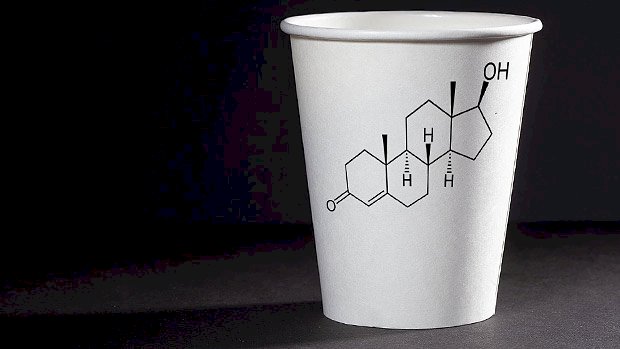
 The Healthiest Drink in the World That’s it. The contest is over. We knew coffee lowered the risk of heart disease, thwarted different types of cancer, protected your liver, lowered your risk of type 2 diabetes, and made you live longer in general, but the results of a new study cinch it. Coffee, I’m naming you the healthiest drink in the world. Granted, your previous accomplishments were all praiseworthy, but when the American Journal of Clinical Nutrition reported that drinking coffee has been found to elevate testosterone while simultaneously lowering estrogen in both men and women, I ordered the cake, rented out the local Moose Lodge, sent out all the invites, and blew up all the celebratory balloons for your coronation. What They Did Epidemiologists from Harvard University looked at data from 15,551 women and 7,397 men who’d participated in the Nurses’ Health Study and the Health Professionals Follow-Up study. They wanted to know how drinking coffee affected C-peptide levels, estrone, total and free estradiol, total and free testosterone, total adipokinectin, high-molecular-weight adipokinectin, leptin, C-reactive protein, interleukin 6, and soluble tumor necrosis factor receptor 2, among other things. What They Found Compared with non-drinkers, subjects who drank four or more cups of coffee a day had lower concentrations of estrone (-6.4%), total estradiol (-5.7%), and free estradiol (-8.1%), while displaying higher levels of free testosterone (7.3% in women and 3.6% in men), and total testosterone (9.3% in women and 5.3% in men). Levels of C-peptide, leptin, C-reactive protein, IL-6, and sTNFR-2 all went down too, while levels of the fat-burning hormome adipokinectin went up (9.3%). The effects were dose dependent, meaning that while one daily cup of coffee had some beneficial effects, two cups worked better and three worked better still, while four or more cups showed maximum benefits. Perhaps surprisingly, it didn’t seem to matter whether the participants were drinking caffeinated or decaffeinated coffee – the effects were largely similar. The researchers concluded the following: “Our data indicate that coffee consumption is associated with favorable profiles of numerous biomarkers in key metabolic and inflammatory pathways.” How to Use This Info So what is it about coffee that makes it so damn healthy to drink? It definitely has nothing to do with caffeine, as this study and numerous others – including at least one that measured the ergogenic benefits of coffee – found that the advantages were conveyed equally well by decaf coffees. Instead, it likely has something to do with the over 1,000 biologically active compounds found in the drink, but while many of them are highly anti-inflammatory and anti-oxidative, there’s one that appears to be particularly gifted in those areas. It’s known as chlorogenic acid, or CGA. Therefore it makes sense that we should seek out brews that are particularly rich in CGA. Here’s how to make sure you’re getting the stuff that raises testosterone and lowers estrogen the most: Opt for Kenyan, Ethiopian, or Columbian, because coffee beans grown at high altitudes and near the equator have the highest amount of CGA. If you’re buying grocery store brands, opt for Dunkin’ Donuts Original Blend and McCafe Premium Roast Decaf, medium roast. As far as general CGA guidelines, keep the following in mind: Flavored blends don’t usually have a high CGA content because they typically use low-quality, low CGA beans (the artificial flavor negates the need for good-tasting, high-CGA beans). Light and medium roast coffees preserve CGA, while dark roasts destroy them (along with generating undesirable byproducts like acrylamide, the carcinogen found in French fries and potato chips). Use fresh ground coffee beans when possible. Pre-ground versions usually lack flavor and are short on CGA. Very fine grinds are the most healthful, but also the most bitter. Medium grinds have an acceptable amount of
Origin: Tip: The Perfect Anabolic Drink
Tag: Anabolic
Tip: Eat More, Train More – The Anabolic Toggle
 How Do You Eat for Muscle Gains Without Getting Fat? First, you have understand that the metabolism is not a great multitasker. It likes to be building up fat and muscle (anabolism) or tearing them both down (catabolism). Trying to do both at once is the metabolic equivalent of patting your head and rubbing your belly. You can do it, it’s just not that easy… unless you’re a beginner or using anabolics. The trick here is to understand you have four different metabolic toggles to pull: 1 – Eat less, exercise more. This will burn fat and muscle because it creates a pretty intense and wide calorie gap through both exercise and food. Think marathon runner or skinny fat. 2 – Eat more, exercise less. This will put on both muscle and fat through creating a calorie gap in the other direction. Think powerlifter or muscle-fat. That latter scenario is what most people try to do when they want to gain muscle. It works, but it often makes you look like you just put a jacket on top of two sweaters. It’s not the best approach or the best look. This is usually creating a 500-calorie surplus or more, and that may be too much if the training isn’t right. 3 – Eat less, exercise less. Think the little old lady in Paris who climbs four flights of stairs six times a day, but eats only half a baguette, a cup each of coffee and wine, a radish, and some cheese. She stays lean because she drives the calorie deficit through diet and moves enough to not become a skeleton. 4 – Eat more, exercise more. That’s the toggle you want. It’s the athlete toggle. Ramp up your food intake to a slight surplus so you can gain some muscle. I suggest somewhere between 15 and 20 times body weight in pounds depending on whether or not you’re a hard gainer. If you tend to get “muscle-fat” easily (like me), stay near 15 to start. Now set your macronutrients to 40-30-30 (carbs, protein, and fat). You’ll need the extra carbs. Insulin is, after all, the most powerful anabolic hormone in the body. If you can’t get that fuel in the cell, you’re not going to grow no matter how much testosterone you have. Now turn on the training intensity like you’re a banshee in a bench, squat, and deadlift competition to the death. Doing things this way will amplify energy flux, reduce fat (or at least minimize its accumulation) and put mechanical pressure on the muscle to grow. If it’s not working, SLOWLY ramp up the calories until it does. My guess is you’ll end up in a slight surplus of 200-400 calories. This is the best way to
Origin: Tip: Eat More, Train More – The Anabolic Toggle
 All about sport xlsport.club