
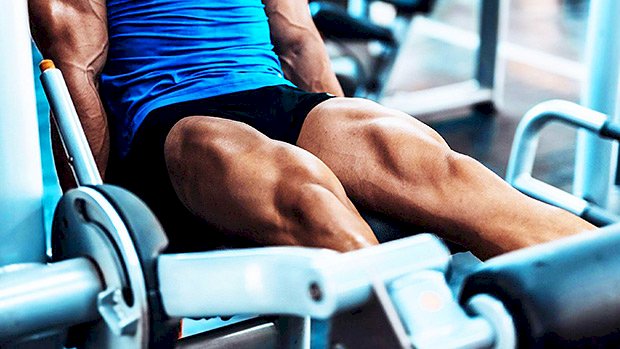
 Need to isolate your quads? Love hitting them with leg extensions? Great! But you’re probably shortchanging yourself on them. The rectus femoris extends the knee and flexes the hip. So to get a truly full contraction, the hip must also flex instead of staying idle in a traditional leg extension. To do this, add a hip hinge (bend forward) as you extend the knee. Once the concentric or lifting phase is completed, slowly lean back into the seat as you lower your legs to get back into a stretched position. This subtle change allows you to get more degrees of motion via hip flexion. Note: I know it looks like I’m rounding my back instead of hip hinging in the video. That’s because the tank top I wore was quite long on me. (5’4″ problems. Anyone relate?) Silly or Useful? Think about it: Lifters often manipulate hamstring exercises by leaning forward on seated leg curls or elevating their toes on RDLs. I know this exercise looks a little weird – maybe really weird – but try it before you knock it. Once you give it a shot, you’ll feel a deeper contraction than you’re used to on standard leg extensions. You’ll also notice that the added hip hinge forces you to control the movement instead of kicking with momentum. How to Program It You could either replace your regular leg extensions with this or do it on a separate day. My recommendation? Do it with high reps toward the end of a workout. Go to failure or very close. Let me know how flaming hot that burn in your quads
Origin: Tip: A Better Leg Extension
Tip: A New Way to Make Overnight Oats
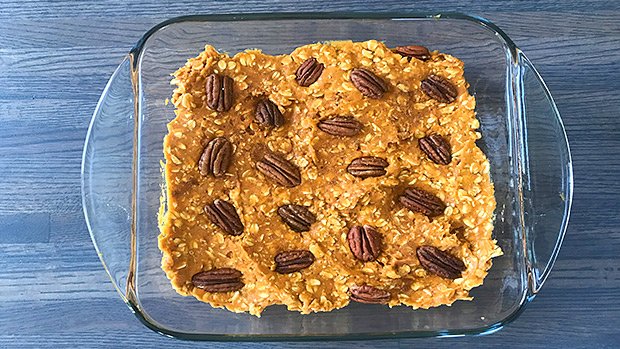 Oats Overnight Around twenty years ago, I stumbled upon something weird at a hotel’s breakfast buffet: a cold oatmeal dish. It was an odd mixture of old-fashioned oats, fruit cocktail, some type of cream, and probably a ton of added sugar. I had a feeling the hotel was just trying to get rid of their leftovers by combining them all into one dish, but I tried it. And it was pretty damn good. Then I fell into a sugar coma and was kicked out of the hotel for napping in a fern. Later, I started making a healthier version: oats, protein powder, and frozen berries. Mix it all up with water and let it soak overnight. Breakfast is served, no cooking required. It was delicious, so I threw the recipe onto the internet. Recently, “overnight oats” has been trending and there are a thousand variations out there… even a pre-made product, because apparently people are THAT damn lazy. I won’t say I invented it, but I think I helped popularize cold oats in the bodybuilding community. Well, here’s a new twist on the recipe. Overnight Pumpkin Oats Sorry to go all “basic white girl at Starbucks” on you, but yeah, this is a pumpkin spice recipe and, yes, my Uggs are super cute. Ingredients 1 Can pure pumpkin, 15 ounces (not pumpkin fie filling) 2 Cups rolled oats 5 Scoops (150g) Metabolic Drive® Protein, vanilla Handful pecans (about one-fourth of a cup) Ground cinnamon, nutmeg, ginger, cloves or allspice – to taste Optional: Splenda or equivalent low-calorie sweetener – to taste Directions Dump the canned pumpkin into a big bowl and mix in all the ingredients except the pecans. You’re going to think the protein powder and oats aren’t going to incorporate into the thick pumpkin, but they will. Just keep stirring. For the spices, I suggest a lot of cinnamon and a dash of everything else, but it’s up to you. It’s pretty tasty with cinnamon alone. Make it a couple of times and you’ll figure out what you like. It’s also perfectly fine without additional sweetener, but add a bit if you want it sweeter. Transfer the mixture to a flat baking dish or a Tupperware-type container. Spread evenly. Top with pecans and another dash of cinnamon. Cover. Refrigerate overnight or at least 4 hours before digging in. Calories and Macros This stuff is extremely satiating. You’ll be full for hours and you won’t fall asleep in the nearest fern. You might get six servings out of this, but I’ll assume you’re a big eater. Divide the dish into four big-boy servings and each one contains: Calories:376 Protein:33 grams Carbs:42 grams (8 grams fiber) Fat:9 grams
Origin: Tip: A New Way to Make Overnight Oats
Tip: Are Single-Joint Exercises Worthless?
 The Dawn of 30-Minute Workouts? When I first started lifting weights, I lifted for two hours a day, six days a week, because that’s what Joe Weider told me to do. Those weren’t his direct instructions, but that’s what was implied by the workouts of the professional bodybuilders featured in his flagship magazine, Muscle & Fitness. The trouble was, neither me nor any of the other poor newbies that followed that training template knew that all those freaks were on steroids. It just wasn’t talked about… ever. As such, we didn’t know that the drugs allowed them to get away with training so much and that we should have been following an entirely different set of rules. My two-hour workouts probably slowed my progress more than enhanced it, but worse than that was all the stuff I missed out on from being in the gym all the damn time. Missed parties! Missed weddings! Even missed funerals (sorry Ma, sorry Pa, sorry Aunt Trudy, sorry Duke)! I had so little spare time that the only woman whose touch I knew all those years was the female powerlifter whose calloused hand would sometimes brush against mine when she spotted me. For all that, I’ve often wished I’d put an axe in Joe Weider’s chest. Man, I’d do it now if I knew where he was buried and was willing to put up with all the flak from the woke people who’d be offended by my belated act of vengeance. Anyhow, as I grew more knowledgeable, my workout periods shrank by at least half and I made a lot more progress. Thank you, exercise science. But what’s this? A new study says I could probably halve my gym time AGAIN. It actually says that if I do multi-joint exercises, then all my single-joint exercises (biceps curls, triceps extensions, etc.) are a waste of time. That means no direct biceps work and no direct triceps work, among other things, and the findings even apply to steroid users, too. Could this be the dawn of 30-minute workouts? What They Did Brazilian scientists rounded up 30 male bodybuilders, each of whom had been training for at least three years. They split them up into four groups. The first group trained the primary muscle groups with nothing but standard multi-joint exercises for 8 weeks. The second group did the same multi-joint exercises for 8 weeks but added a few single-joint exercises to the mix. Now here’s where it got interesting. The third group mirrored the exercise protocols of the first group (nothing but multi-joint exercises) and the fourth group mirrored the workouts of the second (multi-joint exercises and single-joint exercises), but these two groups combined training with weekly injections of 600 mg. of a testosterone ester and 200 mg. of stanozolol. The workouts programs were fairly sophisticated. Each lifter worked out 6 days a week and they were required to vary rep ranges and rest intervals from week to week. A typical Monday/Thursday workout consisted of the following: A. Barbell Bench Press B. Incline Barbell Bench Press C. Military Press D. Pulley Elbow Extensions Since elbow extensions are a single-joint exercise, they were excluded from the workouts of both the natural and the steroid-assisted multi-joint exercise groups. Each lifter was also required to take in 2.5 to 3 grams of protein per kilogram of bodyweight. What They Found Adding single-joint movements to their workouts was pretty much a waste of time in both the “natural” group and, surprisingly, the steroid group. Those who did biceps curls made virtually the same amount of progress in both strength and size as the lifters who stuck to multi-joint movements. Those who did triceps extensions didn’t get any stronger – in their triceps or in their bench – than the lifters who didn’t do them. The steroid users, of course, made far greater gains overall than the natural lifters. The researchers wrote the following in their conclusion: “The addition of single-joint exercises to a resistance training program that already contains multi-joint exercises brings no additional benefit in terms of muscle performance and anthropometric changes in trained men, whether they are using anabolic steroids or not. “These results might help to design more time-efficient resistance training programs, since it suggests that trained men can save time not including single-joint exercises in their routines and still achieve optimal results.” What to Make of This Info I gotta tell you, the results of this study are a little disconcerting. Do we accept the results of this one study and stop doing direct work for biceps and triceps? Do we kick leg extensions to the training gutter? How about leg curls? At the very least, the study’s results probably still don’t apply to the pro bodybuilders that mucked up my early training days or their current counterparts. Unlike the steroid users in this study who used less than a gram of steroids a week, modern pros often use upwards of 3 grams a week. They’re so roided up that they almost undoubtedly still benefit from any and all
Origin: Tip: Are Single-Joint Exercises Worthless?
Tip: Everyday Lateral Raises
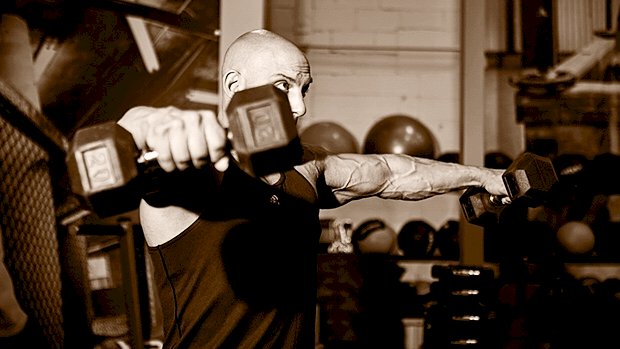 While becoming stronger for sets of 5-8 reps on the basic pressing movements is the key to great delts, there’s no doubt that properly executed lateral raises can help you get there faster. How? Both by directly developing the delts and by improving your capacity to recruit them so they’re better stimulated when you do heavy pressing work. When used to develop a solid mind-muscle connection, lateral raises can be done pretty much every day. Here’s why: First, they cause very little muscle damage. Muscle damage is created when you’re stretching the muscle fibers under load and tension. That occurs during the eccentric phase of the movement. In lateral raises, only the top quarter of the range of motion is under significant loading. Let’s say that in the finish position your arms form a 90-degree angle with your torso. Your delts are only under significant loading when the arms reach about 70-75 degrees. Before that you aren’t moving opposite the source of resistance (which is directly down). You’re moving more sideways than up. It’s the same thing when you’re going down – the deltoid (especially the medial head) will be under load only for the first quarter of the eccentric range of motion, which is when the muscle is shortened. When the muscle is stretched, there’s literally zero tension on the delts. On top of that, if you do the lateral raise properly (no swinging at the bottom where there’s no resistance and you can easily speed up), you won’t be using a lot of weight, which also decreases the amount of muscle damage. Since the movement isn’t neurologically demanding, it likely won’t hurt neurological recovery either. How to Make the Most of Lateral Raises Initiate the movement by trying to push away, not lift up. This will put more focus on the medial head of the delt and less on traps. Getting tension in the traps instead of the shoulders causes frustration for a lot of lifters. If you’re one of them, see my tip on this. This also works with the incline variation: Use zero momentum in the first half of the movement. From the bottom to a bit higher than the mid-range, the resistance is very low. You could easily do half of the lateral raise with 60-pound dumbbells even if you can only use 20 pounds for the full range. Since there’s very little resistance, creating acceleration in the bottom is super easy. The problem is, if you create enough momentum, it’ll take away from the muscle contraction work that occurs in the final portion of the range of motion. So do the first half of the movement under control; focus hard on not accelerating. At the top of the range of motion, hold for two seconds per rep. This is helpful for two reasons. First, the active range of motion is short; the delts only contract maximally for the last 15-20 degrees. That’s not a lot of time under tension to create muscle fiber fatigue and force adaptation. By holding at the top, you increase muscle fiber fatigue. And second, the hold helps develop mind-muscle connection. While holding the top position, also try to push out. This will switch even more of the stress on the medial head of the delt, which is the part that we really want to develop. Shoot for a set duration of at least 40 seconds. Since we aren’t causing muscle damage, we must rely on muscle fiber fatigue as well as lactate and growth factor accumulation to stimulate growth. This requires a bit more time under tension. With the two-second hold at the top, that comes down to around 12 reps per set. You can easily do 3-4 sets of 12 in this fashion every day to improve mind-muscle connection and stimulate
Origin: Tip: Everyday Lateral Raises
Nasty Ab Training
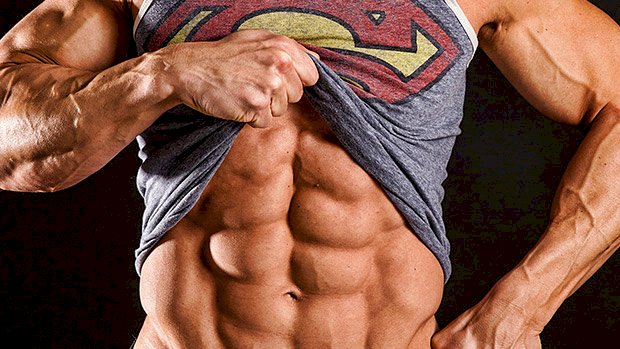 At some point, you’ll need to add resistance to your ab training to build an actual six-pack. And if you’re like most (somewhat masochistic) lifters, you also probably like that burning feeling you get after a ton of reps. Ab exercises just aren’t satisfying without a strong mind-muscle connection. Drop sets for abs can help you achieve both. You’ll start with a heavier weight or percentage of your own bodyweight, then drop to something a little easier and continue until you reach near-technical failure. Here are five cruel ideas to get the juices flowing. 1 – “Lower” Ab Blast A1. Decline Bench Garhammer Crunch x 8-15 A2. Flat Garhammer Raise x AMGRAP Do three rounds of these. What does AMGRAP mean? As many GOOD reps as possible. Don’t keep cranking away with bad form. Garhammer raise variations are great for hitting the function of the lower portion of your rectus abdominis, working it hard in its active range (through posterior pelvic tilt). They were invented by sports scientist John Garhammer, PhD, and popularized by the late Charles Poliquin. Using them as a drop-set is a good way to combine a more challenging, higher load variation with an easier version. This means you’ll hit the golden rep range for building those abs, achieve a longer time under tension, and fatigue more motor units. If these are too easy, then straighten your knees more. You can also vary the incline of the bench (more incline = harder). Be sure to keep your toes pointed inwards and focus on working the active range at the top – think butt off floor. 2 – Athletic Obliques A1. Cable Chop (left): 8-12 A2. Cable Tight Chop (left): AMGRAP Rest 30 seconds A3. Cable Chop (right): 8-12 A4. Cable Tight Chop (right): AMGRAP Only rest between A2 and A3. Go straight from one set to the next. Then rest as needed before you start the whole thing all over again. Do three rounds. Cable chop variations are some of the most effective exercises for building an athletic midsection, making your abs as athletic and strong as they look. Chops help build an efficient power transfer between your lower and upper body, meaning they’re great for athletes. Adding rotation to your training is a must if you want a good set of obliques. Start with your standard cable chop setup. Keeping your elbows straight throughout, swipe the cable horizontally. Engage your core and hips in a powerful transfer of movement (think of the whip of a baseball swing). Once you’ve completed your set on one side, continue the set by “dropping” to a stronger chop position. A “tight” chop simply means your elbows are going to come in tight to your ribs. By bending your elbows and bringing the cable in you’ll be able to lift more weight, or in this case get in a few more reps. Complete a drop-set on one side before switching to the other. 3 – Leveled-Up Planks A1. Iso Row Plank (left): 10-30 seconds A2. 3-Point Plank (left): 10-30 seconds Rest 30 seconds A3. Iso Row Plank (right): 10-30 seconds A4. 3-Point Plank (right): 10-30 seconds Rest for just 30 seconds between A2 and A3, but for everything else go straight from one set to the next. Then after A4, rest as needed before you start the whole thing all over again. Do three rounds. Are you still busting out traditional planks like your life depends on it? Well, hovering a few inches off the floor on all four limbs probably isn’t going to get you where you want to be. Sure, the plank is one of the most basic of core exercises to develop muscular endurance. And while there’s a lot of evidence this can help you with low-back pain and posture, most of life doesn’t happen planted statically on your toes and elbows. Try increasing the intensity of your planks by adding load and throwing in an anti-rotation component. Resisting extension and rotation will carry over far better to just about everything, from walking to landing a right hook. It’ll also hit those obliques and QL’s (quadratus lumborum) harder too. With an iso plank row, using a wider stance will allow you to use more weight, but feel free to go narrower if you’re chasing more instability. Start with the weight, drop it, then keep holding. It’s that simple. 4 – Ab Rollouts… But Harder A1. Banded Ab Rollout: 6-10 A2. Ab Rollout: AMGRAP Do three rounds and use a band you trust! It’s hard to beat an ab wheel rollout. It’s crazy how something that looks like it belongs on a late-night shopping channel has now become a staple in many strength and conditioning programs. Rollouts require a strong eccentric “braking” action on the way down to eliminate a face plant. Then it requires a co-contraction of your abs, obliques, transverse abs and lats to execute in full. The only downside is the loss of tension and reduced difficulty at the top versus the bottom of a rollout. It’s much harder at the bottom. And while you could technically do a drop-set starting with a weighted vest, or even starting on your toes, using a resistance band helps accommodate
Origin: Nasty Ab Training
Tip: Four Reasons to Use the 1.5 Method
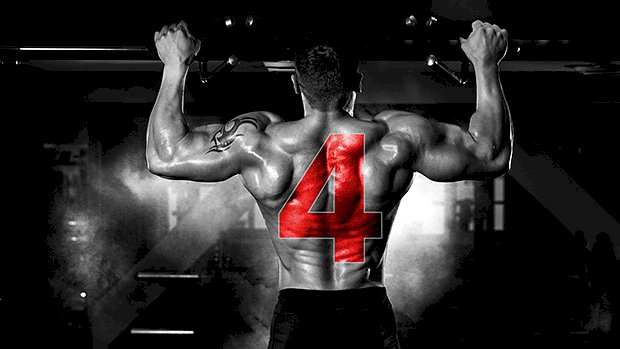 The 1.5 method is simple: Perform full reps with partial reps between each. Although 1.5 means “one-and-a-half,” quarter reps can also be used. Let’s break down the benefits and look at some different ways to use this proven training method. 1 – This method adds time under tension (TUT) to the portion of an exercise you might otherwise be under-loading. Determine the strongest half or quarter of an exercise, then do an extra half or quarter rep in that portion. It doesn’t matter how big the partial reps are – no one will be measuring with a goniometer. As a general rule, just avoid going through your sticking point. This will vary from exercise to exercise. For example, in a deadlift, if you struggle just below your knees, then stay above them for the extra partial reps. Here are some other examples: Snatch-Grip RDL, Half Rep at Top Lateral Raise, Quarter Rep at Bottom 2 – 1.5s increase TUT in the portion of an exercise that emphasizes a certain muscle. Decide what your target muscle is, then determine what portion of the exercise loads the muscle the most. For example, booty-builders might want to squat deep to get more hip flexion and glute loading. So do an extra partial rep at the bottom to, well, hit your bottom. (See what I did there?) To hit your pecs more in a barbell bench press, do an extra touch-and-go off your chest to really fire up those pecs. The top portion of a squat will emphasize quads more, so spend more time at the top with a partial rep. Bench Press, Quarter Rep at Bottom Safety-Bar Cyclist Squat, Quarter Rep at Top 3 – This method helps you spend more time in the portion of an exercise that better fits your structure. Certain exercises aren’t inherently “bad,” but there are positions and ranges of motion that might cause you a few issues if your structure isn’t suited for them. Determine the most “compromising” position of an exercise based on your structure and injury history, then spend less time in that position while creating more TUT in the safer position. Since you won’t be able to handle your normal weight using the one-and-a-half method, you won’t load your cranky positions as much, while still hammering the rest of the movement. For longevity purposes, this idea just makes sense. Dip, Half Rep at Top 4 – This method can be used to address a technique flaw. Pick the portion of an exercise you suck at, then spend more time there. Do you lose tension at the bottom of a squat? Then add an extra partial rep to work on it. Do you compensate at the top of a chin-up by rounding your shoulders forward? Spend more time at the top and work on it. Stop avoiding it and address the problem head-on! Parallel-Grip Chin-Up, Quarter Rep at Top Don’t sweat too much whether you’re doing an extra half or quarter rep – you can do and call it what you
Origin: Tip: Four Reasons to Use the 1.5 Method
5 Fat Loss Myths You Still Believe
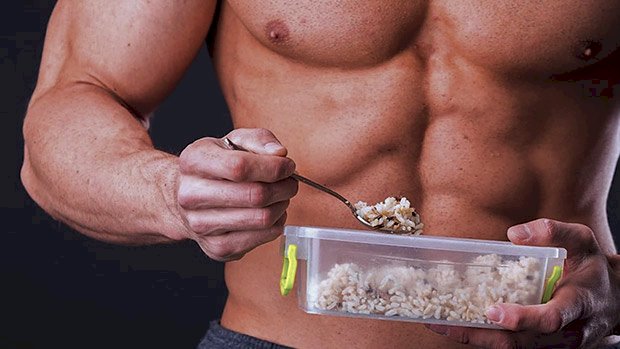 Myth – Carbs at night will make you fat. Since your overall activity is low before bed, and then you go to sleep, the carbs you eat around that period will deposit themselves as fat cells and lead to fat gain. Truth – Carbs at night can expedite fat loss. In a study of 73 fat police officers, researchers found that shifting carb intake to the evening meal caused more fat loss compared to having carbs throughout the day. It also improved insulin sensitivity and lowered inflammation markers (1). One of the theories behind the study was that if insulin was kept low throughout the day, and limited to a single secretion in the evening, it would lead to higher relative concentrations of leptin starting 6–8 hours later (into the next morning and throughout the day). They believed this would lead to greater satiety and dietary compliance each day. The argument against carbs at night is a common one: People believe you’re not as insulin sensitive and thus you’ll be more likely to store excess carbs as fat while you’re at rest. However, if insulin is kept in check for the day, and you’ve spent the day being active, that’s not an issue. You’ll be insulin sensitive at the end of the day and should store those carbs as muscle glycogen. My Recommendation Front load protein, back load the carbs. If you struggle with binge eating in the evening and you’re front loading all of your carbs, or simply dispersing them throughout the day, then moving all of them to your last meal could lead to better dietary compliance the following day. If you want to use this approach, then front load most of your protein in the early part of the day, or even spread it out evenly over four to five meals, then shift all of your carbohydrate intake into the last meal of the day. This strategy can also help with sleep for those who have trouble relaxing in the evening. The influx of carbs can also spike serotonin. A good night’s sleep has also been proven to help increase fat oxidation compared to those who are sleep deprived. So it’s a win-win. Keep in mind, carb back-loading doesn’t mean it’s a free-for-all where you’re pounding down an entire bakery of croissants. Plenty of people do that and those people are fat. Myth – You don’t have to count calories on a keto diet. Keto fans say carbs are what make you fat, not excess calories. Their butter, bacon, and cheese-laden recommendations are often part of the idea that you’ve got to eat fat to burn fat, regardless of caloric intake. Truth – Caloric intake above maintenance will still cause fat gain. One of the most misleading statements about keto diets is that calories don’t matter if you’re not consuming carbs. This stems from the insulin-to-obesity theory. It goes something like this… Carbs cause insulin to be secreted. Insulin (the storage hormone) stores those carbs as fat. So, eliminate carbs and you’ll stop storing fat regardless of calories consumed. Become a fat-burning machine. It’s true that getting into a state of ketosis will increase fat oxidation. After all, fat and carbs are the main fuels used in the muscles for oxidation during exercise. If you eliminate carbs, then eventually the body is left with no choice except to use fat as the primary source for fuel. Boom: increased fat oxidation. But there’s a difference in fat oxidation and a reduction in fat mass, which can only happen in an energy deficit. And if you’re consuming an excess of calories from fat, then the body will do the same thing with those excess calories from fat as it does with carbs: it’ll store them for later use. The reason that a ketogenic diet works well for some people is that it can increase satiation or feeling of fullness. This higher degree of satiation can naturally cause some to eat fewer calories, which leads to fat loss despite the fact that they may not be counting calories. My Recommendation The ketogenic diet will work for fat loss in the same way that every other diet works for fat loss – by creating an energy deficit. You cannot eat “as much as you want” on a keto diet and still lose fat simply because you eliminated a macronutrient source. From the data we’ve seen, keto does appear to increase satiation better than most standard diets which can help with dietary compliance and naturally reducing caloric intake. However, when calories and protein are equal, it’s not a significant advantage for fat loss (2). And on the flip side, the keto diet falls flat on its face when it comes to increasing muscle (3) (4). Myth – Intermittent fasting (IF) works better than any traditional diet. IF has become all the rage again. Heck, I’ve used it. I can attest to the fact that there’s an upswing in mental acuity during extended fasts, and to the fact that I never experienced any muscle loss while doing it (sometimes up to 70 hours of fasting). These things are definitely advantages of fasting protocols. At least they were for me and seem to be for anyone who has done extended fasting. The
Origin: 5 Fat Loss Myths You Still Believe
Tip: Eccentric-less Training For Size
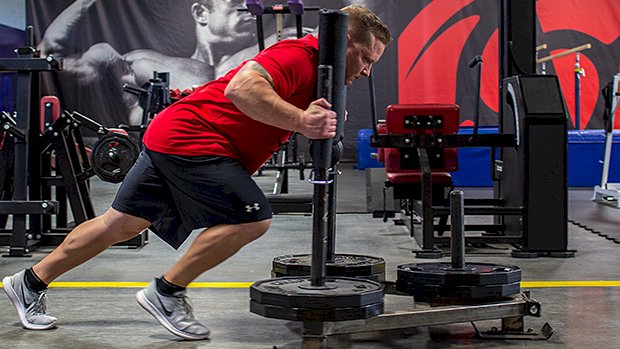 You might remember when I coached Daryl Gee for the Mr. Olympia. One particularity of his routine was daily “eccentric-less” training. It consisted of various forms of Prowler pushing and sled dragging. Remember, the eccentric phase of a lift is usually the lowering or negative portion where the muscles lengthen and stretch. Eccentric-less work removes that portion. If you think about pushing against a sled, each step forward against the weight is concentric. There’s no negative. I also used frequent sled work with a 63-year-old bodybuilder who was making a comeback. He wanted to get back into competing, but his knees were messed up. He couldn’t do any traditional lower-body exercises – no squats, leg presses, lunges, leg extensions, etc. He’d come to see me three days a week and we’d do various types of Prowler pushing and sled drags for his lower body. He ended up winning the overall against guys half his age and his legs were his best body part! He was also able to resume regular lower-body training afterward because his knees were fixed. Two Lessons From This Prowler/sled work is effective at increasing size or strength if you use the right parameters. This type of exercise can be done very often. Sled work is pretty much devoid of an eccentric load. As such, the amount of muscle damage created is very low. That means you can recover quickly. For hypertrophy, since you’re not causing much muscle damage, you must rely on other pathways to stimulate growth: Fiber fatigue Lactate accumulation The release of growth factors. All of these are maximized when the time under load is significant, but not so long that loading has to be light. So 30-45 seconds of work seems to work very well. If strength is your goal, opt for very heavy sets of 10-50 meters with an ideal distance of 30 meters. And, obviously, you can do sled work for conditioning. You can go as high as two minutes per set. I prefer to stay in the 50-70 second zone with either a challenging weight or a challenging speed. When you do frequent (even daily) Prowler/sled work, do one version per day for 3-4 sets. While very little muscle damage is done, you still use a lot of fuel when doing them, so you can end up releasing too much cortisol if you go too heavy on the volume. Note: The 63-year-old bodybuilder used 2-3 variations per workout, but that’s all he did on those workouts. If you add them to your sessions, select one variation per
Origin: Tip: Eccentric-less Training For Size
Your Guide to Pre-Workout Supplements
 What’s a “Pre-Workout” Anyway? It can mean a few things: A pure stimulant to jack you up before training, or a substance to get you mentally focused. A nutritional drink with the right carbs, proteins, and amino acids to fuel workout performance and subsequent recovery. A combination of one and two above. In short, pre-workout supplements are meant to enhance your performance in the gym. They can contain all sorts of ingredients that increase energy, improve blood flow to the muscles, or enhance focus. There are all sorts of formulations, but before you decide to buy a pre-workout supplement, you need to know the facts. Common Pre-Workout Ingredients Some pre-workout supplements are junk. The only legit way to know if a pre-workout is good or not is to simply look at the ingredient label. Marketers often lie, but the ingredients don’t (well, usually). Here are some common pre-workout ingredients: Beta Alanine Betaine Caffeine Creatine L-Citrulline L-Leucine Let’s go over the evidence and show what the clinical studies tell us about these ingredients. Beta Alanine Beta alanine is a naturally-occurring amino that’s responsible for giving you the “tingles” associated with some pre-workout formulations. Those tingles come from increased blood flow to the skin and muscles, which has an impact on performance. In one of the largest research papers published on beta alanine to date, researchers found that it could improve athletic performance by up to 10.49%. The research paper looked at dozens of clinical studies and found that simply taking two grams of beta alanine before a workout was enough to give users a boost in their athletic performance. According to researchers, beta alanine most likely works by increasing “intracellular pH buffering, as the result of increased muscle carnosine levels.” In layman’s terms, this means that beta alanine helps decrease cellular acidity levels from intense exercise. The bottom line is that beta alanine is a great ingredient to have in your pre-workouts, and it’s one of the best ingredients for getting a pump. Betaine Anhydrous This is a naturally-occurring chemical that’s produced by the body, but can also be found in foods such as spinach, beets, seafood, and wine. One study, cited by 70 other clinical research papers, found that supplementing with betaine anhydrous can improve muscle mass, endurance, and body composition. Specifically, the study found that the cross sectional area of the arms increased drastically when users supplemented with betaine. Bench press volume increased dramatically also, along with lean body mass. Caffeine Caffeine is, by far, the most common ingredient found in pre-workout supplements. The benefits of caffeine are very well studied. A meta-study of caffeine published in the British Journal of Sports found that caffeine consumption before a workout can help improve athletic performance by anywhere between 2% and 16%, which is a hell of a lot in the sports performance world. Creatine Creatine is naturally created in your body, and it’s essential to the production of adenosine triphosphate production (ATP). Your body needs ATP to create energy, and thankfully, creatine helps your body create more of the compound. One research paper, conducted at Baylor University and cited by 437 other clinical researchers, found that creatine drastically increased overall athletic performance: “Short-term creatine supplementation has been reported to improve maximal power/strength (5-15%), work performed during sets of maximal effort muscle contractions (5-15%), single-effort sprint performance (1-5%), and work performed during repetitive sprint performance (5-15%). Moreover, creatine supplementation during training has been reported to promote significantly greater gains in strength, fat free mass, and performance primarily of high intensity exercise tasks.” Creatine is especially known for its ability to help users gain muscle mass. Take a look at the following graph from the website Healthline: According to this graph, users can put on nearly twice as much muscle mass when training and taking creatine, as opposed to just training alone. L-Citrulline L-Citrulline, or citrulline malate, is known to enhance endurance and decrease muscle soreness both during and after your workouts. Citrulline also helps muscles recover faster. One study, conducted by the Department of Medicine at the University, found that supplementing with citrulline malate reduced muscle soreness by a whopping 40%, which is a huge deal because it allows athletes to get back into the gym a lot quicker. L-Leucine Among the amino acids, the one that has perhaps the biggest effect on regulating protein synthesis is leucine. It’s the main mTOR amplifier among amino acids. Although leucine is found in any whole protein source, some pre-workout blends add an extra amount of it for an added muscle protein synthesis punch. What’s the Best Pre-Workout Formula? So, what’s the best
Origin: Your Guide to Pre-Workout Supplements
Tip: End Pull-Up Humiliation
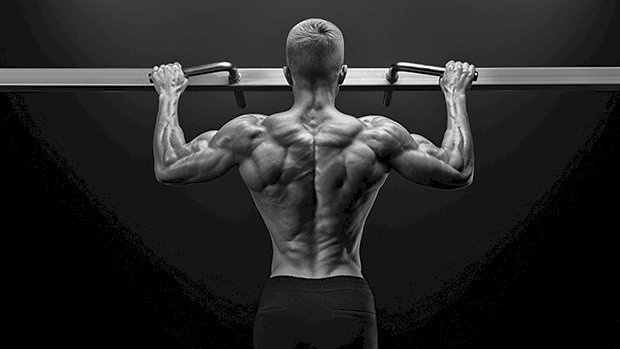 More than 30 years ago, my PE class tested everyone on pull-ups. I did two full reps at a bodyweight of 120 pounds – not exactly top of the class. My friend Dave didn’t fare much better. We decided we’d had enough humiliation and went on a pull-up rampage. A few months later I could do 14 reps and I was the third best in school. Dave was the second best and could do 17 reps. How did we train it? We chose the only way we knew – doing them every day. Greasing the groove and fine-tuning the nervous system works well for upping the reps in pull-ups, but we didn’t know anything about that. We just did it every day because we thought that was the best way to get better. We actually weren’t that far off! Frequency and Mixed Loading I’ve competed in powerlifting and bench press competitions for more than two decades. As such, the “big three” have been my main focus, but pull-ups have stayed with me as one of the main upper-body assistance exercises. Now I can do one with nearly double my bodyweight. Pull-ups are worth doing several times weekly, but not just with bodyweight – and therein lies the secret. Most people focus on improving the number of reps they’re able to do, but they should be concentrating on beefing up their pull-up 1RMs. This will actually increase your ability to perform more bodyweight reps. Here’s a program that will take you there. It still involves doing a lot of high-frequency training with bodyweight pull-ups, but the magic lies in the medium-frequency days that use pull-ups plus added weight. The Program To succeed, you should already be able to do at least several strict bodyweight pull-ups, which means you’re strong enough for added weight attached. Once you’ve checked that box, you’ll be alternating between two workouts: High-Frequency Training – Pull-ups using only bodyweight: 5 x weekly (weeks 1, 2, 5 and 6). Medium-Frequency Training – Pull-ups with added weight: 2 x weekly (weeks 3 and 4). Do bodyweight reps for the first two weeks. Week 3 and 4 will involve doing pull-ups with plates attached to your belt. You’ll then go back to bodyweight reps for weeks 5 and 6. Rotating between bodyweight and weighted pull-ups will give you the best of both worlds. The slightly lighter training and faster reps in weeks 1 and 2 will build power and set you up for the heavier, low-rep strength training in weeks 3 and 4. The lighter weeks will also give you time to recuperate from the heavier loads, but at the same time upgrade your technique and pulling power. As with any specialization program, when you do more of something, you should do less of something else for the rest of your body. Doing too much might halt your progress. Focus on a select few key exercises and your strength progress will likely be better. Start out by testing your 1RM (bodyweight + weights attached). Once you’ve determined that, start the program: Week 1 Days 1-5 – 2×5 reps Week 2 Days 1-5 – 3×5 reps Week 3 and 4 Day 1 – 2×5 reps (warm-up), then 3×2 reps with added weight. Use approximately 85-90% of 1RM. Day 2 – 2×5 reps (warm-up), then 3×2 reps with added weight. Use approximately 80-85% of 1RM. Week 5 Days 1-5 – 2×5 reps Week 6 Days 1-5 – 3×5 reps Week 7 Test your 1RM Remember, when you do pull-ups, pull with speed and force without getting sloppy. Stay tight, pressurize your abs, and pull like you mean it. The eccentric or lowering phase should be controlled. Not sloppy fast, not slow. Once you’ve tested your new 1RM in week 7, start over again while adjusting your poundages based on your new 1RM. Reasons to Do Pull-Ups in the First Place The pulling work aids in balancing out all the pressing work you probably do. The lats are also a very important core-stabilizing muscle group. Strong lats will benefit your bench press and give you a solid platform to press from. Strengthening your lats will assist in stabilizing the bar on your shoulders in a heavy squat and will contribute tightness in order to maintain proper upper-body stability in the
Origin: Tip: End Pull-Up Humiliation
 All about sport xlsport.club