
 Want to get in shape? Develop a mindset of unshakable determination and a belief that you can change yourself. Want to stay shackled to your current circumstances? Develop the belief that you have an illness and it’s out of your control. The American Medical Association (AMA) may be helping the obese do the latter. The Study Researchers studied the behavior of obese people who read an article regarding the AMA’s decision to call obesity a “disease.” Those who read the article were more likely to choose high calorie foods and less likely to self-regulate than those who didn’t. According to the study, the only upshot in believing they had a disease was that test subjects exhibited more “body-love” as a result. What This Tells Us Believing that your weight problem is a disease will make you more likely to embrace it. On the flipside, believing you have a problem that’s manageable, reversible, preventable, and within your power to change, will make you more likely to self-regulate and take the onus to lose weight. The self-esteem of these study participants may have been cushioned by a word that improved their body image, but is that form of “body-love” worth Type II diabetes, dependency on prescription meds, and a shortened lifespan? Obesity will not be reduced by making people feel comfortable about being obese, nor will instilling a false sense of helplessness and contrived victimhood. What You Can Take Away The AMA’s verbiage keeps fat people fat. Perhaps a better message would be that while genetics or medical conditions may load the gun, it doesn’t mean you have to pull the trigger and reload twice. You are not helpless when it comes to your fitness level and quality of life. Accept that and you’ll realize that new, better behaviors can mitigate the problem. The first step is to stop thinking like a victim. Off The Record Even if you’re not obese, you may have labeled yourself with other “diseases” – things you’ve accepted as unavoidable and unchangeable. Maybe you’ve accepted your fate as being skinny-fat, or a non-athlete, a hard-gainer, a junk food addict, a weakling, a wallflower, or a person with no self-discipline. If you’ve embraced these or any other self-limiting labels, then realize that you’re living up to low expectations. Chances are, these things are under your control. You just need to drop the helpless sufferer status and do something about it. References Hoyt, Crystal L., Jeni L. Burnette, and Lisa Auster-Gussman. “Obesity Is a Disease” Psychological Science, 24 Jan. 2014. Web. 9 Dec. 2014. “Labeling obesity as a disease may have psychological costs – association for psychological science.” Association for Psychological Science. 28 Jan. 2014.
Origin: Tip: Avoid Labels that Make You a Victim
Tip: The Fat Loss Hormones
 Hormones Matter It’s true that no hormonal issue, imbalance, or whatever, can negate a calorie deficit. But that doesn’t mean hormones don’t play a huge role in the fat loss process, and the proper regulation of the following is critical to how efficiently and easily you lose fat. Insulin Any time we eat, our bodies produce insulin to help shuttle the nutrients to where we need them – either to our muscle cells or fat cells. And in a perfect world (for physique purposes), we’ll eat so that insulin spikes around workouts to support performance, recovery, and growth. The rest of the time we’ll try to keep these spikes minimized. However, most people are constantly stuffing their faces throughout the day, resulting in constant insulin production. The problem is, the more insulin that gets produced, the less sensitive we become to its effects. That means the body becomes less effective at shuttling nutrients for workout recovery and muscle growth and more effective at storing excess fuel around your waistline. Takeaway: Get your doctor to test your resting insulin levels. This will go a long way in helping you determine your best diet. Focus on timing your highest carbohydrate meals around your workouts to maximize post-exercise insulin sensitivity. Leptin Leptin is produced in the fat cells and works by sending signals to your brain when you’ve stored enough fat and you don’t need to eat any more food. The fatter you are, the more leptin you produce. You’d think that having more body fat would make it easier to eat less food, but like trying to understand cryptocurrency, it’s not that simple. Similar to what happens with insulin, you can become leptin resistant. This happens when too much fat produces too much leptin, and the leptin signals stop getting sent to your brain. When this happens, the body thinks it’s starving and activates feelings of hunger, whether you need food or not. Takeaway: The best way to control leptin is to stay lean in the first place. Sorry, no soft-touch tips here. Ghrelin If you’ve ever been in a lean bulking phase and unintentionally skipped a meal, only to be met by ravenous hunger and a bellowing stomach, you’ve felt the effects of ghrelin. Ghrelin is responsible for the physiological feelings of being hungry. It’s produced in the stomach and it increases when your stomach is empty. Conversely, it decreases when your stomach is full. The less food you eat – like when you’re trying to lose fat – the more ghrelin your body produces as a response. Ghrelin can also be secreted at regular intervals when you’re not dieting. This is one reason starting a diet like intermittent fasting can be brutal for the first few days. Once your hormones adapt to the change in your diet, things get better. But ghrelin doesn’t care whether you’re trying to lose fat or not – it’s fired up and ready to devour anything you put in front of it. Takeaway: Eat at regular intervals to control ghrelin. Intermittent fasting can be a powerful tool in resetting and regaining control over hunger signals. Cortisol The stress you feel when you narrowly avoid a traffic accident is physiologically the same as the stress you feel when dieting, skipping out on sleep, arguing with your coworkers, and training hard. This stress causes the release of cortisol. Chronically elevated cortisol makes it easy to break down muscle tissue, easier to accumulate body fat (specifically belly fat), and it suppresses levels of beneficial hormones like testosterone and growth hormone. Elevated levels of cortisol are also associated with elevated levels of ghrelin, which is why your appetite increases in times of high stress. Takeaway: Stress is inevitable, so you need to find ways to manage it. Sure, iron therapy is great, but take a daily walk, find a few minutes of quiet time in your car before leaving the gym, or adopt a meditation practice. Thyroid Your thyroid hormones, specifically triiodothyronine (T3) and thyroxine (T4), are primarily responsible for the regulation of your metabolism, as well as supporting fat loss and muscle growth. Thyroid hormone levels are directly related to how we live our lives. Poor sleep, nutrition, and high stress can all reduce thyroid levels, as can chronic caloric restriction. This is one of the main reasons why, as you diet, your metabolic rate slows down. Takeaway: Make sleep a priority and avoid long-term strict caloric deficits, which can bring your thyroid to a screeching halt. Growth Hormone Growth hormone (GH) is one of the most powerful hormones produced by your body. Growth hormone stimulates cellular repair and to a lesser extent, muscle growth. More importantly, levels of growth hormone promote the burning of stored body fat for energy while simultaneously limiting the storage of fatty acids. Takeaway: Growth hormone naturally decreases as you age, which is why it’s often considered “the fountain of youth” hormone. To maximize natural levels of growth hormone, sleep 7-9 hours.
Origin: Tip: The Fat Loss Hormones
10 Nutrition Rules for Hardgainers
 The Blueprint for Gains When most hardgainers ask for advice, they’re told simply to eat more. Unfortunately, eating more doesn’t address the problems of raging metabolism, high stress hormones, poor digestion, and pathetic appetite that plague most skinny guys. But with the right guidelines and some hard work, you can say goodbye to your former skinny self – forever! Here’s the blueprint I used to pack 50 pounds of lean muscle onto my scrawny frame. Not only did it work for me, but it also worked for my clients and my athletes. It’s time for you to put the “gainer” back in hardgainer. 1 – Boost your appetite with the right amount of training. When it comes to building muscle, the most important thing is training. Even in situations that aren’t ideal, the body can build muscle to survive the threat imposed by training. Research has shown you absolutely can build muscle in a calorie deficit (if protein intake is high) (1). And anecdotal evidence from prisons shows that guys get jacked all the time, despite awful nutrition. This is not in any way suggesting that eating isn’t important. No skinny guy will gain a respectable amount of muscle without proper nutrition. However, you need to have your priorities straight. Muscle building starts with hard training, and perhaps surprisingly, hard training will improve your eating. Consider that one of the biggest obstacles a hardgainer has is a pathetic appetite. Hard training is one of the fastest, easiest ways to increase your appetite. It makes your body demand more food and this makes eating large amounts of food way easier. Oddly enough, your appetite can actually help you find your training sweet spot. Too little training will do nothing to increase your appetite. Too much training will actually decrease your appetite. The right amount of hypertrophy training will leave you ravenous! 2 – Tough out the two-week BMR increase and keep going. Research on lean, healthy subjects shows an increase in BMR (basal metabolic rate) for about the first two weeks with overfeeding (2). That means when you try to eat big, your body’s first response is to increase its metabolic rate. This is precisely why just eating more doesn’t always work for hardgainers. They take the advice, go out and start eating more for a couple weeks, and then find the scale won’t budge. Now the hardgainer thinks he’s a non-gainer. He gives up on nutrition and thinks some magical new biceps curl variation is the real secret to getting jacked. Look, this spike in your already naturally fast metabolism is part of the game. Don’t worry, it won’t keep increasing forever, but you need to be patient. You need time for your body to get used to consuming larger volumes of food. In fact, you may not even be able to eat and properly digest the amount of quality food you need to build muscle… yet. You need time to get used to eating more and following the other new lifestyle habits and strategies in this blueprint. Stay the course, let your body adapt, and the scale will start moving up. If you’re not in this for the long haul, you need a different hobby. 3 – Replace pre-workout stimulants with peri-workout nutrition. Hardgainers already have too many stress hormones pumping through bodies. As a result, losing muscle is fast and easy while gaining it is slow and difficult. Many hardgainers add even more stress to their bodies by abusing pre-workout stimulants. Remember, the only stimulant you “need” for a great training session is a strong mind, and instead of getting all hopped up on stimulants before training, fuel your body with peri-workout nutrition. It’ll give you extra protein, carbs, and calories without taking up room in your stomach or taking up time to prepare more food. Also, the insulin from the carbs has a powerful anti-catabolic effect, which shuffles the hormonal deck in your favor. 4 – Add menu items instead of increasing portion sizes. Think back to your childhood. Remember how you were so full that you couldn’t eat another bite of dinner? But then, when presented with surprise dessert, you regained your appetite. As a kid, I thought I had a separate dessert stomach. I now know it was just a case of palette fatigue. When you eat a lot of one type of food, your palette simply gets bored of that flavor and texture and you stop wanting to eat. When most hardgainers try to eat, they just eat more of what they’re already eating. They try stuffing down more chicken, rice, and broccoli, and it doesn’t work. Their palettes get so tired of the same stuff that they stop eating long before they reach the level of food necessary to build muscle. Instead of eating more, add more items to your meals. Increase the flavors and textures at your meal and watch the scale finally start to climb. For example, let’s say your typical breakfast consists of the following: 3 eggs 2 pieces of toast or oatmeal 1 apple Gradually add items until you get to this breakfast: 1 scoop Metabolic Drive® Protein in
Origin: 10 Nutrition Rules for Hardgainers
Tip: The 36,000 Reps Challenge
 I’m almost embarrassed to call this technique a challenge because it’s so darn easy. I’m afraid you’ll think, “Hey, if I wanted some lame exercise advice, I’d read Men’s Health,” but bear with me for a minute. The beauty of this “challenge” lies in its simplicity. Because it’s so easy, it’s infinitely doable and, given that you can do it week after week, infinitely sustainable. Despite its apparent ease, though, it works really, really well. 100 Reps Every Day Just pick one bodyweight exercise – one that correlates to some body part or lift you want to improve – and do 100 reps of it every day. For instance, if your bench press is a little shaky or has stalled out, do 100 perfect push-ups a day – in as many sets as necessary – for 7 days. You don’t even need to do the sets in succession. You can do one or two sets before your morning ablutions, another later on in the day after you sweep up the kitty’s hairballs, and a last one while Serbia and Iceland are battling for World Cup glory. It’s an absolute certainty that your bench will be a little sturdier or a little stronger after those 7 days. 36,000 “Bonus” Reps Per Year Once that challenge is over, start another one. If your squat is lagging, do 100 walking or stationary lunges (50 per leg) every day for a week. Even 100 full-range bodyweight squats would work, but feel free to do them goblet style holding a small weight if the bodyweight thing is just too easy for you. You might follow that up with a week of single-leg Romanian deadlifts to shore up your glutes and hamstrings, or 100 burpees a day to strengthen the ol’ ticker. Keep doing the challenges every week. It doesn’t matter if you do the 100 reps in 10 sets or 1 set. As they say, you’re only limited by your imagination, and maybe your slothfulness. After a year, you’ll have added over 36,000 reps to your training, and you’re loopy if you don’t think that’ll make a difference in how you look or perform, even if the reps are low resistance. Try This One One of my favorites is side step-ups, using a milk crate, step stool, or your little brother’s back. You could even get away with doing it on an ordinary stair, provided you make one modification: Instead of touching your foot to the floor, touch your heel lightly to the floor and start the next rep. This prevents you from pushing off with that leg and makes the move a helluva’ lot
Origin: Tip: The 36,000 Reps Challenge
Tip: The Triple Pyramid Conditioning Challenge
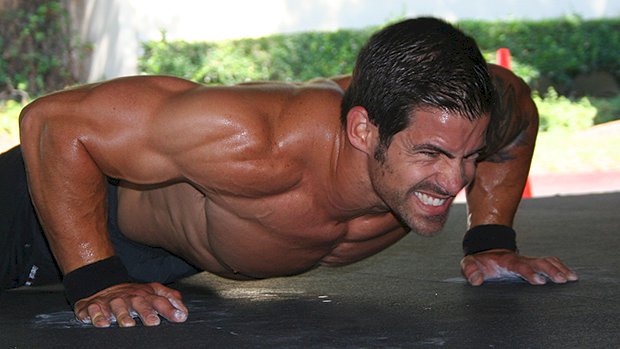 Try something a little different to measure your progress and to test yourself. This challenge will do just that. All you need is a power rack (or Smith machine) and a bench. And, well, maybe a mop. The Challenge This challenge consists of horizontal rows, push-ups, and rear-foot elevated split squats. Set up your space so you can use the bench for all three exercises and go at it. Do one horizontal row, one push-up and one split squat per leg. That’s the first round. Without rest, do another round, only this time you’ll do 2 reps of each (4 for the split squat, 2 each leg). So in round two your reps will be 2-2-2-2, then 3-3-3-3, 4-4-4-4… up to 10 of each exercise as you go up the pyramid. Then make your way back down the pyramid with 9-9-9-9, 8-8-8-8… to one of each at the end. Try to move immediately from one exercise to the next without any rest at all for the duration of the challenge. (Good luck with that.) You may think the challenge is too easy for most of your trip up the pyramid, but at some point after 6 reps, you’ll discover the joy of suffering. Modifications The great thing about the Triple Pyramid is that it’s infinitely adaptable. Each exercise can be modified to make it harder or easier. For the horizontal rows, you can bend your knees to get your feet under you and make it easier. To up the intensity, you can stretch your legs out, place your feet up on the bench and/or add a weight vest. Modify the push-ups with different hand placements (wide vs. narrow; on the floor or on the bench), foot placement (on the floor or elevated on the bench) or with extra load (weight vest). You can make the split squats easier by switching to body weight squats or you can make them harder with added load like kettlebells, dumbbells, or by using the Smith machine. 20 Minutes of Suffering This challenge should take about 20-25 minutes, but it shouldn’t be a race against the clock. Keep your form strict and controlled along the way to maximize time under tension. If it takes you less than 20 minutes with good form, you’ll want to move to a more challenging version of the exercises. Throw the Triple Pyramid in at the end of a regular workout for some extra metabolic conditioning or make it a stand-alone workout during an (almost) off-day, a metcon day, or a
Origin: Tip: The Triple Pyramid Conditioning Challenge
Tip: Go Heavy to Retain Muscle
 Keep Lifting Heavy While Getting Shredded You’ve been training hard and heavy on basic movements while trying to gain as much muscle as possible. Now that you’re on a diet you must give your body a reason to hold on to this new muscle tissue. High-intensity strength exercises (in the 70-100% range) are better than low-intensity strength exercises (in the 40-70% range) while dieting. The higher training loads help you preserve strength and muscle while on a reduced calorie diet much better than super-high volume/low-intensity workouts. Believe it or not, the human body is more interested in survival than being a hulking hunk of manhood (or a chiseled Wonder Woman). So energy reserves such as body fat are more precious than muscle tissue since the latter actually consumes energy. When calories are dropped, we enter a survival mode and the energy-costly muscle mass goes away – it’s broken down into amino acids and then transformed into glucose for energy. To keep your muscle mass, you must give the body a reason to do so. Will lifting light weights do it? No. You need to continue to lift heavy, otherwise some muscle will go to waste! You’ve Been Lied to We’ve been brainwashed by the muscle magazines to believe that you should do high-rep training for definition. This is absolutely ridiculous! Sure, you use a little more energy during your workout, but think about it: the higher the training volume you perform, the more energy you need to recover from your workout. The more glycogen you burn while strength training, the more carbs you’ll need to recover and progress. If you’re on any kind of cutting diet, chances are that you’ve lowered your carb intake quite a bit. So you need more carbs, but you’re actually giving less to your body! Furthermore, while on a hypocaloric diet your body has a lowered anabolic drive, meaning that it can’t synthesize as much protein into muscle as it does when you’re eating a ton. A super-high volume of work leads to a lot of microtrauma to the muscle structures. A lot of microtrauma requires a great protein synthesis increase, which your body can’t do at this point. So if you use high-volume/low-intensity training while dieting, you’ll break down more muscle and build up less. Not exactly good news. Perhaps one of the greatest benefits of high-rep training is an increase in blood and nutrient flow to the muscles, but if you have a reduced amount of nutrients available in your body, this benefit is pretty much wasted. Repeat after me: I will use my diet and cardio/metcon work to stimulate fat loss. I will use strength training to maintain or gain muscle. That’s the bottom
Origin: Tip: Go Heavy to Retain Muscle
Hard Body Training for Women
 Here’s what you need to know… Women tend to have a higher pain tolerance when it comes to training, can recover faster between sets, and are able to sustain a higher volume of work. Men are welcome to try the program, but they may not be able to hang! This program has you training the same muscles two days in a row: heavy lifting the first day and pump work for the same muscles the next day. Training the same muscles two days in a row facilitates recovery and lengthens the duration of the anabolic phase. The workout plan calls for five mandatory training days per week with an optional sixth day. That extra day will help you get leaner super fast, but you’ll get amazing results with just the five main workouts. What To Expect This program will be uncomfortable at times, painful at others. It will force you to focus on performance. You’ll get stronger, faster, more powerful, and more resilient. The end result will be fat loss, more muscle in the right places, and a strong body. This is the type of training I used with one of my clients who won her first two physique competitions this year, training without drugs, while having two kids and a full time job working construction. Can Men Do It? Maybe, If They’re Woman Enough Can guys do this program? Sure, they can try. Muscle is muscle and we’re all the same species, but women don’t have the same needs when it comes to building an aesthetic physique. They don’t need to emphasize building the pecs. Instead, they need more focus on the glutes. And since they need muscular but not massive arms, tons of direct arm work isn’t necessary. Women also tend to have a higher pain tolerance when it comes to training. Females can recover faster between sets, and are able to sustain a higher volume of work during a session. So if you’re a guy, you’re welcome to try the program, but it will be even more uncomfortable for you! The Basic Structure The program calls for five mandatory training days per week with an optional sixth day. That extra day will help you get lean faster, but you’ll get amazing results with just the five main workouts. This program uses a cool concept: train the same muscles two days in a row. You hit them hard with heavy lifting the first day and then you do pump work for the same muscles the next day. This actually facilitates recovery and lengthens the duration of the anabolic phase. Protein synthesis stays elevated for 24 hours post-training, but by having a second session the next day that’s less traumatic, you extend protein synthesis significantly, thus building more muscle. It’s important that the second session is pump work and not heavy lifting, though. We don’t want to cause any muscle damage on that second day. We only want to activate the cell signaling responsible for stimulating hypertrophy and pumping nutrients into the muscles. I also include metabolic conditioning (metcon) to get you lean fast without risking the loss of muscle mass. The metcon will actually help you build more muscle while getting leaner. Explosive work also plays a big role in the program. It increases the insulin sensitivity of muscle, making you more prone to storing ingested nutrients in the muscles instead of the fat cells. Additionally, explosive work gives the body a harder, more sculpted look by improving myogenic tone. The schedule looks like this: Monday: Lower body strength/hypertrophy work Tuesday: Lower body pump complex/lower body metcon Wednesday: Upper body strength/hypertrophy work Thursday: Upper body pump complex/upper body metcon Friday: Optional sprint/energy systems session Saturday: Whole body explosive work Sunday: OFF Load Progression The program uses two main systems of progression: programmed progression and double progression. Programmed progression refers to a cycle where the weights are planned in advance based on your 1RM. So you’ll need to establish your maximum load for one technically solid rep on the back squat, push press, and power clean from the hang. The percentages used during this whole program are all based on that 1RM. Double progression is a system where you have a target rep range instead of a precise number of reps to do, 6 to 8, for example. You will use the same weight for all your work sets. The goal is to be able to do all the work sets with the upper limit of the range (8 in our example) with the same weight. When you’re able to do that, you increase the weight at your next session. If you can’t get 8 reps for all of your work sets, that’s fine, but it means that you’ll keep the same weight during next week’s workout. So when you see a percentage given for an exercise below, it uses the planned progression. When you don’t see a percentage, it means you’ll use the double progression approach. The Program Monday Exercise Wk Sets x Reps %1RM Rest A Box Jump 3 x 10 B Back Squat 1 2 3 4 5 6 7 8 9 10 5 x 4 5 x 5 5 x 6 3 x 3 5 x 3 6 x 3 3 x 3 3 x 2 3 x 3 Test Max 80% 80% 80% 90% 90% 90% 95%
Origin: Hard Body Training for Women
The New High Frequency Training
 Here’s what you need to know… Training more often is better for building muscle than cramming more and more into a long workout. Ideal High Frequency Training (HFT) exercises include pull-ups, push-ups, dips, lunges, single-leg squats, and single-leg deadlifts. Do one of these exercises every day outside of your normal workout, adding a rep each day. Use HFT for the long haul. The best gains come in the last two months. You may find yourself being the most muscular you’ve ever been. Long Workouts vs. More Frequent, Short Workouts There’s a mind-numbing array of training programs out there. But most modern programs fail to provide faster muscle growth than lifters achieved in 1969. True, today’s bodybuilders are much bigger than they were then, but that difference is largely due to drugs. Why so little progress? There are two possible conclusions. Maybe we’ve already tapped out our ability to grow muscle as fast as our physiology allows. Maybe we can’t achieve hypertrophy at a faster clip because our genes have a limit set. There’s still a better way that no one has figured out yet. From a training perspective, there are only two possible angles for cracking the hypertrophy conundrum: Stimulate more growth in a single workout. Train more often. If we consider option #1 and put our energy into figuring out a way to get more growth out of a single workout, we quickly run into a wall. How can I say this? Because if 100 sets of curls over the course of two hours could add an inch to our biceps, we’d all find time to do it. Furthermore, this hypothesis is easiest to test. Every guy who’s tried a four-hour training session ultimately realized how futile and impractical that approach was for muscle growth. I’m not saying that option #1 is unequivocally a dead-end. But if the answer is that we need significantly more volume in a single workout, I have no idea how to approach it without inducing severe stress to your immune system and joints. So that leaves us with option #2: train more often. If there’s one irrefutable truth about training for hypertrophy, it’s that twenty workouts can build more muscle than four workouts. The question then becomes one of fatigue and recovery. How can you manage them? Most lifters train a muscle group three times per week or less, so I categorize training four or more times a week as High Frequency Training (HFT). I’ve been experimenting with all sorts of HFT programs since 2001. If your primary goal is muscle growth, this new version was built for you. HFT Overview Choose one exercise that you’ll train every day, like pull-ups or push-ups. Follow your usual training plan at the gym, but hit this extra exercise every single day following the rules and progression plan below. 1 – Start with Less Than You Think You Need If you forget everything else about HFT, remember rule #1 because it’s the key element – you’re much better off feeling like the first few weeks of a targeted HFT plan are too easy. On January 5, 2011, I embarked upon a six-month long daily pull-up journey. The day I started, I did five pull-ups from the bar I had hanging in my doorway. The next day I did six reps. I could have easily done 20 reps at a time, but I didn’t. I was in it for the long haul and I had already learned my lesson by doing too much too soon. On July 1 of that year I did 182 pull-ups spread throughout the day. The day before I did 181 reps. The day before that it was 180 reps. Yet I had absolutely no soreness or joint pain during those final days. The reason was because I spent six months slowly building up to that volume. When you look at my new rules of a targeted HFT plan, I know you’ll think you can start with more reps, but as my Russian gymnastics coach likes to say in his thick accent, “Just because you can doesn’t mean you should.” Here’s what to do: Start with an exercise that you can do for 12-22 reps while fresh. Let’s say you can do 13 straight pull-ups. Split that total into two sets, as evenly as possible: in this case, 1×7 and 1×6. That’s how many reps you should do on day 1. The next day add an extra rep. So you’ll do two sets of 7 reps. Spread those sets out as far as possible. It’s best to do one set in the morning and one in the evening. This won’t seem necessary in the early days when the volume is low, but once you keep adding reps day after day and reach 60 reps or more it becomes invaluable and necessary to spread the sets throughout the day. 2 – Choose the Right Exercises and Use Perfect Technique Perform every rep with perfect form. There’s no excuse for sloppy technique when you’re doing half as many reps per set as you actually could be doing. Here’s a list of some of the top exercises to use for the HFT methodology explained in Rule #1. Whatever exercise you choose should be removed from your current training program (the one you do in the gym). Pull-up: Ideally, perform them from rings. If rings aren’t an option, use a hammer grip (palms facing
Origin: The New High Frequency Training
Tip: The 4-Second Negative
 Quality, Then Quantity This is especially relevant to anyone with recurring injury issues, as well as people who are relatively new to lifting. We often become myopic when it comes to the idea of progressive overload, assuming that it always means putting more weight on the bar each week. Adding load has an important place in legitimate training, but if your biomechanics are shaky, that heavier load will do more to wreck your joints than to make you bigger or stronger. Let’s be real for a moment: If you squat 185×10 with collapsing knees and a rounded low back, do you really think it’s wise to add more weight? One Way to Boost Workout Quality Sometimes, improved quality simply translates to slowing things down and just exerting better command over the loads you’re lifting. If you typically use the “easiest” lifting speed in your constant attempts to add more weight to the bar, you really don’t have much margin for continued improvements. Consider a different approach: Lighten things up and use a 4-second eccentric (negative) tempo. Then pause for a full second at the bottom, and finally, return to the start position with an aggressive but controlled concentric. It’s All About Stress Muscles only know stress, not how much weight you’re using. Most people report significant soreness after trying this technique, despite using lighter weights. One additional perk is that slowing things down serves to increase confidence. After all, if you can lift a given weight using a slower, more difficult tempo, it means you’ve got some margin available for heavier weights next time
Origin: Tip: The 4-Second Negative
Tip: A New Way to Hammer the Hammer Curl
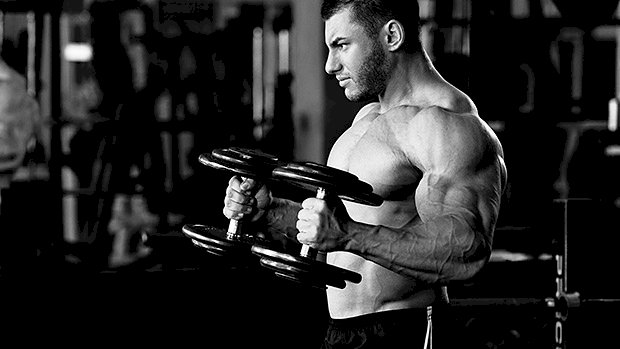 A “muscle round” is where you use a weight you could normally do about 12 reps with, but only do 4 reps with it. You rest 10 seconds and do another 4 reps. Do this 6 times. Then, on the last mini-set, you do as many reps as possible (AMRAP): 4 reps, rest 10 seconds 4 reps, rest 10 seconds 4 reps, rest 10 seconds 4 reps, rest 10 seconds 4 reps, rest 10 seconds AMRAP Here’s what it looks like with preacher hammer curls: Do these on the vertical side of a preacher bench. (If you use the angled preacher bench, there’s virtually no resistance at the top of the movement.) This gives you a built-in work to rest ratio because you’ll be swapping hands on each mini-set. The right arm does 4 reps, the left arm does 4 reps; back and forth like this for the entirety of the round. Do 2 complete muscle rounds to light the brachialis up, taking 2-3 minutes between each
Origin: Tip: A New Way to Hammer the Hammer Curl
 All about sport xlsport.club