
 Reality Check Here’s a question we received recently: “How often do you have to train each week to get 19-inch arms?” Let me offer some hard-earned perspective. I’ve been lifting for a long time. I was always cursed with crappy arms. The late Charles Poliquin used to call me some German term that translated to “Asparagus Tarzan.” Whether he meant I was a half-naked savage raised in the jungle by a tribe of asparagus or that I had arms like spears of asparagus, I’m not sure, but I think it was the latter. Anyhow, I’ve tried every program, every training style, every trick known to bodybuilding, but my arms are still my worst body part. Part of it’s because my arms are long. Want that box of cereal on the high shelf? No problemo. But filling in that long vista of space between my shoulders and elbows with muscle? Sigh. The only thing that ever worked, remotely, was a piece of advice from again, Charles Poliquin. In his experience, he said that you had to gain roughly 15 pounds of bodyweight for every extra inch you added to your arms. True enough, when I went from my usual fighting weight of 215 to 220 pounds to 235 pounds, my “biceps” (more accurately, my arms) grew about an inch. Still, by his reasoning, I would have had to gain another 15 to 25 pounds to get even close to 19 inches. Wasn’t gonna’ happen. Wasn’t the look I wanted, anyhow. And when I went back to my fighting weight, I wasn’t able to sustain the added size for long, which probably means that some of the added arm size was blubber. What I’m trying to say is that the size of your arms is largely genetically determined. I fully realize that right now there are a bunch of genetically gifted guys reading this that are hollering all kinds of synonyms for bullshit, but these guys know nothing about being a hardgainer. They might suggest that someone like me needs to train more, and if that didn’t work, I need to train less. They might say to lift heavier, lift lighter, do drop sets, work them once a week, work them twice a week, eat more, sacrifice a heifer to the biceps god, and so on. Eff ’em. I’ve tried it all. Most of these guys, however, could fold laundry and still grow giant arms. What I’m saying is that if you’re regular folk and want big(ger) biceps, follow the regular rules of bodybuilding: Train the whole body. Get good at the big lifts. Consistently eat more calories than baseline. Do lots of pull-ups and close-bench bench presses. After all that, if it’s in your genetic cards, you’ll get your 19-inch biceps. If not, focus on less stubborn body parts. But if having huge guns means that much to you, there are always steroids, in which case the old “gain 15 pounds rule” goes out the
Origin: Tip: Can Anyone Build 19-Inch Arms?
The Best Damn High Volume Workout Plan for Natties
 In Olympic weightlifting, the word “tonnage” is used to indicate how much total weight was lifted during the session. We also call it the “volume of work.” Tonnage is important, but when it comes to hypertrophy and the natural lifter, there’s an optimal dose. If a natural lifter goes overboard on volume, he or she will burn out their nervous system or skyrocket their cortisol – both of which will make gains stall. But I developed a system for natural lifters using high volume. Before we get to it, let’s take a look at who we’re talking about here and what their bodies do. 4 Kinds of Lifters Different people are stimulated by different types of training: 1 – Volume People Lifters who naturally prefer to perform a greater number of sets to achieve muscular stimulation. They normally don’t push each set as hard to be capable of doing the planned volume without crashing. If you follow the various experts, Dr. Mike Israetel, Pat Davidson, and John Meadows fall in that category. For them, gradually increasing volume over time is the main driver of hypertrophy. 2 – Intensity People These are people who prefer to do fewer work sets, but push these extra hard – to failure (or very close to it) or even beyond. Dr. Scott Stevenson, Dorian Yates, Mike Mentzer are good examples. Paul Carter’s preferred style is also more slanted toward intensity than volume. 3 – Load People These people are mostly about adding weight to the bar. We’ll find them more often among the powerlifting crowd, or they see themselves more as powerbuilders. In that category we can have a wide variety of approaches, from linear progression/progressive overload to the conjugate model. But they have one thing in common: strength is the number one goal. Think: Jim Wendler. 4 – Process People They’re all about precision. Perfecting their technique, writing down everything, analyzing data, and seeing a well-planned program deliver results is what they train for. They’re all about minutia and often suffer from paralysis by analysis. We don’t have that many of them among bodybuilders or strength athletes. Sure, many lifters love geeking out over technique and data, but it’s not their number one priority. Note: This type tends to be common among keyboard warriors who love to argue about everything and then need studies to allow themselves to try something new. When Hypertrophy Is The Main Goal Among those who are mostly interested by muscle gain, we have mainly the volume and intensity people. The intensity people tend to kill themselves and get worse results when they go higher volume because they can’t scale down their effort. They are all-out or nothing. And if they force themselves to “stop short” they don’t feel satisfied and it kills their motivation. The volume crowd often burn out on high intensity programs because of the high adrenaline/cortisol it produces. They’re often unable to reach the required level of intensity to make low volume work and, even if they do, the low volume is unsatisfactory and kills motivation. Cortisol – Enemy Number One Cortisol is the enemy of the natural lifter trying to get jacked. It can limit muscle growth, if chronically or excessively elevated, by: Making protein breakdown higher than protein synthesis Increasing myostatin levels (which inhibits muscle growth) Inhibiting the immune system (muscle damage repair is driven by the immune system) Reducing nutrient transport to muscles There’s a strong connection between training volume and cortisol production. One of the functions of cortisol when training is the mobilization of stored energy so that you have enough fuel for your workout. The more volume you do, the more fuel you require and this means more cortisol release. Understandably that’s one of the reasons why, if you reach a certain amount of volume in a workout, results will start to diminish. However, intensity (and load) can also increase cortisol. See, we often call cortisol the stress hormone, but “readiness hormone” would be more accurate. Basically, cortisol’s purpose is to put you in a physical and mental state to be able to fight or run away. It mobilizes energy so that you don’t run out of fuel in the middle of the fight, but it also increases mental alertness and focus, blood flow (to deliver oxygen to the muscles), and muscle contraction strength. The latter three are done indirectly via an increase in adrenaline levels. So let’s get into that. How Cortisol Increases Adrenaline It does so by increasing the amount of the enzyme responsible for converting noradrenaline into adrenaline (Phenylethanolamine N-methyltransferase). The more a situation requires alertness and drive, the more adrenaline you’ll produce which means that cortisol goes up too. In lifting, the more threatening a set is, or the closer to your limit you go, the more adrenaline/cortisol will be released. A “death set” will spike adrenaline a lot more than a set with 3-4 reps in the tank. A max effort lift will also
Origin: The Best Damn High Volume Workout Plan for Natties
Tip: 3 Ways to Get Growing Again
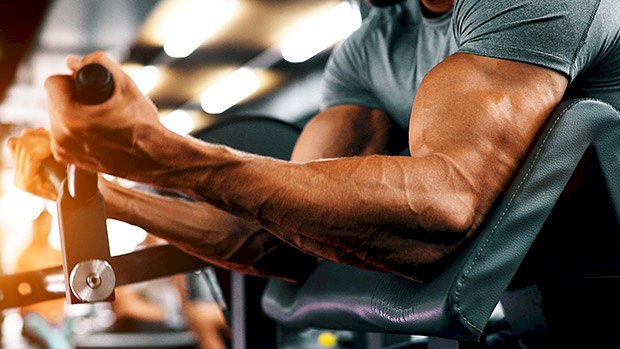 We get this (extremely vague) question often: “My gains have stalled. What do you suggest?” It’s tough to answer since we don’t know your main goals, your age, or even if you’re a girl person, a boy person, or one of those people who identifies as a lesbian parakeet. But here’s some general advice: 1 – Do the opposite. There are tons of great training programs here on T Nation, but the best one is probably the one that’s the most different than the one you’re doing now. Here’s an example. Back in 2005, not-yet-a-Dr. Chad Waterbury introduced a training system based around doing 10 sets of 3 reps. Not 3 x 10, but 10 x 3. And T Nation readers who adopted the program reported great gains in muscle and strength. Now, there’s more to the program than the set/rep scheme, but doing 10 x 3 was radically different than what most lifters were used to doing. It presented a new challenge, recruited motor units that had been largely dormant, ramped up force production and, in short, “shocked the system” and triggered new adaptations in size and strength. So take a look at how you’ve been training for the past few months. Now, do the opposite: Always do 12-15 reps? Then load up the plates and do 3-5. Always train super heavy for low reps? Then lighten it up and shoot for 60 seconds of time under tension for each set. (Set a timer and try not to poop out your spleen.) Always use barbells because “free weights are best?” Switch to a mostly machine-based program. Always do decline barbell presses? Do inclined dumbbell presses. Train 6 days a week? Train 3. Or vice-versa. You get the idea. Or just adopt someone else’s program. I know, the internet experts often advise people to avoid “cookie cutter” programs, but they can be valuable. Any program from the T Nation archives is probably going to push you harder than you push yourself. And it’s probably going to force you to try some new things. 2 – Do something that excites you. Several T Nation coaches have said it: Training very hard using a substandard program is better than lazily going through the motions on the “perfect” program. Take 6 weeks off from what you “should” be doing and train in way that gets you amped up. Maybe you’ve been training like a bodybuilder because hypertrophy is your main goal, but powerfully swinging around kettlebells looks damn fun at the moment. So do it. (We won’t tattle on you.) You’ll get better in other ways, and after a while you’ll be itching to do slow negatives, set-extending partial reps, and pump workouts again. 3 – Examine your diet. Keep a food log. After a week, figure out the average number of calories you consume per day. Now add around 300 to that. Take tape measurements all over your body. Log your rep PRs at the gym. Readjust that calorie number based on your progress over the next few weeks. Chances are, you just weren’t eating enough. Bonus: Get the edge with a good supplement. Still stuck? First, make sure you’re taking care of peri-workout nutrition. Consider Plazma™, Surge® Recovery, or Surge® Workout Fuel. Check out the details on each one. If that’s taken care of, read up on Micro-PA®. This will activate and amplify muscle cell protein synthesis. Take a serving one hour before your lifting
Origin: Tip: 3 Ways to Get Growing Again
Tip: Soylent Is Way Stupid
 Techies, gamers, Hollywood types, and stockbrokers have embraced Soylent, the new high-tech meal replacement that’s supposed to free busy people from the horrible drudgery of eating. Unfortunately, none of them seem to realize that Soylent is essentially just SlimFast for geeks, nerds, and hipsters, but of course a diet food for fatties just isn’t as cool as a meal replacement for over-achievers who don’t have time for all that dreary cutting and spooning and chewing. Whatever you call it, it’s a piss-poor substitute for food and any techie who’s subsisting on Soylent powders, drinks, or bars for any length of time is introducing nutritional malware into their system. How This Particular Shit Hit the National Fan In January, 2013, Rob Rhinehart was a simple software engineer working in San Francisco’s tech scene, struggling to make his monthly nut. One thing stuck out as he looked at his expenses – the bulk of his paycheck was going to groceries. Goddam food. This bothered him because, like lots of bloodshot-eyed programmers and obsessive types in general, he thought food was a thief of time. “I resented the time, money, and effort the purchase, preparation, consumption, and clean-up of food was consuming… I hypothesized that the body doesn’t need food itself, merely the chemicals and elements it contains. So I resolved to embark on an experiment. What if I consumed only the raw ingredients the body uses for energy?” So Rhineheart flipped through a biochemistry textbook and scanned some U.S. government websites to learn what he thought he needed to know about human nutrition. Based on his brief studies, he purchased 35 chemical ingredients that he deemed necessary for survival. He glopped all the stuff together in water and lived off it for 30 days, after which he reported a host of health benefits, in addition to a much-reduced grocery bill. Jazzed by his concoction, he raised a ton of money through a crowd-funding campaign. By April of 2014, Soylent – named after the all-nutritive wafer made from dried-up dead people in the science fiction movie, Soylent Green – was in full-scale production. The original product was a powder but it’s since branched out to pre-made drinks, bars, and wafers. The product is the darling of the tech industry, having freed workers of what they think of as their whole-food and mealtime prison. It’s since been adopted by the aforementioned Hollywood types, Wall Street masters of the universe, and assorted trend setters and trend followers who yearn to be on the cutting edge of the latest nutrition trend, yet tragically know little about nutrition. And now it’s infiltrated the domains of the common man. Wal-Mart now carries Soylent products, as does 7-Eleven. Well-meaning mothers will soon dole it out to innocent children and mentally pat themselves on the back for being a good parent. Hell, I Wish Soylent Really Was People Companies that made supplements for bodybuilders used to be guilty of the same hubris as Rhineheart, but that was 30 years ago. High-protein meal replacements were incredibly popular, but we soon learned that it took a lot more to make an all-encompassing pre-packaged meal than some protein, a single source of carbohydrate (maltodextrin), and a few vitamins and minerals. Soylent has admittedly improved on the products of the 1990’s by adding fiber and healthy fats, but most of the first few ingredients on the label read like any meal replacement from that era, or really any candy bar or “weight loss” shake you can find in the grocery store: Soy protein isolate High oleic canola oil Maltodextrin Isomaltulose Soluble corn fiber Modified food starch Each powdered packet contains 20 grams of fat, 20 grams of protein, and 39 grams of carbs (of which 15 grams are sugars) for a total of 400 calories. One Soylent bar contains roughly one-fourth of the number of macronutrients of the powder, but they’re intended to be eaten individually as snacks or, alternately, in bulk (4 of them) to make a “complete” meal. If you’re an average sized man, you’d have to down 5 of these shakes a day to give you 2,400 calories. That equates to about 100 grams of fat, 100 grams of protein, and close to 200 grams of carbs, 75 of them from sugar. That’s not an entirely horrible macronutrient comp… for computer programmers and stockbrokers, but it sucks for most athletes. Never mind that its protein source is soy, which is problematic all on its own, but what’s missing from the formulation is more important than what it contains. Soylent’s formula doesn’t have any phytonutrients or antioxidants from plants in it, which, as more and more evidence suggests, form the backbone of real health. It also doesn’t contain anywhere near the amount of essential fatty acids you’d want to see. Furthermore, we only have a basic idea as to how many vitamins and minerals we truly need as a species, let alone as individuals, so making a one-size-fits-alls prescription is just nuts. To be
Origin: Tip: Soylent Is Way Stupid
Tip: Do This Before a Squat PR Attempt
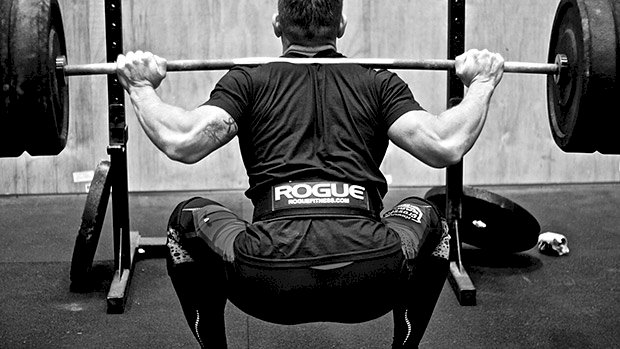 Ready to attempt a new squat PR? Or maybe the plan is to just work up to heavy sets of 3 reps? Well, the worst thing you can do is knock out a few warm-ups sets then go for the big one. To pull off a great back squat, you need to have a tightly squeezed back, a well braced core, and fully firing glutes. Do these three exercises first to make sure your body is primed and ready. Exercise 1: Wide-Grip Lat Pulldown The back squat requires a ton of upper back tightness to distribute force into the bar effectively. And you need a decent amount of shoulder mobility to put you into a position where you can get tight. To squat effectively, you should be squeezing your lats and pulling the bar down into the upper back to keep your torso as tight as possible. Performing some light reps with a wide-grip lat pulldown will not only activate your lats, it’ll also prep your shoulders for the motion needed to pull the bar into your back. You don’t need to go super heavy on these. Just do few sets of 8-12 reps. Exercise 2: Dead Bug The dead bug helps you practice bracing your core. This movement, much like the squat, requires that your core stabilize your lower back while your limbs move. Doing this before your first set of squats teaches you to activate your deep core stabilizers that keep your body from crumpling while under a heavy load. When you do this movement, contract intensely. Do NOT be lackadaisical. Imagine that a motorcycle is about to run over your midsection and you have no choice but to brace. That is how hard you should be bearing down on each rep. Fewer reps are better than a lot of reps as long as they’re done with intensity. Exercise 3: Banded Squats Few people use bands when doing their warm-up sets, but they should try it. Placing a “Slingshot” or hip circle just above the knees is a great way to get extra glute activation before you go for your heavy lift. Having the band around your knees forces you to drive them outward and helps you figure out how to “spread the floor” to get your butt to work for you. Since your glutes are the most powerful muscle in your body, it’s essential you get them firing before going for your big
Origin: Tip: Do This Before a Squat PR Attempt
Tip: A New Variation on Seated Rows
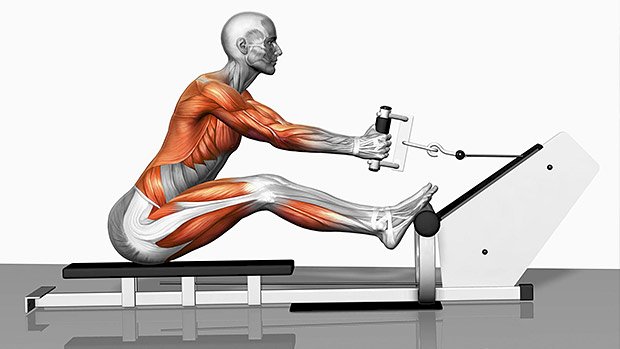 Simply adding a forward lean during seated rows is a great way to target the lats rather than the upper back muscles. The reason? Physics. Leaning your torso forward creates a de facto inverted lat pulldown position, only with stricter form. Leaning back for a standard pulldown – the way it’s normally done – can cause plenty of lumbar and thoracic overextension, which, beyond a certain point, doesn’t do much for back activation. That’s why this seated row modification will isolate the lats a lot more, using much less weight to get there. Since you’re leaning IN and not BACK, you have no room to extend the torso and can focus more on the pump. Get a good stretch after each rep to optimize the length-tension ratio. Chasing volume is the way to go – sets of at least 10-12 reps is
Origin: Tip: A New Variation on Seated Rows
Question of Strength 56
 Diagnosing Your Bench Press Problems Q: In a previous column you gave us a table explaining the problems and solutions for each sticking point in the military press. Can you do that for the bench press? A: Sure! Now, this table only lists the most probable issue causing each sticking point. There could be something more complex going on, or a technical issue that’s more unique to you. But eight times out of ten, I’ve found that strengthening the sticking point area will solve the problem. So take a look at this table, determine where your sticking point is, take note of the causes, and use the appropriate assistance exercises to strengthen that area. Bench Press Sticking Point Causes Assistance Exercises Breaking off from chest 1. Lats weak or not properly engaged 2. External shoulder rotators 3. Upper traps more dominant than lower traps and rear delts 1. Straight-arms pulldown, Pendlay row, seal row 2. Cuban press, seated dumbbell snatch, external shoulder rotations 3. Trap-3 raise, rear delt machine, Powell raise, victory raise Lower third Pecs Wide-grip bench press, Spotto press, decline bench press, floor press, dumbbell bench press, bench press with Duffalo bar Mid third 1. Anterior delts 2. Rear delts and rhomboids (Shoulder lifts up from bench) 1. Incline bench press, slight incline bench press, lying front raise 2. Bench press with resistance band around wrists, rear delt machine, face pulls Upper third (lockout) Triceps, especially long head Close-grip pin press, lockout bench press, close-grip floor press, close-grip decline bench, overhead triceps extensions If you’re unfamiliar with some of these exercises, use this list: Seal Row A seal row is a chest-supported row (using dumbbells or a bar) using a bench. Elevate the bench on blocks or plates. If you don’t have that setup, a regular chest-supported row will do. Cuban Press Trap-3 Raise Powell Raise Victory Raise Spotto Press Bench Press With Resistance Band Around Wrists Bench Press With Duffalo Bar Once you fix a muscle weakness, it’ll take some time to transfer those strength gains to the bench press. Your body will need to change the intermuscular coordination pattern. Don’t panic if your strength gains in pressing lag a few weeks behind your strength gains in the assistance lifts. CNS Stress and Trap Bar Deadlifts Q: Are trap bar deadlifts any less demanding on the central nervous system than barbell deadlifts? A: That’s a good question. Let’s look at what’s likely to increase the stress on the CNS when lifting. The Weight Lifted:The more weight imposed on your body (tendons, skeletal system, muscles), the greater the demand will be on the CNS. The Work Performed:I’m not talking strictly about volume here, but more about the amount of work you perform when doing a movement. Work is equal to force X distance. That’s why a partial lift is often less demanding on the CNS even if you’re using more weight. The Amount of Muscle Involved:If more muscles are involved at the same time, the CNS will be challenged more. This happens in part because normally more muscles involved means heavier weight, but also because the system needs to work harder to coordinate all of those muscles. The Complexity and Coordination Required:The more difficult the technique is, the harder the CNS will work. Technical Efficiency:The less efficient your technique, the harder your nervous system will work to properly execute the movement. A better engrained motor pattern, and a more efficient movement, is more economical on neurological resources. That’s one of the reasons why elite Olympic lifters with superb technique can snatch and clean Both speed (more precisely, accelerating the bar) and mass moved will increase the demands for force production. Force equals mass x acceleration. So the more force you need to produce, the greater the demands on the CNS. The Perceived Stress:When the body sees a lift as potentially dangerous, either voluntarily or subconsciously, it’ll produce more cortisol which leads to an increase in adrenaline production. More adrenaline production can lead to what we wrongfully refer to as “CNS fatigue” either by depleting dopamine (adrenaline is made from dopamine) or a desensitization of the adrenergic receptors due to overstimulation. Now, using this info, let’s compare the two. Traditional Deadlift vs. Trap Bar Deadlift The Weight Lifted:Pretty much everybody will lift more on a trap bar deadlift, especially if using the high-handle position. So if we’re talking strictly about using a certain percentage of your max, let’s say 85% of your max on that lift, the trap bar “wins” this one. The Work Performed:If you’re using the lower setting of a trap bar, the linear distance travelled will be the same as a conventional deadlift. However, the bar path is much straighter on a trap bar deadlift. So while the distance from point A to point B is the same, the path is “longer” on the
Origin: Question of Strength 56
Tip: Should Kids Specialize In Sports?
 Some parents want to get their kids devoted to one sport early on. They point to Tiger Woods as an example of how it works. But does it really? Let’s get into it. For the first 12 years of my career I trained athletes exclusively. I worked with pro athletes, Olympians, and also kids from ages 9-18 as the head strength coach of a sport-school program. I’ve also coached high school and college football (defensive coordinator and running back coach). For team sports where you have to interact, react, and play as a team, early specialization is one of the biggest mistakes parents can make with their kids. It will severely limit their potential and what we call “talent.” The best young athletes in team sports all played at least two sports as kids. For individual sports with a repetitive skill that needs to be done without having to adjust to an opponent’s play (like golf, gymnastics, figure skating, diving, swimming, cycling) it likely doesn’t have as much negative impact. That’s why you can’t use Tiger Woods as an example for sports like hockey, football, or basketball. Let’s first examine what makes a great athlete and where a lot of parents screw up. I divide it into two main categories: What we call “being gifted or naturally talented.” What we call “being a talented athlete.” In the first case we’re referring to someone who naturally picks up pretty much any skill easily and is good at most sports right away. He’s the 7 year old kid that kicks ass in soccer, then goes and plays flag football, basketball, or hockey. He’s also dominant without much practice or coaching. In the second case we’re talking about someone who excels at a specific sport, outplaying his competition. He shows a high level of technical mastery and a great knowledge of the game. What we call “natural talent” is in large part due to what you do during your early childhood, even very early, like a few months old. It comes from a combination of being great at moving and adapting to your surroundings. Good coordination, balance, and precision of movement are all part of it. This depends on the efficacy of three key systems: Visual system (eyes) Vestibular system (inner ear) Proprioceptive system (hands and feet mostly) The foundation of these systems is laid out during very early childhood. What you do with your baby can have an impact on how well these systems develop and represent the foundation on which talent is built. You must present your child with a lot of different stimuli. For the visual system: Show him different shapes, colors, and various objects. Have him play with many things to develop both eye-eye and hand-eye coordination. For the vestibular system: Put the baby in various positions and move him in the air (e.g. doing the airplane) so that he has to rapidly adjust muscle tone to changes in body position. For the proprioceptive system: Have him touch and handle many different objects and textures. Have the baby spend a lot of time barefoot, doing drills to have him assume a supported standing position. (My kid could stand up, grabbing only one of my fingers, at three and a half months.) Can You Compensate for Late Development? Sure. But a kid who develops very efficient visual, vestibular, and proprioceptive systems will always be a step ahead of someone who’s been parked in front of a TV all day. Have you noticed how most babies will stop crying when you put them in front of a TV? That’s in part due to the dopaminergic overstimulation from the blue light. The problem is that the baby’s brain isn’t equipped to deal with this intense signal, and in large doses it can lead to problems with the dopamine receptors. Parents who rely on TV as a substitute for parenthood are doing the worst things to help their kid develop optimally. When I see a hockey dad scream at his kid’s coach, telling him to play his kid more, I can’t help but think, “Shut up, you’re embarrassing your kid, and your kid doesn’t play because he’s not that good and has no real interest in it. And that’s most likely your fault because you preferred to drink beer and watch TV instead of spending time with your baby.” That’s the first part of talent and it comes from the parents… not only their genetics, but in large part how they interacted with their child. Athletic Creativity This is where early specialization becomes a problem. In team sports, where you have to instantly come up with solutions to rapidly developing problems during play, creativity is what separates the good players from the great ones. Hockey, soccer, football, basketball, and rugby all require an athlete to quickly analyze the situation in front of him and come up with a strategy to solve the problem. When you look at truly talented athletes rarely will you hear, “Wow, look at how he applied the system!” It’ll be more like, “Wow, how did he do that?” Or “Where does that come from?” Early specialization, and especially forcing young kids to play according to a rigid
Origin: Tip: Should Kids Specialize In Sports?
3 Lessons From Bodybuilding Legend Bill Pearl
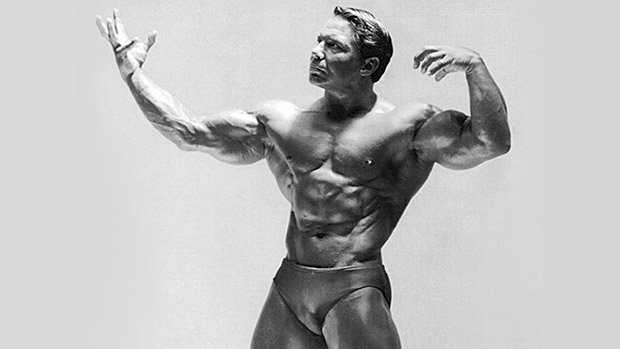 Who Is Bill Pearl? You may not know who Bill Pearl is, or realize his impact on the whole industry. I like to explain it this way: Bill Pearl was Arnold, before there was Arnold. Bill Pearl was bodybuilding’s first true crossover superstar. And his early books should be considered required reading even today, especially “Keys to the Inner Universe.” I met Bill in the summer of 1989 while I was working at the prestigious Muscle Camp in Los Angeles. My job was to open up the one-of-a-kind gym every morning. I’d get there at 4:30 AM and I can still remember how it took the floodlights about 15 minutes to fully kick on. Half the time I’d be warming up in darkness. I pretty much had the place to myself… until Bill Pearl started coming in right about the same time. When I introduced myself, he shook my hand and said, “It’s been a pleasure watching you work out.” That was something that stood out about Bill Pearl. Even with the enormity of the shadow he cast, he always made you feel like YOU were the most important person in every conversation. I told Bill that if he had any advice for me I’d love to hear it. Luckily, he had plenty. He imparted the following lessons to me over 30 years ago, but they’re lessons you can and should put to use today. 1 – Stop training like you have something to prove.Instead, train like you have something to accomplish. The next morning Bill pulled me aside and asked me, “Scott, what are you trying to accomplish in your workout?” To this day I remember not being able to give Bill a reasonable answer beyond some sheepish, kindergarten-level reference to what body part I was training. He told me I looked like I was working out like I had something to prove, but each workout should instead be about accomplishing something specific, beyond numbers and beyond efforts expended. He was right. I did train like I had something to prove. Since I wasn’t as strong as other bodybuilders of my size and caliber, I always aimed to out-train them. It was something Bill spotted right away. Rather than working out to build my pecs, for example, I acted like I was working to increase my max bench. It was a lot like the guys you see in the gym every week who start with bench press with the same weight, same reps, and same bad form – one guy holding the bar pretty much doing upright rows while the bencher does a hip bridge with every rep. And all their follow-up exercises are chest exercises. Ask them what the hell they’re trying to accomplish and they can’t tell you. And we’ve all seen the guy with pipe cleaners for legs load up the leg press with 10 plates per side and move the sled an inch or two. That’s training with something to prove (exactly what, I’m not sure) instead of wanting to accomplish a specific goal. I can’t tell you how many career-ending torn biceps, torn pecs, torn ACL’s, blown quad tendons, and herniated discs I’ve seen, all because lifters were training with something to prove rather than training with something to accomplish. It might have been because of training partners encouraging them to get more reps, even though their form was breaking down; or lifters adding more weight to the bench or squat or other risky exercises just to keep up with a training partner or a bad personal trainer’s expectations. All of that stuff led to bad outcomes. Training with something to accomplish instead of training with something to prove puts you in a much more mature headspace. Start by thinking about your workout and what you aim to accomplish within it, beyond a numbers game. Leave your ego at the door. 2 – Learn by doing, but also by observing. At that time, the Mr. Olympia contest was right around the corner and top pros were coming into Muscle Camp to work out. One morning Bill asked me to meet him at the gym when it was the busiest. Puzzled, I agreed. I met Bill and the gym was packed with people and some top pros, including the reigning Mr. Olympia, Lee Haney. I remember wondering what kind of workout Bill was going to put me through, but when I got there he told me that we were just going to watch – watch everyone – from the regular gym goers to the top-tier pros and amateurs. At first, this was a disappointment, but I gradually saw his intent. Bill would point out someone training and ask me to explain what I saw. At one end of the gym was a top wannabe Olympia competitor bench pressing with a training partner. He was struggling, like really struggling, to get up a couple of reps of 305 pounds. His form was horrible and his training partner helped him eke out a couple of forced reps. This already had me shaking my head because just a couple months earlier, one of the top magazines had shown this same guy benching four plates per side – obviously some fake weights were involved there. In another corner of the gym, Lee Haney was training back and shoulders, and I’ll never forget the image. I hadn’t really ever seen anything quite like that before. With Haney, there seemed
Origin: 3 Lessons From Bodybuilding Legend Bill Pearl
Tip: You’re Still an Ego Lifter
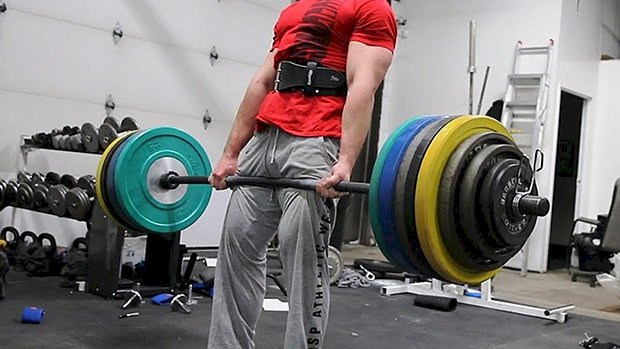 When you hear the term “ego lifting” you probably think of one-fourth squats, curls that use everything but biceps, and bench presses that double as the spotter’s deadlift workout. As a T Nation reader, you know better. However, you can easily fall prey to a more subtle version of ego lifting where you train at or too close to your 1RM. This is especially common with the bench press and deadlift. A lifter trains hard and can eventually hit a plate milestone. It might be a three-plate bench press or a four-plate deadlift with proper form. Now he’s hooked. Each time he trains that lift, he wants that feeling again (and wants everyone in the gym to see him). As a result, his training session consists of working back up to that 1, 2 or 3RM. A typical deadlift workout might look like this: Set 1:5 x 135 Set 2:3 x 225 Set 3:2 x 315 Set 4:1 x 365 Set 5:1-2 x 405 The problem with subtle ego lifting is that the intensity is too high. This can easily lead to burnout, plateaus, and injury. The other problem? The volume is too low to actually build muscle and achieve long-term strength gains. If you’re serious about results, swap subtle ego training for true strength building. True strength building is when you… Check your ego at the door Come to the gym to build strength, not to demonstrate it Lift heavy, but not maximal, weights Train hard, but leave a rep or two in the tank each set Use a moderate, repeatable amount of volume (3×5, 5×5, 4×6, 3×8, 5-8×3) Work on your weaknesses A true strength training deadlift workout might look like this: Warm-up sets Set 1:5 x 135 Set 2:3 x 225 Set 3:2 x 275 Set 4:1 x 315 Set 5:1 x 345 Work sets 2-3 sets of 5 reps with 365 This may not seem as cool at first, but this is a very easy way to add 5-10 pounds per week for quite a while. Before long you’ll be doing a perfect set of 5 with your old
Origin: Tip: You’re Still an Ego Lifter
 All about sport xlsport.club