
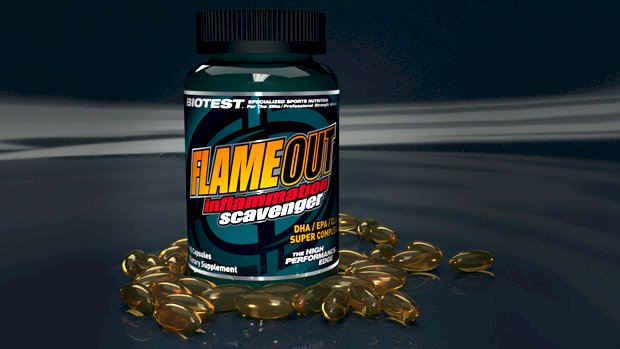
 I’m an advocate of fish oil, so lately I kind of know how Sisyphus felt. For those of you who aren’t up on your Greek mythology, Sisyphus was a king who pissed off Zeus and, as punishment, was condemned to forever push a boulder up a hill, only to have it come crashing down again and again. Frankly, I’m just a little surprised the CrossFit people haven’t appropriated eternal boulder pushing as a WOD and given it some cute girl name, like Sissy. Anyhow, trying to convince people of the merits of fish oil has gotten to be just as frustrating as I imagine pushing Sisyphus’ boulder up that hill would be. Every time I (or anybody else, for that matter) write a positive article about fish oil, or Biotest’s premium fish oil product – Flameout® – some half-baked study comes out and claims that fish oil is overrated. The Latest Fiasco The latest fiasco involved a clinical trial (the VITAL study) that was published in the New England Journal of Medicine. It attracted a lot of attention by purportedly throwing chum on the idea that fish oil reduces the rate of cardiovascular events or other health problems. Yeah okay, but there were a couple of big problems with the alleged findings. For one, the dosages and potencies of the fish oils used in the study were far below what experts recommend. Secondly, the media glossed over some of the relevant data. Despite the woefully inadequate dosages of fish oil used, one sub-group analysis reflected a 28% reduction in risk of heart attack and a 50% reduction in fatal heart attacks, but no reduction in deaths from stroke. Unfortunately, the researchers needed fish oil to check all of the cardiac-related boxes in order to get a passing grade, but the low-dose fish oil failed when it came to strokes. In a way, it was like dismissing a Major League baseball player as sub-par because, in his quest for the Triple Crown, he only hit the most home runs and had the highest batting average, but not the most runs batted in. Loser! Because of fish oil’s “failure,” the media ignored the positive findings of the study and instead focused on some of the study’s under-dosed endpoints to discredit fish oil, and that ain’t right. The Right Dosage Most of the studies that support the use of fish oil found that the greatest degree of protection occurred in people who had the highest percentage of omega-3 fatty acids in their blood. That’s why I, along with other science types who study fish oil, recommend anywhere from 2,200 to 3,000 mg. of DHA/EPA (the two most biologically important omega-3 fatty acids found in fish oil) per day. So how much did the VITAL study use? A measly 840 mg. a day of EPA/DHA. That’s only a third or fourth the amount deemed most effective in combating heart attack or stroke. Put the Fire Out But let’s forget about cardiovascular stuff for a bit. Fish oil does a body a helluva’ lot more good than just preventing heart problems, and volumes of studies have confirmed it. First and foremost, fish oil is a hugely powerful anti-inflammatory and make no mistake about it, cellularly speaking, our bodies are on fire. Quenching that fire can help ward off asthma, arthritis, macular degeneration, autoimmune dysfunction, and a host of other diseases or maladies, along with decreasing muscle soreness and joint pain. Properly dosed fish oil can also lead to significant decreases in body fat levels through increased insulin sensitivity (thus helping prevent Type II diabetes), increases in metabolic rate, and activation of leptin to control appetite. What to Look For In a Fish Oil Supplement The challenging thing about fish oil is in finding one that’s of high quality. You need to find one with the following attributes: The proper dosage of the purest, most highly concentrated DHA and EPA fatty acids available. A product that’s been purified by molecular distillation and stringently tested for PCBs, dioxins, mercury, and other heavy metal contaminants. A product that includes a self-emulsifying delivery system so they’re virtually odorless, better absorbed, and don’t result in a fishy aftertaste or “fish burps.” Biotest’s Flameout® checks all those boxes. It’s so highly concentrated, you’d have to double or triple the dosage of similar products to get even close to one serving of Flameout®. Likewise, it’s meticulously tested for any chemical contaminants, and, unlike most fish oil products, it doesn’t turn you into a social pariah because your breath smells like a tuna cannery. Lastly, it has one little special twist that’s virtually unheard of in the fish oil world. Most Fish Oil Is Made for Women Most fish oil products contain more EPA than DHA because, well, that’s what you find in fish. Companies, by and large, bring in raw fish that’s been cut into pieces. They cook it with steam and then centrifuge it to separate it into fat-free dry solids and liquid (water and oil). This water and oil mixture, called “press liquor,” is then further processed to separate the two
Origin: Beyond Fish Oil
Author: ondriving
Tip: The Missing Exercise for a Stronger Bench
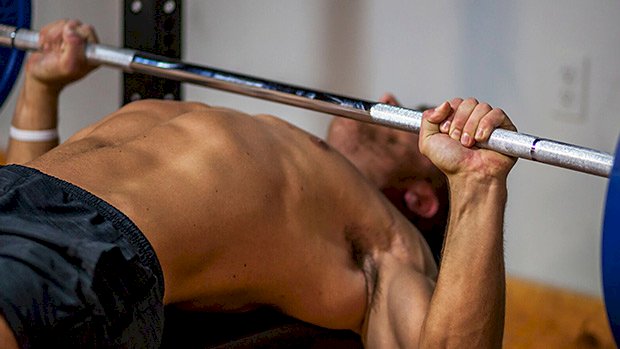 You can’t fire cannons from a canoe and you can’t bench press big weights from unstable shoulders. The external rotators of the shoulders are important for shoulder health. But they also play a role in stabilizing the arms during bench presses and can contribute to a stronger bench. Some guys know all this and do their best ostrich impression. They stick their head in the sand, neglect training external rotation, and play ignorant when their shoulders hurt and their bench stalls. Other guys are more proactive. They do dedicated external rotation work and… still end up with a stalled bench press! Why? They forget one-third of the muscles involved and use exercises which ignore how these muscles actually function during a bench press. The rotator cuff muscles play an important role in shoulder stability. These muscles work like “active” ligaments to maintain proper alignment of the shoulder and reduce excess movement. Two of the four muscles work to externally rotate the upper arm. These are the teres minor and infraspinatus. These both get worked with your classic external rotation, rehab-style exercises. But there’s one other muscle that can contribute to externally rotating your humerus. The Forgotten Muscle By strengthening the posterior (rear) deltoid, you can increase your stability on pressing exercises AND build more impressive-looking shoulders. To make your rear-delt work maximally efficient, combine it with the function of the external rotators during a bench press: isometrically contract to hold the upper arm in position. Don’t go back and forth, externally rotating the shoulder as you do with the pink dumbbells in your typical rehab drills. One Exercise to Do It All Use the supinated-grip rear delt flye: This exercise places you into external rotation and requires you to work to maintain this position while the shoulder moves through flexion and extension. This mimics the requirements of teres minor and infraspinatus during a bench press. Even better, you’re simultaneously training the rear delt and taking it to a fully shortened position. The arm path you take also lines up the fibers of the rear delt optimally to produce force, meaning you get a greater training effect. Hold at the top, where the muscle is maximally shortened and the lever arm is longest. This will place high levels of tension through the muscle and develop the strength required for you to stabilize big weights when benching. Since you’re looking to develop stability to boost your bench press, using higher reps to train strength-endurance is a good choice with this lift. I suggest sets of 12-20 reps with a 2-second peak contraction on every rep. This will develop great isometric strength in the rotator cuff and pack size onto your rear delts. The rear delts have a high proportion of slow-twitch fibers and respond really well to higher reps and long time under tension
Origin: Tip: The Missing Exercise for a Stronger Bench
Tip: A Great Reason to Do Whole-Body Workouts
 Most of the time, whole-body workouts are just something you do when your week is bollixed up with appointments and you can only get to the gym a couple of times. You’re having a root canal on Monday, the twins have oboe class on Wednesday, and your wife needs you to lay out some fresh mulch on Thursday. If you don’t curse your life and run away to Bora Bora first, you’re stuck doing whole-body workouts on the occasional obligation-free day or weekend. Otherwise, you’d sure as hell be hitting the gym four or five time a week and doing upper body and lower body splits. Wonder of wonders, though, a new study suggests that you build considerably more muscle when you do whole body workouts, and it’s largely because the change in the ratio of two directly-oppositional muscle-regulating proteins – myostatin and follistatin – is almost twice as large when you combine upper body and lower body training. What They Did The researchers recruited 40 middle-aged men and randomly assigned them to one of four groups: Upper-body resistance training Lower-body resistance training Combined resistance training (lower body and upper body) Control The three resistance-training groups did three exercise sessions a week for 8 weeks. Blood samples were taken before training began and 48 hours after the last session. What They Found Muscle mass increased significantly in all three resistance-training groups: The upper-body training group gained 0.76 kilograms, +/- .46 kilograms. The lower-body training group gained 0.90 kilograms, +/- .29 kilograms. The combined upper-body/lower-body training group gained 1.38 kilograms, +/- 0.70 kilograms. Clearly, the combined training led to more muscle, but what’s really interesting is how the different training regimens affected a couple of growth-regulating proteins that play a big role in determining how muscular someone (or something) is. You’ve probably heard of myostatin. It’s a growth factor that actually limits muscle growth in humans and other animals. You know those “double-muscled cattle” you sometimes see pictures of, the ones who look like something a CGI artist conjured up to pull Conan’s corpse wagon to the gates of hell? They have a mutation that limits the activity of myostatin, which allows them to grow enormous muscles. Most of us probably wish we had at least a mildly dysfunctional myostatin gene, but there’s another growth factor that works to inhibit levels of myostatin and it’s called follistatin. When levels of follistatin increase, levels of myostatin decrease, thereby allowing more muscle growth (assuming all other factors are optimal). As you probably guessed, resistance training increases levels of follistatin in general, but the researchers in the training study found that while lower-body training increased levels of follistatin (and decreased myostatin) more than upper-body training, whole-body training had almost twice as large an effect on the ratio of follistatin to myostatin. How to Use This Info It looks like the volume of muscle involved in a workout is a factor in determining how much follistatin you produce, which would logically mean that whole-body training increases its levels more than other types of body splits. Of course, like most studies, this one doesn’t perfectly mimic real life. After all, I’ve never met any lifters other than amputees who consistently worked just one half of their body. It could be that when, over the course of a training week or month, the total amount of follistatin produced (and, consequently, the amount of myostatin inhibited) by performing an upper body/lower body split could approximate or equal the amount you’d get from training total body. Regardless, at the very least, this study underscores the value of increased levels of follistatin. It’s possible that you can also increase levels of the protein through diet, too. Egg yolks contain follistatin, but it’s not known for certain if orally ingested follistatin actually leads to additional muscle. Another tactic involves ingesting high levels of epicatechins, a polyphenol found in cocoa powder, dark chocolate, blackberries, and pomegranates. Aside from enhancing mitochondrial biogenesis and improving the skeletal muscles’ response to exercise, increased levels of epicatechins lead to increased levels of follistatin. Like most things that smack of legitimacy, it’s worth a try to up your epicatechin intake while experimenting with a couple of months of whole-body
Origin: Tip: A Great Reason to Do Whole-Body Workouts
Tip: 5 Next-Level Ab Wheel Rollouts
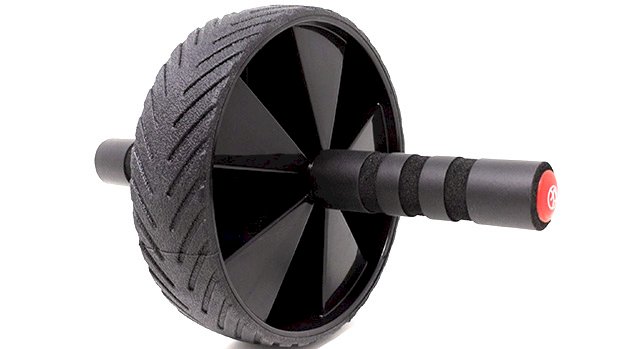 Fitness gadgets come and go. Only a few stand the test of time. Here’s one gizmo that does: the ab wheel. The ab wheel rollout might be the most comprehensive exercise you can do to strengthen your midsection. It challenges every bit of your anterior core musculature, as well as your lower back, lats, and shoulder complex (to keep you from “breaking” into an overly-extended position). Continuing to build that strength is going to keep your low back healthy. That same strength will help you transfer force from your lower body to your upper body, and vice versa. The stronger your trunk, the more weight it can handle before becoming a weak link in your squat and deadlift. But what happens after you can hammer 10 or 15 solid reps of traditional rollouts? Well, you can continue to add volume, but eventually you’ll see diminishing returns if that’s your only form of progression. Here are five advanced ways to keep moving forward with your rollouts. About 2-4 sets of 5-10 reps will work best. As you get to the top end of that rep range, opt for more challenging version. 1 – Weighted Vest Ab Wheel Rollout Adding a weight vest is one of the simplest ways to increase the difficulty. This is the baseline progression; it can be added to any of the following progressions as necessary. Just throw on a vest. From your knees, squeeze your glutes and abs. This will pull your ribs down and your pelvis under, making a cylinder between your rib cage and pelvis. From there, position your weight on your hands and think about reaching over your head without breaking your cylinder position. Once you get out as far as you can, reverse the motion by pushing your hands down into the floor, as if you were doing a straight arm pulldown. This will keep you from starting the concentric portion of the exercise with a “hips back” action, which takes the tension off. (“Hips back” is an uneducated newbie move, by the way, and you see it all the time in most gyms.) Repeat for 2-4 sets of 5-10. 2 – Knees-Elevated Ab Wheel Rollout No vest? No problem. You can increase the amount of your bodyweight you handle by elevating your knees on a box, just like you’d do for push-ups. More isn’t better here, though a 12-18 inch box works best. It gets awkward if you increase much higher than that. 3 – Paused Ab Wheel Rollout and Eccentric Ab Wheel Rollout Slowing down the tempo or adding a pause is a surefire way to make your rollout more challenging. Try for 5-10 second eccentrics (negatives) or add in a 5-10 second iso-hold at the end position. 4 – Standing Rollout to Wall Moving from kneeling rollouts to standing rollouts is a huge jump, but one way to bridge the gap is by using a wall as a built-in end point. Start a few feet from a wall and perform them the same way you would kneeling, just on your feet. Once you get to the wall, return to the starting position. Start with 5 reps. Once you can do those perfectly, move back 6-12 inches. Start conservatively and brace hard. When you get to the wall, it’s easy to lose tension as you reverse direction. 5 – Medicine Ball Rollout For a new twist, try doing rollouts with a heavy medicine ball. A slam-style ball works best; it doesn’t roll as smoothly, making it more challenging. Using a hand-over-hand action, walk the medicine ball out as far as you can without overextending at your lower back, then return to the starting position. You can use a pretty heavy ball on these. Just be prepared for a more intense triceps and shoulder pump than any of the other
Origin: Tip: 5 Next-Level Ab Wheel Rollouts
Tip: The Break-Through Pulldown
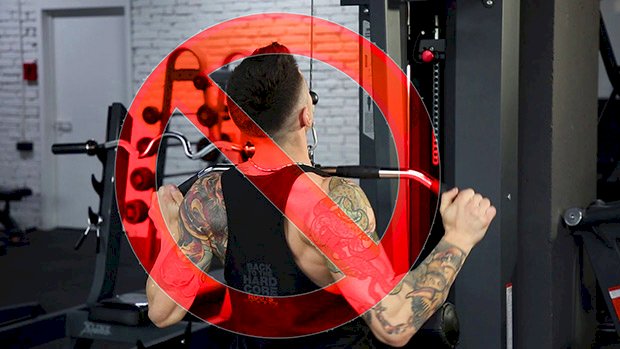 Can’t build a wide back? It’s most likely because your technique sucks and you can’t develop a mind-muscle connection (MMC) with the latissimus dorsi. The solution isn’t to do more of what isn’t working for you. Doing countless sets of crappy reps won’t make up for a lack of quality. If you want to build your back, invest some time improving the activation of the lats. Not All Pulldowns Are Created Equal Exactly how you perform pulldowns will determine if the lats are effectively stimulated. To bias the lats and build a great MMC throughout the entire range of motion, you need to train them all the way from fully stretched to fully shortened. To do this, use the single-arm “break-through” lat pulldown. The single-arm part of the name is fairly obvious. The break-through portion relates to the fact that you’re going to try and drive your elbow down to “break through” the leg pad at the bottom of the lift. This exercise has a couple of key benefits compared to traditional pulldowns. First, doing it one arm at a time helps you to focus all of your intention on one side. This means you can really feel the lat working. It also means your scapula can move more freely and can get into a full stretch easier. Using the rotating grip allows you to reach up and in-front of the body to create a good stretch on the lats. (A pronated grip doesn’t allow for this.) Second, using the leg pad as an immovable object to drive into provides a range check and really helps to create a high-quality peak contraction. Technique Tips There are some key techniques which really magnify this exercise’s effectiveness: Let the arm reach up and in-front of the body to achieve the lengthened position. This will immediately place tension through the lats. Initiate the movement by pulling the elbow down and in-front, NOT in back. This will keep tension on the lats and keep the upper back from taking over. Keep your arm path out in-front for as long as possible. Keeping a long lever arm creates and maintains maximal tension. Only at the bottom of the lift do you finish by driving your elbow around into the spine. Imagine trying to stab your elbow through the leg pad towards the base of your spine to achieve a great peak contraction. Hold this for a two-count. After a few sets of 10-12 reps you’ll feel your lats like never
Origin: Tip: The Break-Through Pulldown
Question Of Strength 58
 Realistic Gains After 40 Q: How much muscle can a natural, advanced lifter build in his 40s? A: I’d love to tell you that an advanced lifter in his 40s can keep building tons of muscle… in part because I’m over 40 too. But it’d be a lie. It’s not even an age thing (although that plays a role), but a matter of training experience and adaptation. To me, “advanced lifter” means at least 15 years of hard training. That means you’ve gained quite a few pounds of muscle already. The human body has a limited capacity to build and keep muscle naturally. This is largely dependent on our genetics. The ACTN3 genotype, myostatin levels, body structure, and many more factors come into play. We don’t fully understand all the factors yet, but the fact is that the average human male can add 30-40 pounds of muscle above what his normal adult weight would be over the course of his training career. Of course, using anabolics will bypass many of the limiting factors that prevent a natural from growing to Mr. Olympia size. I’m also talking about pure muscle weight. With those 30-40 pounds you’d likely add some extra pounds in the form of glycogen, water, and collagen. Not to mention that you could add some fat and still look great. You might add 50-60 pounds of scale weight over your career, but only 30-40 pounds of that weight would be muscle. The closer you are to reaching those 30-40 pounds, the slower and harder your gains will be. So let’s take a 40-year old man who’s at a normal adult weight who would be around 175 pounds without lifting. And let’s say, after 15 years of training, he’s now 210 pounds with a similar or better body fat percentage. By lifting for all those years, he added around 30-35 pounds of muscle to his frame. Realistically, he can now hope to add 5-10 pounds of muscle at most. If a second 40-year-old man gained only 10 pounds over the course of his training career (because he hasn’t been training hard and smart consistently), he has the potential to gain more muscle than the first guy if he trains the right way. Why is the more dedicated and experienced lifter going to have a harder time building a lot of new muscle? First because of adaptation. His body is well adapted to lifting. It’s very hard at that point for training to represent a stress. If the training is no longer a stress, the body won’t change because extra muscle isn’t needed to do the work. If you want to increase the training stress you need to: Lift more weight or… Do more volume or… Push your sets harder But there’s the catch-22. All three of these things can jack up cortisol and might stop progression. Furthermore, you can’t always push them up. There will be a point where it’s hard to add 5 pounds per 6-8 weeks on a lift. And if you already train to failure or close to it, there isn’t much room to increase there either. And adding volume – especially in older lifters – is one of the best ways to halt progress. It’s also not very practical for the real world. A normal human being with a job and family can’t spend 2-3 hours in the gym every day. An advanced lifter needs an extremely high training stress to keep progressing, but doing just that might actually do more harm than good. Also, as you get older your physiology changes, and not for the best when it comes to building muscle: Testosterone levels tend to decrease. Growth hormone and IGF-1 can decrease. Stem cells decrease due to a lower IGF-1 level. Stem cells are required to repair muscle damage. Fewer stem cells means that you don’t repair and build muscle as easily. Your body likely has more chronic systemic inflammation. This can significantly decrease your capacity to build muscle (among other things) in part because it reduces insulin sensitivity. You lose nerve cells and have atrophy in others. This will decrease strength. And if strength goes down, it can be harder to maintain, much less add, more muscle tissue. The muscle tissue is adapted to a certain level of loading. If your nerves no longer allow you to produce as much force, the lower level of muscle tension produced when training might not be enough to fully stimulate growth. Finally, as you’re getting older, life tends to take over. If you have a full-time job and a family, you have a lot more stress. That can also impact your capacity to progress. Now The Good News Don’t stop trying to improve because it’s possible to surprise yourself and achieve more than you thought. I got into my best shape at 41 and I’m still able to improve a bit. Here are a few guidelines that tend to help older lifters keep making progress: 1. Don’t always train hard. I know this sounds counterintuitive, but periods of maintenance training can help re-sensitize your body to training. Call it “strategic deconditioning” if you want. For 3-5 weeks, do the minimum necessary to avoid losing muscle. If you’re a dedicated lifter, that’s going to be much less than you think. Do less volume, don’t push your sets hard (stop 2-3
Origin: Question Of Strength 58
Tip: 3 Steps to Preventing Wrist Pain
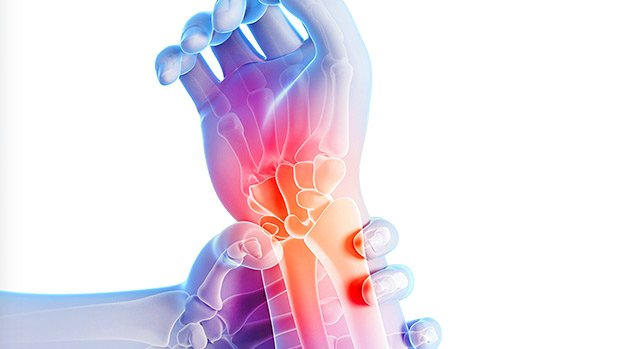 The bench press and the overhead press cause a lot of compression on your wrists. This can lead to pain and reduced mobility if not addressed. Luckily, you can protect them with the proper grips, some between-set moves, and a little special attention at the end of your workouts. 1 – Check Your Grip When doing any barbell pressing exercise, you need bone support. Placing the bar too high on the palm will lead to excessive wrist extension. This will overstretch your wrist flexors, leading not only to pain, but to far less force exerted into the bar. Instead, grip the bar towards the base of the palm and squeeze it as hard as you can. This will allow you to drive your wrist bones directly into the bar leading to a much better transfer of force. Grip Setup for the Strict Press (False Grip) Proper False Grip, Overhead Strict Press Improper False Grip, Overhead Strict Press I’m a big fan of the false grip for the overhead press. It’s very comfortable and easy to set up for most people. Placing your thumbs on top of the bar lets the bar sit much more naturally on your wrists, which leads to much greater force exerted into the bar. It has the added benefit of putting your shoulders in a more neutral position which can help to save you from impingement. Grip Setup for the Barbell Bench Press Proper Bench Press Grip Improper Bench Press Grip Most lifters should be wrapping their thumbs around the bar. Unlike the overhead press, if the bar rolls forward in your hands during the bench, it has nowhere to go but right across your neck. Although some lifters can put up huge numbers with a false grip, the risks just outweigh the benefits unless you really know how to lock it in. To grip the bar properly, place it diagonally in the base of your palm. Think of externally rotating your shoulders so that your grip tightens and you get the feeling of “breaking the bar” in your palms. You should feel your wrist bones drive up into the bar and your triceps tighten as you squeeze. 2 – Do Some Pulling or Gripping Exercises Between Sets Doing some sort of pulling or gripping exercise after pressing is not only great for your shoulders, but your wrists too. Rows, pull-ups, weighted carries, or hanging from a bar will fire up your forearm flexors, get some blood flowing to your wrists, and allow for some slight distraction of the carpal bones. Even if you choose to go light to focus on your pressing, the extra forearm work will help keep your wrists prepped for your next set. 3 – Do Direct Forearm Exercises Give your wrists a little TLC at the end of a heavy pressing day by doing some direct forearm work. Train wrist flexors and extensors, and do some form of radial deviation and ulnar deviation for a balanced, well-developed forearm. Here are a few exercises that will help you target all of these components: Extensors Reverse curls are a great way to isometrically train the wrist extensors. Keeping your wrists locked out as you do curls will lead to a stronger grip and a more stable bar when you press. Flexors “Hand blades” are a great way to strengthen your forearm flexors and add mobility to your wrists. Keep your fingers straight and give yourself a little bit of assistance as you go onto your fingertips. Radial/Ulnar Deviation Doing rapid pulsing contractions with the forearm will increase blood flow and restore some movement to stiff wrists. Choose a light Body Bar or barbell and perform radial and ulnar deviations for approximately 30 seconds. Decompression Stretch Decompression feels amazing after loading your wrists with heavy presses. You can easily decompress the wrists by placing your feet on the break in your wrists and pulling up with your
Origin: Tip: 3 Steps to Preventing Wrist Pain
Tip: 6 Things That Affect Ab Visibility
 Strength isn’t a great indicator that someone will have visible abs, and while diet can play a role, there are people who have ab definition even when they’re not dieting. The truth is, abs can be a sign of multiple things. Here are six variables that affect their visibility: 1 – Genetics The science of abs is pretty cool. Christian Thibaudeau has explained how some people – even when they get lean – won’t be able to see their abs because their abdominal muscle bellies aren’t naturally thick. (See: Abs Are Built in the Gym, Not the Kitchen.) He’s also explained tendinous attachments (they’re what create the lines between abs) and how they can play a role in the amount of separation you see between abdominal muscles. In short, they determine whether you’ll have a 4-pack, 6-pack, or 8-pack, no matter how lean and muscular you are. It’s genetic. 2 – Training Those who don’t genetically have thicker ab muscles will need to do more work to hypertrophy theirs. Diet alone won’t cut it. The abs are a muscle group, so this shouldn’t come as a surprise. Train them directly with resistance. The big lifts alone won’t cut it. 3 – Body Fat There’s a point when, even if you DO have developed abs, they won’t be visible if you’re carrying too much body fat. No amount of ab training will make them visible if they’re underneath several inches of adipose tissue. You knew that, right? 4 – Digestion Some people say chronic digestive distress can lead to increased body fat around the midsection. I’m not sure I buy that. But I will say that stomach distension and pressure in the gut (from gas, constipation, undigested food sitting in the stomach, etc.) can make your belly protrude. And extreme protrusion alone will make ab separation less visible, unless you flex hard. So even if you’re someone who’s lean enough to have abs, slow motility and poor digestion can simply make it harder to display them. 5 – Water Retention Ask any fit woman when she wants to get professional photos taken and there’s a good chance she’ll schedule it around her period. Why? Because there are a handful of days every month when we retain more water than usual, and it can affect the appearance of our midsection. But even men experience water retention for various reasons. Sometimes both males and females will use diuretics before big events in order to manipulate water and increase definition all over, including the abs. 6 – Skin Tone Ab definition is slightly more visible when you have a tan. It just makes what you have easier to see. This is especially true if you’re lean enough to have ab definition, but you haven’t been able to build much muscle thickness there. So if you’re pale skinned and you have a shadow of an ab or two, try slapping some fake tanner on and see if that makes them a bit more visible. To recap, having visible abs mainly depends on what your mom and dad gave you, how much muscle you’ve built in the midsection, and how lean you are. Contributing factors may include digestion, water retention, and skin
Origin: Tip: 6 Things That Affect Ab Visibility
Tip: Is Cardio Essential?
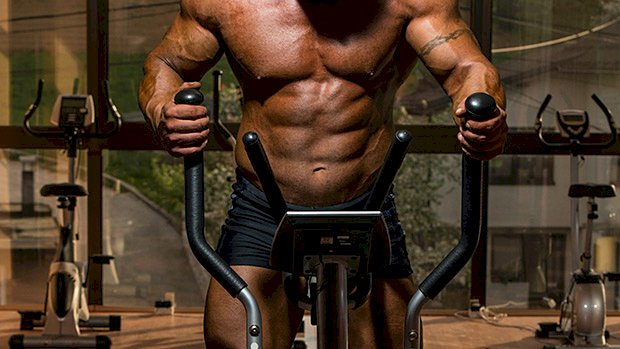 Is cardio essential? In a nutshell, yes. Sorry. Let’s break it down: Is cardio necessary for a powerlifter to lift a heavy barbell once? No. But if he’d like to meet his grandkids – or least not be a wheezing sack of soft potatoes by age 40 – then yes. Is cardio necessary to lose fat? No. Does it make fat loss faster and easier to maintain? Yes. It also improves insulin sensitivity, which basically allows you to “use” carbs better for things like stimulating protein synthesis and restoring glycogen. Is cardio necessary to build big muscles? No. Can a little cardio help you become a better bodybuilder? Yes, via improved capillary density and venous return, higher work capacity, better/faster recovery, etc. And you won’t gas out during long time under tension training, supersets, drop sets, or other tiring hypertrophy training methods. Do you need a lot of cardio? The good news is that it doesn’t take much. For the slow stuff, try two sessions per week, 65-70% of max heart rate or 120-140 BPM, for 20 minutes. Throw in a CrossFit-style workout every once in a while. Shorter-duration HIIT and longer-duration cardio have unique heart health benefits, so you need a blend. Do YOU Need Cardio? Here’s a popular test I came up with a while back: Run one mile on the treadmill with the speed set at 6 miles per hour. Don’t try to go faster; the idea is to be able to SUSTAIN this pace. That’ll take you exactly 10 minutes and it should be pretty easy. If it’s not, you need cardio… or you’re just too fat. Either way, you’ve learned something. Here’s another way to know. Let’s say you’re doing a classic drop set on the leg press: you do 8-10 reps and your partner takes off a couple of plates when you reach failure or close to it. After a couple of drops, what gives out first – your legs or your ability to breathe? If your legs have a few more reps in them but you just can’t suck in enough air, then you need some
Origin: Tip: Is Cardio Essential?
The Next Generation Nutrition Bar
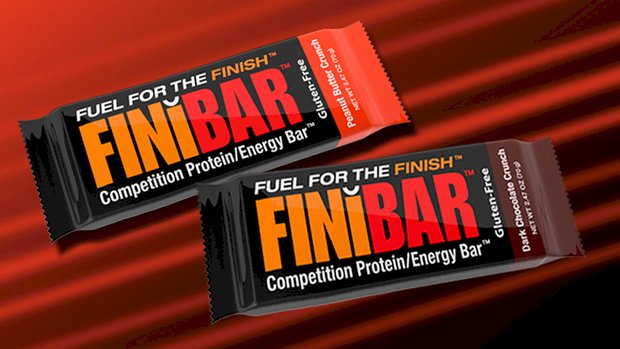 How Was That Possible?! Working at T Nation headquarters in Colorado has a lot of advantages. First, I get to use the private T Nation gym. Pretty sweet. Second, I get to work from the same building as our sister company, Biotest Labs. A while back, Biotest received a big delivery of product – a huge pallet of Finibars in unmarked white wrappers. In case you don’t know, good supplements companies do what are called “pilot runs” of their products to test for things like flavor and texture and make sure everything is up to snuff before they produce millions of them. The pilot run turned out great and production was cranked up. But that big pallet of Finibars, cases of them left over from testing, was just sitting there… right outside my office. Naturally, I started to grab one here and there. Then I grabbed another couple. And maybe a couple more. Sometimes I’d stack a dark chocolate crunch bar with a peanut butter crunch bar, stick them in the microwave for 10 seconds, and eat them like giant, high-performance Reese’s Peanut Butter Cups. Now, if you’re a fan of Finibars, then you’re probably saying, “Um, hey Chris, those bar are designed to be eaten before hard workouts and athletic competitions. They aren’t snacks!” Yeah, I know. And I still worked my way up to eating five of them every day: one before training and four more spread throughout the day or as a lunch replacement. I fully expected to gain some body fat. But, weirdly, I didn’t. The only thing I noticed was having the best workouts of my life and muscular pumps so tight they were almost painful. So I decided to take a closer look at the ingredients of Finibars and figure out what was going on. Protein and Functional Carbs Aside from 16 grams of protein – a blend of high-quality whey protein isolate and milk protein isolate, not cheap soy like most food bars – Finibars contain 39 to 40 grams of carbohydrate. That’s what initially had me worried. I was a low-carb guy at one time. I’m not anymore, but those carbs scared me a little, given the number of bars I was scarfing down. Turns out, instead of being primarily made out of syrup and cheap sugars like most “energy” bars, Finibars contain isomaltulose as the primary carbohydrate. It’s truly a “functional” carb, and not just because it can do squats while standing on an exercise ball. Isomaltulose is derived from beets, but the molecules have been enzymatically rearranged to create a carbohydrate that’s fully digested and fully absorbed — but much, much slower than regular, non-functional carbs. That’s how Finibars sustain your energy for competition or long/intense workouts. Also, isomaltulose induces a very low blood sugar response. As such, the body releases a very small amount of insulin, which prompts the body to burn stored fat for energy production. Yes, that means these bars actually promote fat burning and improve metabolism. That explains how I was able to eat so many of them and stay lean. Isomaltulose is a functional carb source that causes the body to oxidize fat at a greater rate, which is one of the ways it improves endurance and athletic performance. What’s more, studies – randomized, double-blind, controlled cross-over studies – show that cyclists were able to improve their time trial tests by over a minute when using isomaltulose – the difference between winning gold and going home with just the free T-shirt (1). Fuel for the Finish Finibars weren’t made because Biotest wanted a piece of the nutrition bar market. No, it happened organically. An Olympic cyclist we were working with said she needed a bar that fueled her competitions and helped her stay hydrated without upsetting her stomach. Finibars were designed just for her and not sold to the general pubic at first. Later they were tested with every type of athlete, from ultra-marathoners to pro bodybuilders and NFL football players (who would eat them before games and during halftime). Actor Bradley Cooper would eat them before and after his brutal workouts to prepare for his role in American Sniper. Finibars also provide anti-catabolic protection (very important for natural lifters and athletes) and something called “superhydration.” They help pull water into muscle – when consumed with fluids of course – for a superhydration effect, which is critical for supporting and sustaining high-level performance. And unlike a grocery store “energy bar,” which can upset your stomach during training and sports, Finibars soothe the digestive tract. As a bonus, they’re wheat free and gluten free. Who Should Use Finibars? Lifters and bodybuilders who train intensively (and love a good pump) Combat-sport athletes and fighters Runners and obstacle racers CrossFit athletes Military personal Hikers Anyone who trains their butt off And while you won’t find this on the label or on the store page, I think Finibars make a great anytime snack or meal replacement. Hey, life is a competition. Fuel up and win it. To Sum Up,
Origin: The Next Generation Nutrition Bar
 All about sport xlsport.club