
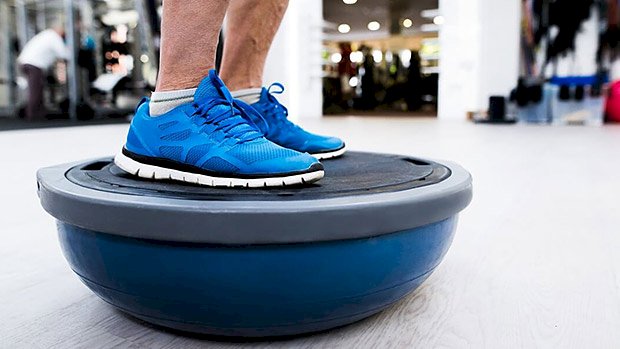
 Despite what we’ve learned about the ridiculousness of most instability training for athletes, there isn’t a training day that goes by when I don’t see some yutz doing dumbbell squats, shoulder presses, or curls atop an inflatable disk, an inverted BOSU ball, or even a Swiss ball. They’re not doing it to strengthen a weak or injured joint, though; they’re doing it to strengthen their core, or to further challenge their biceps or quads in the hopes that all that wobbling will translate into more muscle, more athleticism, and more looking purty. And, most annoyingly, these wobblers always have the same smug look on their faces, as if they’re using an infinitely advanced training method while you, you corn-pone country hick, are still stuck doing here a squat, there a squat, everywhere a squat-squat on solid ground, E-I-E-I-O. Luckily, T Nation contributor and MLB secret weapon Eric Cressey saw instability training for what it was – good for sprained ankles and little else. One of these things must have smushed his pet Chihuahua, Lupe, when he was a kid because his 2007 Master’s thesis obliterated most reasons for doing them. Too bad the lessons he revealed have been largely forgotten by the masses. Hence this brief recap of his findings, along with some other things these unsteady folk need to know. What Cressey Did Cressey recruited a bunch of athletes who, while weight-trained, had never done any unstable surface training (UST). All athletes were pre-tested with two different jumps, a 40-yard sprint, and an agility running drill. They then began a 10-week strength and conditioning program. The only big difference was that the experimental group performed UST with one lower-body exercise per workout. What Cressey Found After 10 weeks, the stable training group showed improvement in both jumps while the UST group showed no significant improvement in either one. Both groups improved their 40-yard sprint time, but the stable training group experienced greater improvements than the wobblers. Both groups did equally well on their agility tests, but the stable group was 0.9 seconds slower than the UST group at pre-testing and 0.03 seconds faster after the 10 weeks of training. The Problem with Unstable Training What Cressey and others have noted about athletics in general is that just about every sport, except maybe the 50-Yard Earthquake Dash, is done on a stable surface. As such, training on unstable surfaces ignores the principle of specificity of training, at least when it comes to the lower body. UST also commits a physiological cardinal sin in that it impairs what’s known as the stretch shortening cycle (SSC). In sport and human movement in general, the length of a tendon increases during the concentric portion of a movement and when the transition to the eccentric part of the movement is lightning quick, the tendons act like a spring, releasing a bunch of energy to help complete the lift or athletic movement. But exercising on an unstable surface lengthens the time between the eccentric and concentric part of a movement, resulting in a much-impaired SSC. Cressey likened it to trying to jump out of sand. UST forces athletes to train slow and, in sports, training slow makes you slow. As far as making strength gains with UST training, fat chance. Cressey says that it doesn’t allow for adequate resistance to provide for strength gains and can actually interfere with them. And while he didn’t specifically address muscle hypertrophy, the same type of thinking applies. They don’t allow for adequate resistance as the limiting factor in how much weight you use will be the balancing capabilities of the stabilizer muscles. Are They At Least Good for Abs? Umm, not so much. Exercising on a BOSU, for instance, provides higher EMG activity in the rectus abdominis than doing the same exercise on a stable surface, but not as much as doing a heavy deadlift or front squat on regular old Terra Firma. So Are These Things Good for Anything? There is a place for UST training. It definitely helps with ankle injuries, and a 2004 study found that Swiss balls and BOSU balls in particular might be useful for upper body injuries. Say for instance your shoulders are barking and you can’t handle pressing the big weights. Sitting or lying on a Swiss Ball should allow you to maintain a high level of muscle activation while reducing the stress on joints. In other words, UST might allow you to use a lower weight than you might ordinarily use and still get something out of it. Likewise, legendary powerlifter Louie Simmons has long advocated using a Swiss ball dumbbell press to improve the shoulder health for big benchers. Lastly, Swiss balls and, occasionally, BOSU balls, make convenient and picturesque props for Instagram fitness models. So there’s
Origin: Tip: Puncture All BOSU and Swiss Balls
Author: ondriving
Tip: The Food That Intensifies Male Orgasms
 Women with higher levels of Vitamin D3 enjoy sex more than women who are low in Vitamin D3. They experience more desire and more intense orgasms. (Insert your own joke here about how D makes women want “the D.” I will not be doing that. That’s tacky.) But what about dudes? Can we do anything to have better glute-clenching orgasms? Yep. According to a new study, we can eat half a cup of walnuts, hazelnuts, and almonds every day. The Study Researchers gathered up 83 men between the ages of 18 and 35 who were eating the typical Western diet. The men were divided into two groups for this randomized, controlled, parallel feeding trial. Group 1, the control group, didn’t change anything about their diets. Group 2 consumed 60 grams of mixed nuts every day for 14 weeks. In a nutshell (see what I did there?) the men who ate nuts every day reported improved orgasmic function and sexual desire. Although the researchers tested peripheral levels of nitric oxide (NO) and E-selectin (surrogated markers of erectile endothelial function), there were no significant differences between the two groups. So basically, the researchers weren’t exactly sure why eating nuts helped with sexual function, but it certainly did. How to Use This Info Sixty grams of nuts is about half a cup. That’s pretty easy to slip into your diet. Just remember to eat mainly walnuts, hazelnuts, and almonds, and try to buy them raw, not cooked in junky oils. (More info: Nuts – You’re Eating Them
Origin: Tip: The Food That Intensifies Male Orgasms
Tip: Make This Healthy Banana Bread
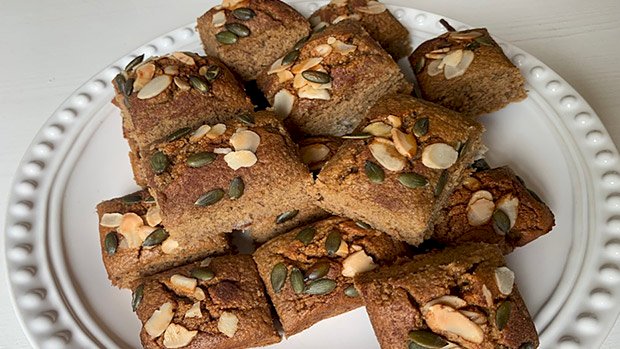 These banana bread “bites” are foolproof. They’re also more physique-friendly than the banana bread you see at the counter at your local coffee shop. This recipe is designed to keep preparation and baking time to a minimum without sacrificing taste and texture. That’s not even the best news though. These are made with simple, healthy ingredients you’ll probably already have in your kitchen. They’re lower sugar, higher fiber, gluten free, and powered by Metabolic Drive® Protein. Ingredients 8 Ounces (220g) rolled oats 2.5 Scoops (75g) vanilla Metabolic Drive® Protein. (chocolate will also work) 1/3 Cup extra-virgin olive oil 1/2 Cup honey or maple syrup 2 Medium eggs 2 Large ripe bananas 1/3 Cup fat-free Greek yogurt 1 Teaspoon baking soda (not baking powder!) 1 Teaspoon vanilla extract 1/2 Teaspoon salt 1/2 Teaspoon ground cinnamon Optional: Half a cup of mix-ins like chopped nuts, chocolate chips, seeds, dried fruit, or fresh banana slices. Instructions Preheat the oven to 350 Fahrenheit (180 Celsius). Prepare a 12×8 baking tray with baking/parchment paper. A brownie tin with dividers can also come in useful here. In a blender or food processor, blitz the oats to a fine oat four. Alternatively, you can use pre-bought oat flour. Pour the oat flour in a large mixing bowl, then add in the rest of the dry ingredients: Metabolic Drive® Protein, baking soda, salt, and cinnamon. Mix together the wet ingredients using a blender or food processor: olive oil, honey, bananas, Greek yogurt, and vanilla extract. Pour the wet mix into the bowl with the dry ingredients and combine well. Fold in any extras such as chopped banana, nuts, chocolate chips, or whatever you fancy. Bear in mind, these will change the macros. Pour the mix into the tray. Add further toppings for extra social media likes and follows (essential!) Bake for approximately 20 minutes on the top shelf of the oven. Once done, a toothpick should come out clean or with a few moist crumbs. If you prefer to bake this in a loaf tin, then aim for 325 Fahrenheit (165 Celsius) for around 50 minutes. Allow to cool for at least 10 minutes in the tray before taking out to slice. Enjoy on its own or as a vehicle for your favorite toppings. Macros Per Square (Makes 18) Calories: 142 Carbs: 19 grams Fat: 6 grams Protein: 5 grams Fiber: 2
Origin: Tip: Make This Healthy Banana Bread
6 Push-Up Workouts for Hypertrophy
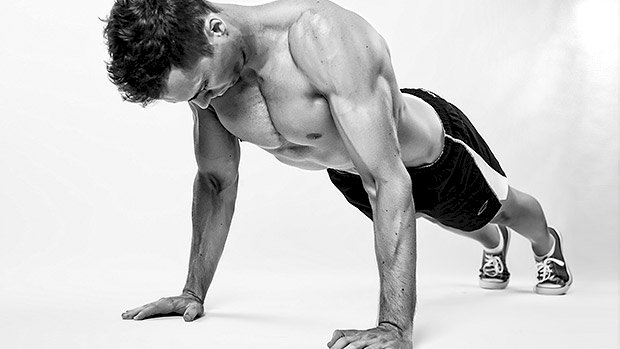 There’s no better all-around upper body exercise than a push-up. But for some reason, people stop doing them. Oh, you think you’re too “advanced” for push-ups? Think again. Push-Up Complexes To build muscle you need to produce tension, metabolic stress, and tissue breakdown. But if you’re able to knock out fifty reps or more, you’re rendering traditional push-ups useless for muscle or strength building. It’s not enough of a challenge at that point. You’ll develop some endurance and maybe even get a good poolside pump, but that’s about it. That’s where complexes come in. They’re highly effective for stimulating muscle growth. You’ll start by choosing a challenging variation, then extending the set using easier variations – a mechanical drop set. The hardest exercise always goes at the beginning. It’s the one you can get the smallest load or do the fewest number of reps with. Then as you reach failure, you’ll move to an easier version. You might even drop again (and again). So let’s look at six examples. 1 – The Chest and Triceps Builder Exercise Sets Reps A1 Close-Grip Push-Up on Medicine Ball 2-3 4-10 A2 Switchover Push-Up on Medicine Ball 2-3 4-10/side A3 Offset Push-Up on Medicine Ball 2-3 4-10/side Hat tip to Coach Nick Tumminello, for this one. Starting with the hardest one – close-grip and squeezing the ball – you’ll then switch to a switchover variation either walking the ball across or hopping yourself over a static ball. Finally, you’ll stay on one side to squeeze out some extra reps before blurting out a few curse words. This medball push-up complex makes a great finish to your chest workouts. The ball also challenges those oft-neglected shoulder stabilizers. If you can do more than 10 reps in the close-grip position, then use a weighted vest to add some load. 2 – The Jacked Shoulders Complex Exercise Sets Reps A1 Vertical Press Push-Up 2-3 6-12 A2 Hand Release Push-Up to Y-Reach 2-3 6-12 A3 Y-Reach 2-3 6-12 A4 Y-Reach Iso Hold 2-3 20 sec. The vertical press push-up is a great variation on its own. It’s like a pike push-up but more comfortable for those who struggle with tight hamstrings. Placing your body in a more vertical position with feet on a bench changes the pressing angle to bias your shoulders in a joint-friendly position. When going from the hand release push-up to Y-reach there should be some external rotation of the shoulder since your thumbs are pointing up towards the end of the reach. You’ll be asking quite a bit of your delts and shoulder external rotators by this point, as well as getting some extra shoulder range of motion. Next, you’ll be dropping the push-up component and just doing the Y-reaches to really burn out the shoulders. You’ll then finish with an isometric hold. Simply hold for 10-20 seconds, stay tight, and think of America (or respective homeland). This is good combination of exercises to hit the entire shoulder complex while improving overall shoulder health. Plus, it burns like a MOFO! 3 – The Strong Shoulders encrypted-media” allowfullscreen> Exercise Sets Reps A1 Pike Push-Up 2-3 6-12 A2 Reverse Yoga Push-Up 2-3 failure A3 Yoga Push Up 2-3 failure This complex also has a shoulder emphasis. If your hamstrings have seen better days then use the previous one instead. If you’re only a little tight then see these as a good opportunity to gain some upper body strength and size, while bringing out your inner yogi. A few sets at the end of your next upper body workout would be a great way to finish. 4 – Simple Mechanical Drop-Set Exercise Sets Reps A1 Feet Elevated Push-Up (loaded or bodyweight) 2-3 8-12 A2 Push-Up 2-3 6-10 A3 Hands Elevated Push-Up 2-3 4-6 This one’s the most simple complex, so if you’re lacking the coordination to do any of the others, try this. Elevating your feet is the hardest variation. Once your feet are on the floor it gets a little easier, then the hands-on-bench variation is the easiest. This sequence reduces the percentage of bodyweight you’re lifting by adjusting the leverages. A resistance band works well here since you get the benefit of accommodating resistance. A weighted vest is excellent too. Try to complete one extra rep of each move every workout, or gradually add a little weight each week. 5 – The Triceps Finisher You might be thinking these are more like bodyweight triceps extensions than they are a push-up variation. Well, whatever you want to call them, they work. There are a few ways you could do them and using a weighted vest is always an option too. Harder Exercise Sets Reps A1 Decline Bodyweight Skull Crusher 2-3 6-10 A2 Bodyweight Skull Crusher 2-3 6-10 A3 Decline Narrow Grip Push-Up 2-3 AMAP Easier Exercise Sets Reps A1 Bodyweight Skull Crusher 2-3 6-10 A2 Incline Bodyweight Skull Crusher 2-3 6-10 A3 Narrow Grip Push-Up 2-3 AMAP Skull crushers do a great job of hitting the long-head of the triceps brachii. Doing them
Origin: 6 Push-Up Workouts for Hypertrophy
Tip: Easy Ways to Do the Hardest Ham Exercise
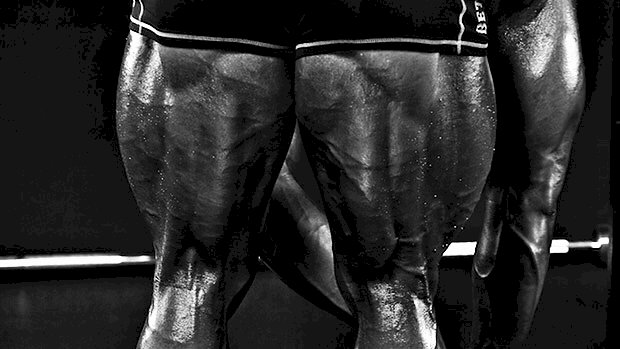 Notorious Nordics Build larger, stronger, and more injury-resilient hamstrings with Nordic hamstring curls. People who perform Nordics experience fewer hamstring strains and other injuries, making this movement a valuable part of an athlete’s program. Be warned: Nordics cause serious muscle damage and deep soreness. Nordics are usually performed with a partner holding your ankles, but here are some alternatives when working out solo. A leg extension or hamstring machine will work well if there’s adequate space in front of the machine. The padded roller offers a perfect resting point for your heels. A Smith machine works great too if the bar can lower to the ground. Use a foam pad on the bar to rest your calves against. Load the bar with enough weight to hold it in place. How to Do Nordics Begin in an upright position with knees flexed to 90 degrees and heels or base of calves resting against the padded machine. Bret Contreras recommends dorsiflexing your ankles (raising the foot upwards towards the shin) to place the calves in an elongated position. Maintain neutral hips throughout the movement. Place your hands in front, ready to catch your body at the bottom position. Slowly lower yourself through the eccentric (negative) phase of the movement until you can no longer maintain control. Emphasize tension through your hamstrings during the slow negative. Absorb the bottom of the movement by decelerating your momentum in the push-up negative, then quickly transition into an explosive push-up. Re-engage your hamstrings by curling yourself upward as the push-up momentum brings you high enough to safely load the hamstrings with your bodyweight. Begin the negative portion of the next rep. If you don’t yet have the upper-body pushing power to propel the explosive push-up, decelerate the negative portion carefully and pause. Hand walk yourself back into the starting position and repeat negative-only reps. Take into consideration your bodyweight and torso length. Heavier and longer lifters will find this more challenging. Not strong enough yet? You can use a band to help out: A few individuals will possess the strength-to-bodyweight ratio to perform a full range of motion positive and negative. Use a weighted vest if you’re a bad-ass. Sets, Reps, and Sore Knees Aim for 3-4 sets of 5-8 reps. Begin conservatively to get comfortable and avoid disabling soreness. (After your first workout with these, you’re probably screwed regardless.) Increase as you tolerate more volume. Perform Nordics later in your workout to avoid massively fatiguing your hamstrings before lower-body compound movements. Don’t be afraid to use some padding for your knees. Focus on the pain in your hamstrings, not the pain in your
Origin: Tip: Easy Ways to Do the Hardest Ham Exercise
This Stuff is Rocket Fuel for the Mind & Body
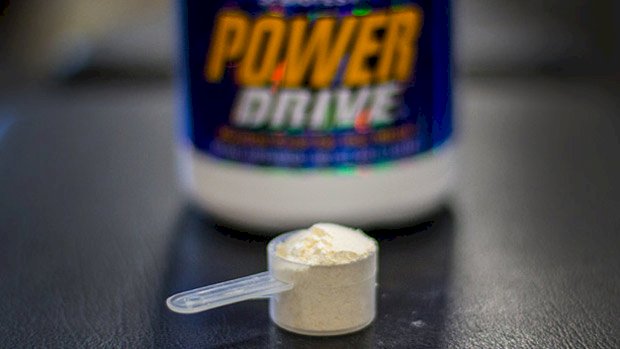 Increased muscle-fiber recruitment and strength Enhanced neural recovery Heightened and focused concentration Accelerated training progress and muscular gains Boosted motivation and mood Higher and sustained energy levels A mental edge during competition Enhanced performance in studies or exams A reduction in social anxiety And all that is exactly what Power Drive® was designed for. How Does Power Drive® Do All These Things? Power Drive®’s active ingredients are known as nootropics – substances that give cognitive benefits to the brain that often translate to physical benefits. In order to qualify as a nootropic, a substance has to meet five criteria set by Dr. Corneliu E. Giurgea, the man who coined the term: It has to enhance memory and the ability to learn. It has to increase the efficacy of neuronal firing mechanisms (which is where the physical benefits of nootropics kick in). It has to help the brain function under stressful or disruptive conditions. It has to protect the brain from chemical or physical assaults. It has to have few or no side effects and be virtually non-toxic. There are about 85 known nootropics, each of which has slightly different capabilities, mechanisms of action, and strengths. Three of them were chosen to form the backbone of the Power Drive® formulation. They are: L-Tyrosine Phosphatidylcholine DMAE Here’s a short rundown of the attributes of each: L-Tyrosine This amino acid is known as the “master precursor” because it’s required to form the stimulatory neurotransmitters dopamine, norepinephrine, and epinephrine, known collectively as catecholamines. Back in early 1980’s, an MIT scientist named Richard Wurtman discovered that when combined with a catalyst, tyrosine “Enhances performance, improves subjective vigor, decreases fatigue, diminishes subjective confusion, and decreases anxiety and tension.” And a little over a decade later, Dr. Jeffrey Stout, then of the University of Nebraska, found that tyrosine, when given an hour before exercise, increased peak bench press torque by 283% during a set of 15 reps. L-tyrosine, along with boosting cognitive function, also stimulates the production of the fat-burning thyroid hormones T3 and T4. Phosphatidylcholine Forbes magazine called this nootropic a “wonder drug.” They’re not wrong. The mag was mostly intrigued by its potential in slowing down mental decline and staving off Alzhemer’s because it’s been shown to stimulate the growth of new brain cells and neural connections – a process once thought to be impossible. But phosphatidylcholine also leads to an increase in another vital neurotransmitter known as acetylcholine, which helps control motor unit recruitment, along with reflexes and reaction times. Here’s the thing: Muscles are made of individual motor units and if you can recruit more of them, courtesy of acetylcholine, you experience an almost immediate gain in strength, power, and endurance. Over the long run, this enhanced ability to kick in more motor units will likely result in more muscle mass. DMAE Dimethylaminoethanol, or DMAE, is an amino acid naturally produced in the brain, but supplying additional amounts through the diet has some interesting effects. It, like phosphatidylcholine, helps increase levels of the neurotransmitter acetylcholine, but it’s also thought to increase blood flow to the brain, which results in improved oxygen and glucose uptake and manifests itself through increased focus and increased mental stamina. It also has some unique abilities to elevate mood, address certain symptoms of depression, and increase athletic performance. (It may even have some life extension effects as one early study showed that mice lived an unheard of 50% longer when they were given DMAE.) Does Power Drive® Have Any Negative Side Effects? Power Drive® is remarkably free of any negative side effects. Perhaps paradoxically, it doesn’t even seem to effect sleep patterns negatively. While it brings you mentally up, it’s not the skin-on-fire type of energy enhancement sometimes felt with cruder stimulants. It just makes the brain work better at everything it does, and if the brain decides it’s time to go to sleep, it actually helps with that too. Neither is Power Drive® addictive, at least not in any clinical sense. However, it might be “addictive” in the way that any pleasurable experience is, in that you’ll likely want to try it again and again when circumstances call for it. How Do I Use Power Drive®? Power Drive® is an orange-flavored, pleasant tasting powder that mixes easily in your protein drink or water. Take 1 scoop 30 to 60 minutes before workouts, athletic events, exams, or any event where you want to think or perform better, or even just to feel more mentally alert and even
Origin: This Stuff is Rocket Fuel for the Mind & Body
Tip: Master the J-Row
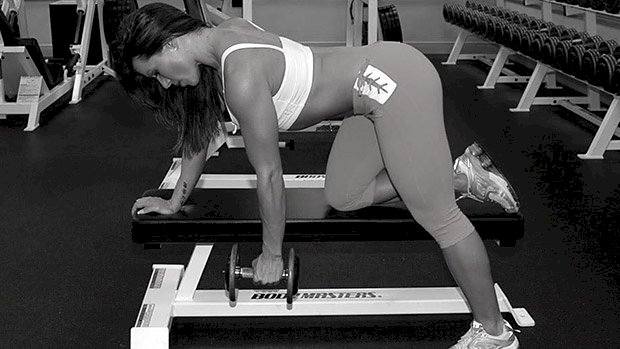 The one-arm row is a classic exercise, but it can usually be performed better by pulling with a J-shaped trajectory. One concept in muscular anatomy that’s often overlooked is the direction that fibers run. Muscles contract along the lines of fibers within them. So, muscles only contract in the direction those fibers run. In the case of the lats, the fibers run a bit diagonally from the shoulder joint down towards the lumbar spine. So it’s important to use those fibers that are high up in the back (and diving into the shoulder joint) by letting a weight travel in front of us during rows. How to Do It Get one knee on a bench with the same-side arm directly underneath the shoulder joint. Your off-bench leg should shoot out wide to “get out of the way” and create a pocket for the elbow. Engage your core and brace to keep your spine level (tabletop back). Let the dumbbell begin underneath your forehead/eye region and pull it towards your hip. Move it back towards the hips, up towards the ceiling, and then in towards the spine. Slowly control the weight back into that stretched lat position.
Origin: Tip: Master the J-Row
Tip: Eat These for Big Sex Drive
 Spanish scientists just published a report that found that adding nuts to a regular diet improves orgasmic intensity and sexual desire in men. What’s particularly notable about this study is that it wasn’t like most of the studies on erectile function in that it didn’t involve flaccid old coots who became only slightly less flaccid after undergoing some dietary or lifestyle change. Instead, this study involved young guys who already possessed the unassailable erections and volcanic orgasmic function of youth before taking part in the study. What They Did Spanish scientists, led by Dr. Albert Salas-Huetos of the University Rovira i Virgili, recruited 98 healthy men between the ages of 18 and 35 for a 14-week, randomized controlled study on the effects of mixed nuts on male sexual function. Half of the men were assigned to consume a typical Western-style diet while the other half was assigned to eat that same diet but with the addition of 60 grams per day of raw, mixed nuts (walnuts, almonds, and hazelnuts). What They Found The primary outcome seen in the nut-diet group was improved sperm count and sperm quality, but the researchers then asked the participants to supply answers to the 15-question International Index of Erectile Function (IIEF). Eighty-three of the subjects (43 in the nut group and 40 in the control group) complied. Compared to the control group, the nut-diet group reported a significant increase in orgasmic function and sexual desire. Oddly enough, the researchers couldn’t figure out why the nut group experienced an improvement in sexual function because the usual biochemical suspects didn’t appear to play a part. For instance, increased erectile function usually corresponds and correlates with an increase in nitric oxide (NO), which improves endothelial function and allows more blood to flow into the penis. But for some reason the scientists didn’t see an increase in NO production, even though nuts are high in arginine, an amino acid precursor of NO. And neither did the scientists note an increase in concentration of E-selectin, another molecule indirectly involved in healthy erections. In fact, they couldn’t figure out why nuts had the effect the did, but they rightly concluded that, “an absence of evidence does not mean evidence of no effect,” which is probably another way of saying that you shouldn’t look either a gift horse or gift erection in the mouth. How to Use This Info It’s easy to test out the findings of this study. All you’ve got to do is start eating 60 grams of mixed nuts a day and take your penis out for an occasional spin to see how the old boy handles some curves. While the study used a blend of walnuts, almonds, and hazelnuts, you could probably get away with sticking to one or two of the listed varieties instead of an equally proportioned blend of all three. Likewise, you could probably opt for other types of nuts. A previous study found that eating 100 grams of pistachios every day for three weeks had similar effects on sexual function. (That particular study was done with men who had erectile dysfunction at the outset, so given that the pistachios literally had a heavier load to lift, it could mean that larger amounts of nuts are even more potent than the 60 grams used in the Spanish study.) Here’s a breakdown of approximately how many nuts you’d have to eat to get 60 grams: 20 Walnuts, or… 40 Almonds, or… 40 Hazelnuts, or … 20 Brazil nuts, or… 30 Cashews, or… 30 Pecans, or… 4 Tablespoons of pine nuts, or… A blend of different nuts totaling 60 grams. So if you wanted to duplicate the protocol used in the Spanish study, you could eat a 60-gram blend consisting of about 10 walnuts (30 grams), 10 almonds (15 grams), and 10 hazelnuts (15 grams). However you do it, keep in mind that 60 grams of nuts is between 350 and 400 calories, so make dietary adjustments accordingly so you don’t gradually pork out your waistline. Of course, 60 grams is a damn lot of nuts to eat in general, so let’s get practical. The pro-sexual effects of nuts are likely due to their anti-inflammatory, anti-oxidant properties (courtesy of their inherent polyphenols), and eating just 30 grams of them a day instead of 60 is probably more than enough to help you get the desired sexual effects and the desired health effects, especially if you’re young and already turgid a good amount of the
Origin: Tip: Eat These for Big Sex Drive
30 Days of Shoulders: 1-10
 If you’re reading this right now, chances are… You have two shoulders. One of them doesn’t feel so good. The shoulder is one of the most frequently injured areas of the body. These tips, on top of being gluten free, will help keep your shoulders healthy long-term and help you continue to kick ass and take names in the gym. Day 1 – First Fix These Two Mistakes There are many things to consider when it comes to why someone’s shoulder may be bothering him or her: poor soft tissue quality, programming imbalance, weak this, overactive that, they wore blue on a Wednesday, etc. I don’t know. It’s a lot. But more often than not, it’s how someone performs certain exercises. This factor often gets overlooked. Take the dumbbell row for example. It’s not uncommon to see one or both of these mistakes being made: Too much glenohumeral extension. I call it the “more ROM must be better” scenario. In this situation, each scapula dumps forward putting excessive stress on the bicep tendon. Not allowing the scapulae to move around the rib cage. Let that shit move, yo. Address those two things and your shoulders may not hate you as much. Day 2 – Decide If Overhead Pressing is a Good Fit One simple screen I use to ascertain if overhead pressing is a good fit for someone is to look at his shoulder flexion – his ability to bring his arms overhead. Sometimes you’ll see one or both of these compensations: excessive lumbar extension and/or excessive forward head posture. The culprit could be a few things: Soft tissue restrictions in the lats, pecs, triceps, etc. Or even postural considerations like upper cross syndrome. Although, admittedly, I’ve come to realize this is less of a thing and the culprit is usually addressing postural habits. Insufficient ability to access scapular upward rotation, protraction, or posterior tilt. Lack of anterior core stability or lumbo-pelvic control. Bony restriction, which, unless you’re a wizard, you’re not fixing with any amount of corrective exercise. Note: If you are a wizard, can we hang out? Anyway, if someone exhibits the inability to bring his arms overhead without going into excessive rib flair, it’s likely not going to be in his best interest to hoist a barbell in that direction either. This isn’t to say he’ll never be able to press overhead or, I don’t know, perform barbell snatches paired with handstand walks over broken glass for AMRAP. Never say never. But rather, for the time being, it may be more prudent to opt for exercises that’ll be a better fit. This is a straightforward screen, which gives me important information as a coach, and ammunition to sell the idea that one needs to earn the right to overhead press. Day 3 – Assess, Reassess, and Release Shit If someone’s shoulder flexion is lacking, I’ll use the assess and reassess approach, tossing in a “corrective” layer to see if I can induce an improvement. If it works, cool, I’m the man. If not, well, shit gets awkward and I’ll just start doing shadow puppets. Kidding. I’ll just move onto the next corrective layer. The shoulder blades are at the mercy of the thoracic spine. If that area doesn’t move then it’ll be hard for the scapulae to move as well. The first layer is what I like to call “release shit.” Take a look: In the video I use Acumobility balls to “release” the area and see whether or not I can improve overhead mobility. Day 4 – Getting the Ribcage to Move The shoulder blades are at the mercy of the thoracic spine and, in particular, the rib cage. If that area is incapable of moving (or getting 360 degrees of expansion) then the ability to bring the arms overhead can often be compromised. I know most people don’t have enough eye rolls to give once the topic of positional breathing enters the conversation, but all we’re talking about here is one or two drills. That’s ten or so “breaths” and your shoulders will thank you in the long run. Does this mean you can jump right into barbell snatches, kipping pull-ups, or whateverthefuck? No. These drills allow “access” to overhead ROM via improved position and stability. The appropriate move may mean “fake overhead pressing” like landmine press variations, or maybe controlled tempo dumbbell overhead presses. Either way, these drills may allow a window of overhead training and I believe they’re well worth it. One drill I love is the dead bug because it hammers home the concept that proximal stability equals distal mobility. Watch the video and you’ll see what I’m talking about. Day 5 – Improving Overhead Mobility (Upper Traps) To move the arms overhead it’s important to improve scapular protraction, posterior tilt, and maybe most important of all, upward rotation. Three areas play a role in upward rotation: serratus anterior, upper traps, and lower traps. All act as force couplers to “pull” the shoulder blade into upward rotation as the humerus elevates overhead, kinda like when the Night King pulled a “come at me, bro” pose toward
Origin: 30 Days of Shoulders: 1-10
Tip: Replace the Rear-Delt Raise
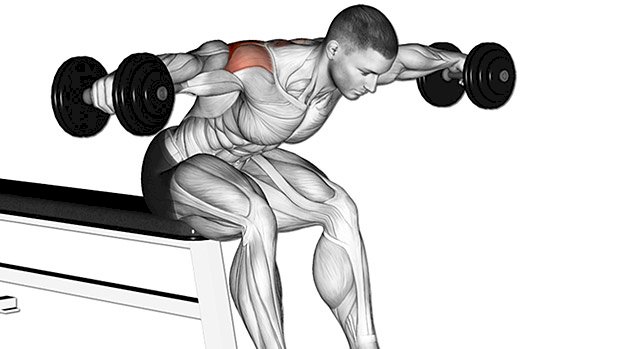 I’ve done my fair share of bent-over lateral raises (rear delt raises), but the truth is that they fall short. With a bent-over lateral raise, the rear delts never actually get fully shortened. A key component in maximizing an exercise is to get the target muscle fully lengthened and then fully shortened within a movement. But some exercises don’t do that as well as others. Here’s a better option: Rear Delt Row with Supination Row to bring the elbow behind the body as far as possible, which will shorten the rear delt. Add a twist, literally, by supinating as you perform the row. Why the twist? Because it’ll bring about a certain amount of external rotation in the shoulder, which is one of the components of the rear delt. Supination at the forearm is actively linked with external rotation of the shoulder, just like pronation is linked with internal rotation. This isn’t an exercise you’ll go super heavy on, but you won’t need to so long as you’re using the appropriate resistance with it for the mechanics, and making sure to get the rear delt fully
Origin: Tip: Replace the Rear-Delt Raise
 All about sport xlsport.club