
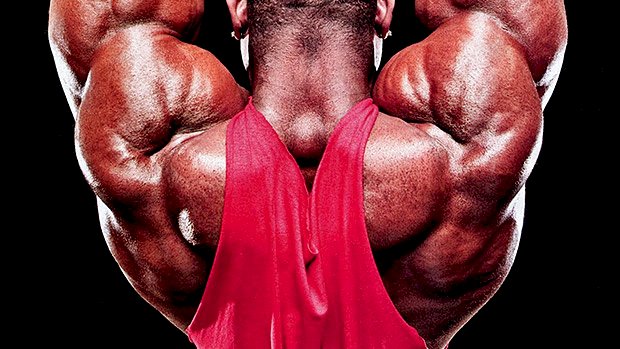
 Every rear delt movement I see has the lifter start with his hands and arms in line with his body, then proceeding to move them outward (think of rear delt flyes). There’s nothing wrong with this, other than the fact that solely focusing on this kind of path severely limits how much of your muscle you’re going to hit. To change things up, try setting up on a cable machine for constant tension: This is a very isolated pattern that, when done correctly, absolutely torches the rear delts. It’s important to maintain the same elbow angle throughout the entire range of motion. This isn’t a triceps exercise; the fulcrum is the shoulder. Pull the arm all the way across the body as though you’re trying to cover your mouth with your biceps. Then aim down toward your outside shoe with your fist. It’ll take a few reps to initially feel, but once you’re rolling, you’ll get an insane pump in the target
Origin: Tip: The Cable Chop for Rear Delts
Author: ondriving
Tip: Should You Bench With Your Feet Up?
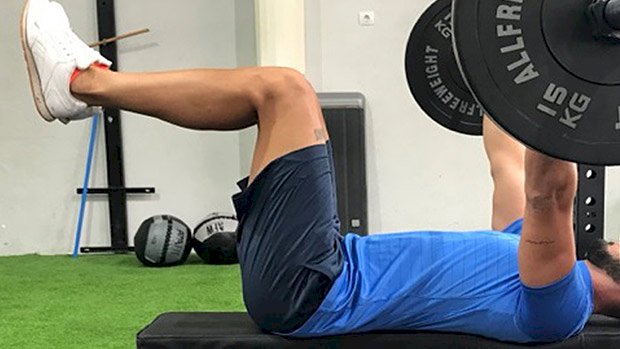 Charles Poliquin used to have a term for guys who bench-pressed with their legs off the floor and their knees bent at a 45-degree angle. He called them “future orthopedic patients.” He thought that benching that way was plain stupid and totally useless, unless maybe Ludmilla, the one-eyed Russian former Olympic shotputter who works in custodial services at the gym was mopping up around the bench press and you had to lift up your legs because you were afraid of getting a meaty backhand across the face for mucking up her clean floor. I’ve always thought it was a stupid way to bench, too, and I can’t help but shoot condescending stares at any moron I see doing it. That’s why it was particularly painful to read this new study. It seems, cough, hem, haw, that benching with your feet off the floor actually increases the involvement of the pecs, delts, triceps, and even the muscles in the forearms. But then I thought about it a bit and decided that their findings, while legitimate, weren’t applicable to anyone who wants to add muscle or get stronger. What They Did Spanish scientists recruited 20 young men and carefully established their 1 RMs (the most weight they could lift for one rep). They then wired them up with enough electrodes to make them look like the dudes in a Marvel Comics origin story, just before something went horribly wrong and turned them into super heroes or super villains that spat lighting bolts out of their wazoo. After thoroughly warming up, the subjects performed 8 reps of bench press with 60% of their 1 RM with either their feet on the ground or their feet elevated. They did a set of 8 reps using a 2:2 tempo (both lowering and raising the bar to a count of 2). After an appropriate rest period, the participants repeated the lifts, doing the opposite (feet up or feet down) of their first test. What They Found Doing bench presses with the legs up significantly increased the recruitment of the pectoralis major (clavicular portion, sternal portion, and costal portion), anterior deltoid, triceps brachii (medial head), forearms (flexor digitorum), rectus abdominis, external oblique, and rectus femoris muscles. This prompted the authors of the study to write, in Yoda-speak, the following: “To perform the bench press exercise with flexed hips could be recommended for training in sports where the upper limbs and hip flexor muscles are required.” How to Use This Info While I don’t doubt the findings of this study, I’m still not going to do or recommend the “legs up” bench press. I’ve got several reasons. For one, the slow tempo they used in the study doesn’t reflect how people normally bench and I’m pretty sure that lifting explosively, or at least quickly, would show a different recruitment pattern. Secondly, their study showed that there’s more activation of the rectus femoris in the legs-up bench than there is in the conventional bench. The trouble with that is, the bench, when it’s done with any amount of significant weight, is actually a whole-body lift with all kinds of involvement from the legs. Clearly, these guys were using a weight that was so light that it didn’t require any drive from their legs. If they had used a heavier weight, it would surely have shown a higher level of recruitment of the rectus femoris than just lifting up your legs so Ludmilla can mop under your feet. Third, other studies have shown the opposite – that the conventional bench recruits more muscle than the legs-up version. (Of course, those studies used a BOSU ball underneath the lumbar spine to introduce instability, and the weight of the lifter plus the weight on the bar just might have smushed the ball down so it was, in effect, close to being a flat or semi-flat surface.) Lastly, recruitment of motor units isn’t the end-all and be-all of hypertrophy or strength. What matters more is the mechanical loading the muscle fibers are subjected to. Look at it this way, if you were to put on a chicken costume, climb atop your house and jump off, you’d recruit a whole lot of pectoralis-muscle fibers as you frantically sought to achieve flight, but all the flapping in the world wouldn’t lead to additional strength or size. What you need is adequate load, but if you attempted legs-up benches with much more than the 60% of 1 RM used in the Spanish study, you’d eventually run into the same problem you do with any type of instability training – having to balance the bar lengthens the amount of time between the eccentric and concentric part of a movement, resulting in a much-impaired stretch-shortening cycle, which impedes strength gains. Also, the limiting factor in any kind of instability training becomes the strength of the stabilizer muscles involved in the lift. In other words, muscle fiber recruitment of the chest, delts, and triceps ultimately would suffer because the amount of weight you’d need to coax the muscle to grow would likely be more than you could balance and keep from ending up an orthopedic
Origin: Tip: Should You Bench With Your Feet Up?
Tip: The Athlete’s Floor Press
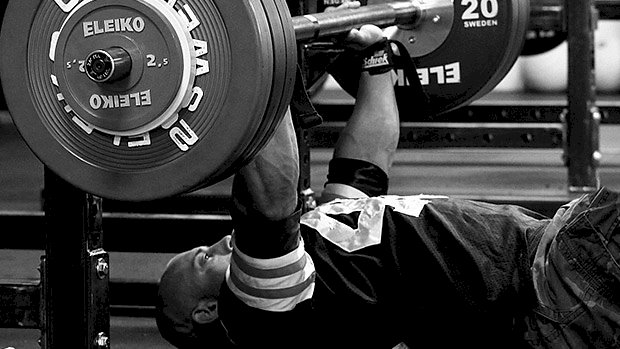 The floor press is a classic bench-building, triceps-focused lift. It’s also a great alternative for people who suffer from low back pain, especially extension-based pain. But for my athletes, I’ve found that the standard floor press doesn’t have the greatest transfer when it comes to sports performance. The good news? One simple adjustment will not only make the exercise more athletic, it’ll make you stronger in this position! Check it out: Floor Press With Glute Bridge Simply perform a glute bridge before you unrack the weight. Really focus on staying tight in the core by using your abs to pin the ribcage down. Contract your glutes hard to hold your hips in position. You’ll notice a couple things: Your core is challenged hard, so you must focus on maintaining the bridge position throughout the lift. You’re actually stronger in this position than a regular floor press. Try a rep without the glute bridge and a rep with it. You can lift slightly more in the bridged position. This probably has to do with energy transfer. A regular floor press doesn’t utilize the lower body or core as much. This variation is much more athletic for a few reasons: Energy transfer from lower to upper body. Pretty much all athletic movements use ground force to initiate a movement. This creates a need to produce energy and transfer it from the ground, through the lower body, and then to the upper body. Challenging static hip stability while dynamically pressing with the upper body. Many sports require joint stability in one area while simultaneously performing a dynamic movement. Direct sport-specific transfer to ground athletes such as MMA fighters and wrestlers. Think of a wrestler pinned on the ground. You’re not just going to use your arms to get a guy off of you; you’re going to use your whole body. Bret Contreras thought of the hip thrust while watching MMA fighters. When they’re on the ground, they thrust to get someone off. This takes that to the next
Origin: Tip: The Athlete’s Floor Press
Tip: The Best Deadlift for Glutes
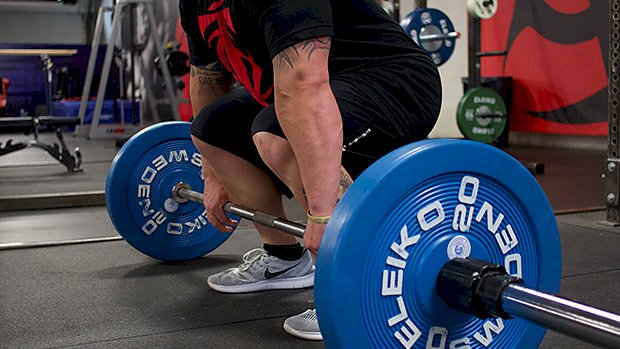 Most lifters have always assumed that the Romanian deadlift (RDL) was a tad better for the glutes and hamstrings than the conventional deadlift (CD) because the quads (specifically, the rectus femoris) play such a big role in the latter. It was a forgone conclusion, like how Eggos are better than English muffins, but no real-deal scientists had ever bothered to compare the two lifts – at least not until some researchers from Western Michigan University looked into it. What They Did The scientists found 21 men with at least three year’s experience with both the CD and the RDL. Each subject had a spider web of needles and electrodes affixed to their rectus femoris, biceps femoris, and gluteus maximus. The lifters then alternated between performing RDLs and CDs, using 70% of their one-rep maximum on both. They all used standard form on both of the lifts, with one exception: While the typical RDL range of motion usually comes to a halt when you start to feel a mild stretch in the hamstrings (which generally happens when the bar travels just south of the knees), the participants in this study were asked to at least attempt to lower the bar to the floor, flexibility permitting. What They Found To no one’s surprise, the CD evoked a much stronger response in the rectus femoris than the RDL – almost double the EMG percentage peak. The researchers also found that the CD caused significantly greater EMG values in the glutes, but this is where we have to take a brief side bar, your honor. Scientists have an entirely different definition of the word “significant” than lay people. In science parlance, significant is kind of a weasel word that just means the amount was large enough to be noticed, or large enough to matter. It’s closely related to the term “statistically significant,” which means a difference that’s unlikely to be caused by random chance. However, if you said you had a significant amount of sex last night, it would likely mean something far different than an amount of sex that, when compared to the amount of sex you normally had, was unlikely to be caused by random chance. So while the CD evoked a “significantly” greater response in the glutes than the RDL, the difference in EMG value in normal, non-science language was just a smidgeon, a duck snort that probably doesn’t matter in the long run. And while the CD came out on top with biceps femoris activation, too, the difference here was even less than we saw with the glutes. In short, the CD definitely caused the rectus femoris, or predominant quadriceps muscle, to work a lot harder. As far as the biceps femoris (the predominant hamstrings muscle) and the glutes, the amount was pretty much a wash between the two lifts. How This Info Might Change Your Training The real eye-opener in this study is just how much the CD relies on the rectus femoris, which presents a potential problem: A lot of us split our leg training as part of a push/pull workout, doing quad dominant movements (like the squat, leg extensions, etc.) on one training day and then doing hip-dominant exercises (deadlifts, glute thrusts, etc.) on another. Since the CD recruits the rectus femoris so heavily, incorporating it into a push/pull workout is problematic. Let’s say your push/pull workout includes squats on “push” day and CD’s on “pull” day. That means you’re working the quads twice as often as you intended. Given this study and the results described in this article, it would be much more logical and efficient to keep the squats in your push workout but replace the CD with the RDL in your pull workout. The glutes and biceps femoris recruitment is virtually the same as with the CD, but you’re getting minimal involvement of the rectus femoris. Max Glute and Biceps Femoris Recruitment with the RDL If you’re going to do RDLs instead of CDs, I suggest you make them count and do them on the Smith machine, as T Nation contributor Paul Carter suggests. (He prefers them to barbell RDLs because the stability afforded by the machine allows you to sit back farther.) Paul also suggests you do them with with a 5-second eccentric to further accentuate the targeted glutes and biceps femoris. To really maximize recruitment, slap a couple of step platforms underneath the bar and stand on them. This will allow you to extend the range of motion (provided your spine is flexible enough). A couple of sets of 10 should more than do the
Origin: Tip: The Best Deadlift for Glutes
The Next Generation Energy Supplement
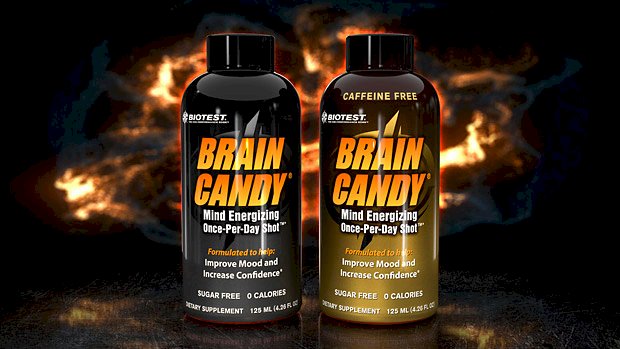 Conventional Energy Products Are Garbage Most of them are just caffeine delivery systems and drinking one is pretty much the same as going to Starbucks and chugging four Grande Iced Peppermint Mochas in rapid succession, only without having to listen to the same playlist they use at Guantanamo to torture the prisoners. Either approach will cold-cock your brain with a buzz that’s harsh and off-key, closer to anxiety than motivation, energy, or inspiration. That’s the trouble with caffeine, especially when you ingest a lot of it. It’s like an untamed stallion – of little use to anyone if you can’t make it go in the direction you want it to. But an evolved energy product, one that benefits the mind as much as the body, puts a chemical saddle and bridle on caffeine. It “tames” it. It makes it take you where you want to go. This evolved energy supplement would use a bevy of carefully chosen synergistic smart drugs (nootropics) to enhance caffeine’s best qualities (alertness, inspiration, etc.) while minimizing the bad (jitteriness, rapid heart rate, etc.). And caffeine simultaneously would return the favor in these evolved energy supplements by working to make the nootropics in them work better. When it clicks, when you’ve got the right formula, the product would give your brain superpowers above and beyond the capabilities of caffeine or any one individual nootropic ingredient. Biotest’s Brain Candy® is the right formula, whether you choose the regular or caffeine-free version. What Brain Candy® Does Brain Candy® customizes your brain function. It turns no into yes. Let’s say I don’t have the energy, the will, the inspiration, or the courage to do something – whether it be heading to the gym, tackling a new writing project, or going to some stupid party where I don’t know anybody. Brain Candy® coaxes me into doing a 180 on all my negative mental outlooks. In general, it boosts athletic performance, increases confidence, reduces social anxiety, and improves mood. It inspires and it motivates. It even improves learning and memory retention. Use it whenever you want to turn no into yes, or yes into hell yes. How Does Brain Candy® Do All That? Brain Candy® contains five nootropic ingredients, each selected for its individual properties and its ability to work synergistically with its teammates: Acetyl-L-Carnitine (ALCAR) ALCAR is a naturally occurring amino acid that easily slips across the blood-brain barrier. It’s been found to convey the following benefits: Improved “processing speed,” focus, mood, and memory (including long-term memory). Improved verbal fluency so you’re less Forrest Gump and more George Will. Improved social interaction. Increased glucose and creatinine levels in the brain (both of which decrease as we age). Increased energy production in the mitochondria, thereby boosting physical and mental energy for several hours. Protecting brain cells from Saturday night’s alcohol binge. Stimulating brain cells and prompting them to grow more connections to other neurons. Increased learning rate. Counteracting some forms of depression. Alleviating dysthymia, a depressive disorder. It’s still unclear as to how ALCAR does all those things, but we definitely know it increases levels of norepinephrine and serotonin, two neurotransmitters that play a vital role in brain function and mood. ALCAR, in general, improves the electrical “wattage” of your brain so that you “burn” brighter and longer. Acetyl-L-Tyrosine Acetyl-L-tyrosine is another naturally occurring amino acid that’s used by the brain to make the stimulatory neurotransmitters norepinephrine, epinephrine, and dopamine, the last of which is involved in emotions, movement, and even the sensations of pleasure and pain. Using acetyl-l-tyrosine has the following effects: Improved moods so that you say goodbye to the doldrums. Reduction of social anxiety. No more wallflower. No more struggling with what to say. Improved memory. Increased learning capacity. Improved analytical skills. Increased energy. Improved concentration. Restores neurotransmitter levels depleted by ingesting too much caffeine. Acteyl-L-tyrosine also helps you cope with stress, both physical and mental. Users report that it even leaves them feeling refreshed after an intense workout. CDP Choline CDP-choline is an intermediate in the production of the structural phospholipids that form cell membranes. It’s also one helluva’ nootropic with the following effects: Increased attention span. No more wandering brain. Enhanced production of ATP in brain cells so your mind works faster. Optimized signaling between brain neurons that enhances learning, cognition, and recall. Improved memory. Enhanced learning. Protects nerves against damage. Helps prevent addiction to drugs like cocaine and even, more interestingly, food. DMAE (Dimethylethanolamine) DMAE is yet another naturally occurring amino acid. It helps increase levels of the neurotransmitters acetylcholine, along with
Origin: The Next Generation Energy Supplement
30 Days of Shoulders: 11-20
 Note: Miss the first ten tips? You bastard. Don’t worry, you can check them out here: 30 Days of Shoulders: 1-10. Day 11 – Fix Your Bench Press Setup I’ve learned from experience that if bench pressing bothers a meathead’s shoulders the last thing you should do is tell him is to stop bench pressing. He’s not going to listen to you. He’d probably rather swallow live bees. That said, for shoulder health the big player that’s often overlooked is the ability for the scapulae (shoulder blades) to move. We want them to retract, protract, upwardly rotate, downwardly rotate, all of it. To lift heavy things, however, we need to pin those bad boys down. Whenever I start working with someone and they mention how bench pressing always bothers their shoulders, rather than bog them down with a litany of corrective exercises they’re not going to do, I’ll instead audit their technique – in particular their initial setup. The shoulder blades should be together and down. This is crucial to help save your shoulders during the bench press and to ensure a more stable base to hoist a barbell off your chest. Day 12 – Guide the Bar During the Bench Press Taking things a step further, I’d be remiss not to also discuss how to unrack the barbell properly. It doesn’t make much sense to spend all that effort to get tight on your setup only to press the barbell off the j-hooks and lose it all. Learning to guide the barbell off the hooks rather than pressing it is a skill and takes some practice to master. It’ll make a massive difference in helping to cement your setup for benching success. Day 13 – Meet the Bar During the Bench Press A common technique flaw with the bench press is people allowing their shoulders to roll forward in the bottom position (or when the barbell approaches the chest). One simple cue I like to use is, “Meet the bar with your chest.” For most people, most of the time, it’s far more advantageous to focus on bringing the chest towards the bar rather than the bar to the chest. This not only helps maintain more of an arch with the upper back (which, not coincidentally, also makes it easier to keep the shoulder blades retracted and depressed or in a stable position), but it also helps reduce the likelihood of the shoulders dumping forward. Day 14 – The Spoto Press The Spoto press is one of my favorite bench accessory movements for a variety of reasons: Stopping an inch or two from the chest reduces the range of motion, so you can think of it as an “invisible 2-board press.” This means it’s a viable pressing option for those with cranky shoulders. It’s an excellent exercise for those who have a tendency of allowing their shoulders to “roll” forward as the bar approaches their chest. The rolling motion places the shoulders in a more anteriorly tilted (unstable) position, which in turn makes you a shitty bench presser. Too many people fail just off the chest, so the Spoto press makes it so you spend more time within the ROM you’re weakest. This variation lends itself well to high(er) reps (8-12) using 65-75% of your 1RM. Side Note: If anyone calls you out for doing half reps when doing this exercise, feel free to drop-kick them in the kidney. And tell them the guy who invented it, Eric Spoto, used this variation exclusively to help build his RAW bench press to a previously held world record of 722 pounds. Day 15 – The Decline Press If a flat or incline bench press bothers your shoulders you’re not doomed to a life of push-up purgatory. Instead, try the decline position. Why? It reduces the degree of shoulder flexion you’re in when you press and helps keep you out of the “danger zone” or pain arc with regards to shoulder flexion. This is huge because it allows for a training effect to be accomplished while using a shoulder-friendly pressing variation. And as Dr. John Rusin has stated, it’s never a bad idea to expose people to different angles of training to better challenge joint centration. Adding some variety in pressing motions can go a long ways in keeping shoulders healthy. The bigger lesson, though, is having a better appreciation that you can always train around an injury. Always. Day 16 – Accessing the Back Squat I like the back squat. However, I’m not married to it and recognize that it’s not a good fit for many lifters. One of the main contraindications would be one’s ability to “access” the shoulder range of motion needed to place a (straight) barbell on his or her back. Back squatting with a straight bar requires a significant amount of shoulder abduction and external rotation. While there are a host of screens, assessments, and correctives that can be used to help someone gain access, the quick drill above works swimmingly. Day 17 – Scrape the Rack Press If I want to introduce more traditional overhead pressing variations into my clients’ programs using a barbell, the scrape the rack press is one of my go-to introductory variations. I like it because I’m able to
Origin: 30 Days of Shoulders: 11-20
Tip: Do Sprint Snacks to Build Conditioning
 Metabolic conditioning, cardio, aerobics, HIIT, or whatever you want to call it, is to weightlifting what flossing is to dental health. You know, good for us. Still, it’s a grim, joyless, kind of disgusting semi-compulsory act. Granted, we’re not getting drool and masticated burrito bits all over our fingers when we do cardio, but none of us started lifting weights so we could spend hours running or peddling to nowhere on machines, or flogging Mother Earth with old ropes your gym manager stole from the USS Ronald Reagan. Still, we have to do conditioning work, both for health and to improve work capacity. There may, however, be a way to make it more palatable. Scientists have found that doing short sprint “snacks” separated by an hour or more worked just as well as doing them together in one session. In other words, you could do short bouts of peddling or running or presumably any HIIT-type training modality throughout the day when you had a minute to spare and you’d accrue the same benefits as if you’d done them all at once in one tedious, mind-numbing session. What They Did Scientists at the University of British Columbia recruited 28 healthy, young, inactive adults and randomly assigned them to one of two groups that performed 18 training sessions over 6 weeks. One group did traditional sprint interval training (SIT) that involved doing three 20-second bouts of full-out cycling, each 20-second bout interspersed by 3-minute rest periods. The other group did sprint “snacks” (SS) consisting of three, separate 20-second full-out bouts each interspersed by 1 to 4 hours of rest. What They Found As far as cardiorespiratory fitness, both the SIT group and the SS group increased their absolute VO2 peak with no difference between groups. Both groups also showed similar improvement in their 150 kilojoule (kj) cycling time trial. How to Use This Info If you’re somebody who hates doing cardio, you can use the results of this study to make it more palatable. Say for instance you’ve got a stationary bike at home. You can hop on the thing any old time when you’ve got a few seconds to spare, like when you’re waiting for your toast to pop up. Simply get on the bike (or treadmill, or whatever apparatus you use), go balls out for 20 seconds, and then resume whatever you were doing. Then, when similar opportunities present themselves throughout the day, whip out another couple of 20-second high-intensity efforts. Similarly, you could do a single 20-second burst as part of your warm up for your workout and then do another an hour later when you’re finishing up, then doing a third bout later on at home. If we believe the results of this current study, the effects on cardiorespiratory fitness would be the same as if you’d done all three bouts at the same time. It Controls Appetite, Too This type of exercise may also suppress appetite. In a separate study, sport scientists at the University of Birmingham found that high-intensity cycling protocols (4 x 30 seconds) also reduced levels of the hunger hormone ghrelin while increasing levels of the satiety hormone GLP-1. Of course, unlike the “sprint snacks” described in the British Columbia study, the appetite-suppressed subjects did their high-intensity bouts all at once, but it’s likely that even one high-intensity bout would have similar effects on hunger hormones, albeit to a lesser
Origin: Tip: Do Sprint Snacks to Build Conditioning
Tip: Inside-Out Shoulder Strength and Mobility
 I coach CrossFit. I know, I know, I’m sorry. It was an accident. But I kinda have a problem: I like motivated people that enjoy lifting and high-skill bodyweight movements. And there’s something to be learned from this crazy “functional” stuff. Like, how can they do 20 muscle-ups followed by 30 clean encrypted-media” allowfullscreen> Let’s break each part down: Passive-Active Hang Think about pulling your shoulder blades down as much as you can to engage all your back muscles. You can either hold for 5 sets of 10 seconds or perform 5 to 10 reps with no pause. Try both and see if you fatigue easily. This is a basic shoulder movement and ideally you should feel like you could do it all day. Hanging Shoulder Rotation All the movement has to come from the shoulder and not the elbow… or weird bobbing movements from your neck. We’re looking for good shoulder mobility here, not head gestures that would accompany a naughty innuendo. Many people struggle with rotations and it can feel unnatural at first, but it really shouldn’t. If it helps, try lifting your arms overhead and rotating your shoulders without holding on to a bar. This way you’re not having to lift your bodyweight so you can get a better feeling for the movement. Then, try it on the bar with your toes on the floor for assistance and build up to fully hanging rotations. Think like a monkey in a tree. You have to be able to have that control to navigate from branch to branch; otherwise you’re just swinging and yanking your shoulder out of its socket every time. Yes, CrossFitters may look like a floppy fish when doing butterfly pull-ups, but there’s actually a lot of coordination, control, and strength that goes into them. Butterfly pull-ups without the prerequisite control are a quick way to a dislocated shoulder or torn rotator cuff. Even if you never have any intention of flopping about on a pull-up bar, this control and strength is important to your general shoulder health. Single-Arm Hang It’s incredibly important to be able to hold yourself from one arm and still be able to engage the lat, provided you’re not a heavyweight powerlifter. A great strength test is to see how each arm matches up to the other. If one arm has tremendous endurance and the other slips after a few seconds, which arm you will favor in pull-ups and presses? Working on this will even help bring balance to your shoulders. Single-Arm Rotation Last in the video, we show you a demonstration of a full rotation from a supinated grip to a pronated grip. When I demo this at workshops, it’s amusing how many people freak out. But this is nothing compared to what you’d see in a gymnastics training camp! Despite the common reaction, this is simply a normal range of motion for the shoulder. We demo it in the video because I want you think about how much range of motion you’re missing out on by not having a rotational element to your shoulder work. It’s kind of like only ever training squats without doing deadlifts – there’s a whole range of strength there that needs to be worked on. However, please don’t try a full rotation unless you’re confident in one-arm hanging and you’ve tried it with your feet on the ground first. If you’re new to it, an easier way to build rotation strength is dumbbell shoulder rotations. If you work to make all these movements easy, your shoulders will not only be smarter, but a hell of a lot more durable and able to cope with punishment from any training program. More stability, more strength, and fewer injuries – that’s hard to
Origin: Tip: Inside-Out Shoulder Strength and Mobility
Fear of Muscle: What Women Need to Know
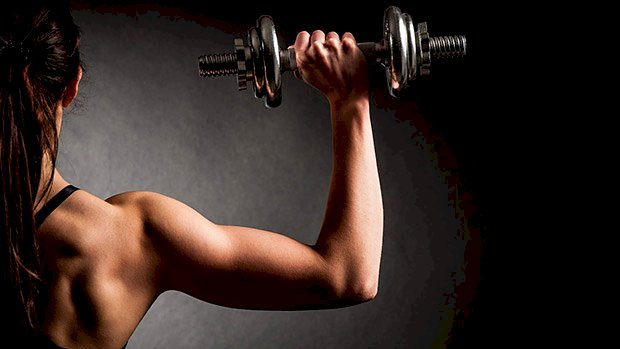 Although great strides have been made in the war against female fear of muscle, or myophobia (CrossFit deserves much of the credit), muscle is still often regarded with curious suspicion and sometimes outright distrust in female fitness circles. Sure, on some level, most women these days understand that muscle can have value, but there’s still a significant amount of (unnecessary) trepidation about becoming overly muscular. On a certain level, women’s mistrust of muscle makes sense. After all, one of the most immediately recognizable masculine traits is conspicuous muscularity, a trait most women want to avoid. But muscle is certainly not a universally masculine feature. Beyond that, the inescapable truth is that women with the most admired physiques also tend to be significantly more muscular than the average woman. So let’s clear up the misconceptions and concerns that women often have about building muscle. 5 Things Some Women Don’t Understand Muscle is very difficult for women to acquire. This is especially true for women who are older and/or dieting. Any muscle you do gain is acquired very gradually – there will always be plenty of time to apply the brakes if you feel you’re becoming too muscular. Most women find that if and when they do build new muscle, they like it much more than they imagined. But, if they end up not liking it, no problem! It’s very easy to lose. Muscle is what gets (and keeps) you lean. It’s commonly known that men can eat more than women without consequence, even if you match them for bodyweight. More muscle is the main reason why. Muscle and Metabolism Interestingly, many people tend to think of metabolism as a mysterious external force, kinda like gravity – you can’t touch it, you can’t see it, but darn it, it sure comes to a screeching halt right after your 40th birthday, doesn’t it? (Your metabolism, not gravity.) Mmm, not really. “Metabolism” simply refers mainly to your energy expenditure. There are four primary categories: “Basal” metabolism:This is the amount of energy you need to survive. You need a minimal amount of energy to keep all of your organs functioning and to maintain key survival functions such as consciousness, respiration, temperature maintenance, and so on. Non-Exercise Activity Thermogenesis (N.E.A.T.):This is the additional energy you need to perform any and all activity excluding formal exercise. This includes walking, work activities (from relatively sedentary work to manual labor), sitting and rising from chairs, pacing, fidgeting, household chores, literally any activity that isn’t “exercise.” Exercise Activity:The energy you need to perform, and recover from, any type of formal exercise. Thermic Effect Of Food (T.E.F):Whenever you eat food, it requires a certain amount of energy to process (digest, absorb, eliminate) that food. It takes between 5 and 15% of the calories in carbs and fats to process them. Protein requires a bit more work to process, requiring between 20 and 35% of its calories. All that being said, muscle beneficially affects total metabolic rate in three different ways: The training required to build additional muscle requires energy, both to perform, and also to recover from. Once acquired, this new muscle requires you to expend additional energy on a daily basis simply to maintain the new muscle. Both basal metabolism and NEAT increase. When you have more muscle, all activities are easier to perform, making it likely that you’ll do more of these activities, which of course, requires additional energy. So, gaining as much muscle as possible has a powerful impact on metabolic rate. Still, some women might have some psychological barriers to overcome. Why Women Think They’re Getting Too Big When They’re Not The Thanksgiving Dinner Effect Have you ever felt disgustingly fat after a huge holiday feast? Of course you have, but you haven’t gained ANY measurable fat after a single meal, no matter how gluttonous it may have been. But your attention has been diverted to your stomach, because it’s stuffed full of food. So you feel fat. The same phenomenon applies to lifting weights. Both during and after a workout, your muscles will burn from lactic acid accumulation and swell with blood. Both of these phenomenon focus your attention to your working muscles, which are now temporarily bigger due to being pumped. The Knee Surgery Effect I never noticed knee scars until I had knee surgery. But, the very day I got out of the hospital, amazingly, everyone suddenly had knee scars. Well, not really, but it’s just that I suddenly started thinking a lot about knees and knee surgery, which caused me to start noticing people’s knees and their scars. Similarly, when women start training, say, their legs, they often start feeling, noticing, and observing their legs, and often with the suspicion that muscle is being gained. And, needless to say, if a woman experiences a pump for the first time ever, she’s likely to mistake it for
Origin: Fear of Muscle: What Women Need to Know
Tip: Pause Squats for a Healthier Spine
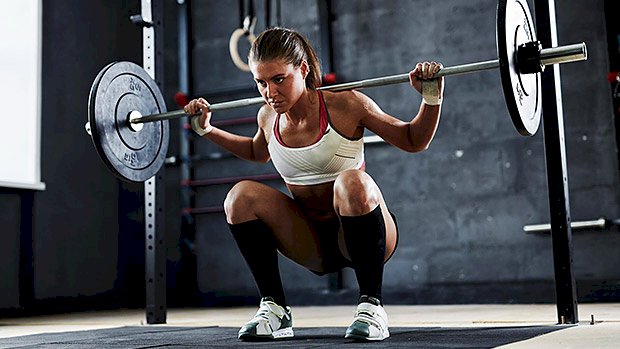 Understanding how to get the most out of stored elastic energy in the muscle has helped lifters hit new PRs on their squats. But over-relying on a huge stretch reflex or “bounce” out of the bottom of your squat can also cause a loss of tightness at the bottom. This can lead to posterior pelvic tilt or “butt wink” – your hips rotating backward which causes rounding in your lower back. When this happens, your body goes too far forward, your butt shoots back, and you end up with an awkward squat that looks more like you’re twerking than actually squatting. You may get away with this for a while, but eventually your back will have had enough and you’ll get injured. Not sure what I’m talking about? Here’s what this looks like: Back Squat – Losing Tightness Front Squat – Losing Tightness To save your back, do paused reps. This will increase your static strength from the bottom of the squat since you’ll no longer be able to generate a stretch reflex to rebound from the bottom. Paused Back Squat Paused Front Squat Pausing will strengthen your core and hips by increasing your time under tension (TUT) under the bar. Paused reps also help you learn a good bar path –your body will naturally find the most efficient way to keep the bar over your center of gravity. Finding the Right Depth Find out where you should pause by having someone film you performing light reps from a side view. Go into a full squat and watch the point at which your hips start to rotate back and you see a slight rounding of the lower back. Aim to pause right before this
Origin: Tip: Pause Squats for a Healthier Spine
 All about sport xlsport.club