
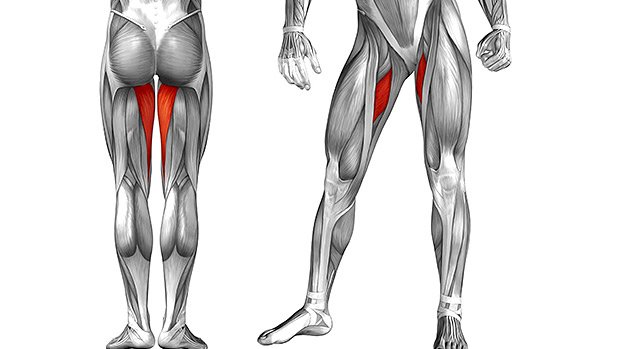
 In my early days of training, something that really bugged me was coaches talking about the importance of “torque” and “tension” and “bracing.” To be honest, I had no idea what they meant. As far as I could see, they were just going up and down. It looked the same as what I was doing. Skip forward a few years and I started to pick up what bracing meant: keeping air in the belly to keep the spine safe. It’s a pretty simple concept, but not for someone whose athletic background involved computer games. Skip forward a few more years and I’m coaching. I’m noticing a high number of people, especially those who play sports, commonly getting groin injuries from squatting heavy. What’s going on? I realized that the usual fix for groin issues was to make the glutes stronger. The main exercises prescribed involved a resistance band and abduction. Yes, you will feel your glutes doing those, and they’re great exercises for a burn. But you may have left out an important part of the puzzle: if you constantly leave out the adductors they’ll never be able to compete with the overriding strength of the glutes. The actual issue – an imbalance between two opposing muscles – will never be resolved. This is the idea of torque and tension: opposing muscles having a good relationship with each other so that they work well together to create balanced strength. Throughout all your banded glute rehab exercises, the band is simply playing the role of the adductors. For the glutes to be able to pull outwards during a squat, the adductors have to be strong enough to pull inwards to give the glutes something to work against. If they’re weak, the knees will collapse and you’ll either have a horrendous looking squat or strain your adductors because your glutes overpowered them. Making the glutes even stronger will only make the issue worse. Yes, you may temporarily feel better, but it will be more because you rested your adductor and it healed, not because your glute drills worked. Luckily, there’s an easy fix. Literally all you have to do is take off a few reps of your glute exercises and add in an exercise that involves the adductors, such as a Copenhagen plank or, my current favorite, the adductor bridge (which I’m hoping I invented, but probably didn’t) which we demonstrate in the video. If you teach your adductors to fire with the glutes, they’ll work together more efficiently and you can spend more time getting stronger, rather than having to do rehab drills every couple of months. How to Do the Adductor Bridge Set up in a 90/90 position. (See minute 2:15 in the video.) Place one hand on the floor beside the externally-rotated hip. Press your knee on the internally-rotated leg into the ground. Lift yourself up by pressing through the hand and knee at the same time. Repeat for 10 reps and add pauses at the top for extra fun. Repeat on the other side. Go and lift some weights!
Origin: Tip: The Secret to Stronger Glutes
Author: ondriving
Tip: A New Way to Murder Your Hamstrings
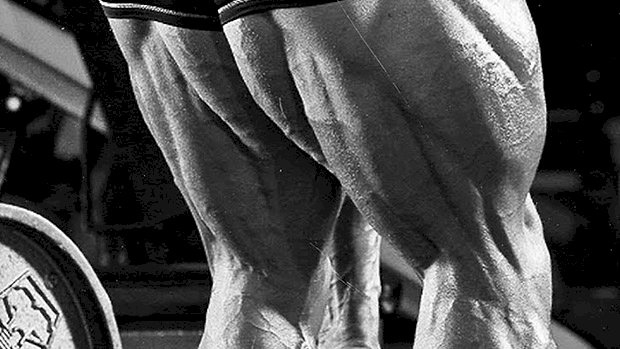 Looking for a new way to build your hamstrings? Try these. Triple-Threat Hamstring Bridge A1:Long Hamstring Bridge (toes down) x 5-10 A2:Medium Hamstring Bridge (toes down) x 5-10 A3:Regular Hamstring Bridge (heels down) x 5-10 Do 5-10 reps in each position, finishing each with a 5-10 second isometric hold – contract as hard as possible and battle against gravity. Master bodyweight before you add a barbell (or even use a sandbag across your hips). Besides being a good hamstring builder, these can also work as an activation exercise with bodyweight only, helping feel your hamstrings later in the workout. This is a form of mechanical drop set. You start with the hardest position (knees straight, toes down), and finish with the position where you have the greatest mechanical advantage (knees at 90 degrees, heels down). Adding isometric holds into the equation allows you to get a little more time under tension in each position. Isometrics will help you tap into the abundance of high-threshold motor units your hamstrings contain. Hams, Not Glutes You probably already use a combination of hamstring curls and hip hinges (RDLs, back extensions, pull-throughs, etc.) to train your hamstrings, but bridges are often left out. Normally, lifters do glute-dominant bridge variations. To hit your hamstrings, you make a few changes: Driving through your toes encourages a co-contraction of your calves and hamstrings. “Active insufficiency” of the gastrocnemius increases hamstring activation. Using a larger angle at the knee increases hamstring length and moment-arm length, placing more tension through the hamstrings. Elevating your feet on a box or bench changes leverage factors to bias more hamstring dominance, as opposed to elevating your back (hip thrusts) which will bias the glutes. All of these factors can be manipulated to target your hamstrings during
Origin: Tip: A New Way to Murder Your Hamstrings
Tip: Sweet Potato Protein Brownies
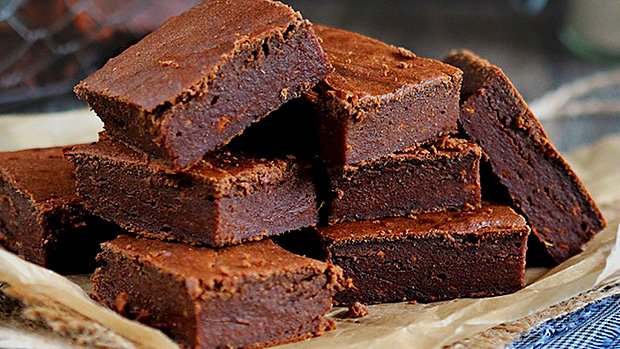 The typical brownie might make you go weak at the knees, but there’s always a cost. After all, it’s a devilish mixture of fat and sugar. The good news is, you can make a more macro-friendly brownie that won’t sacrifice on flavor or fudginess. These are made with a sweet potato base for good carbs without the sugar crash. There’s zero gluten and lots of fiber. They also have a Metabolic Drive® Protein kick, with 6 grams per brownie. Here’s the best thing about them though: At just 95 calories per generously-sized brownie, zero added sugar, and only 3 grams of fat, you wouldn’t be pushing it if you had more than one at a time. Ready to make them yourself? Here are the ingredients you’ll need and the directions. Brownie Ingredients 2 Baked medium (about 16 ounces) sweet potatoes, skins removed 3 Scoops (90 grams) chocolate Metabolic Drive® Protein 3 Whole eggs 1/2 Cup unsweetened cocoa powder 2 Tablespoons olive oil, or macadamia nut oil if available 2 Tablespoons any milk 1/4 Cup semi-sweet chocolate chips Optional Icing Ingredients 1/2 Cup powdered erythritol (not granulated) 1/4 Cup PB2 powdered peanut butter Directions Bake your sweet potatoes and let cool before beginning. Then scoop out the insides. (Don’t waste the skins; they’re great in stews and one-pot meals for extra texture and fiber.) Preheat your oven to 350 degrees Fahrenheit or 180 degrees Celsius. Line a brownie tin or deep baking tray with baking or parchment paper. Use a food processor or immersion blender to blitz the sweet potato into a smooth mash. Add the rest of the ingredients except the chocolate chips. Blend until a thick batter is formed. Scrape the sides of your food processor a few times to ensure it’s well-combined. Fold in the chocolate chips, then pour into your pre-prepared tin. Spread evenly. Top with a few extra chocolate chips if you’re going for the fancy finish (add macros accordingly). Bake on the top shelf of your oven for around 14-16 minutes – a shorter bake time will produce a more gooey brownie. Let it cool a little, then cut into 18 squares. These brownies are good warm, but if you can resist the temptation and allow them to refrigerate overnight, they’ll transform into the fudge-like brownie you’ve been waiting for. For Icing (Optional) Mix together equal portions of PB2 peanut butter powder with powdered erythritol. Add a little water at a time to get your desired texture. This creates a peanut-butter-flavored icing that makes for an extra decadent topping with very few calories. Nutrition Info Per Brownie Recipe makes 18 servings. Calories:95 Carbs:17 grams Fat:3 grams Protein:6 grams Fiber:7 grams
Origin: Tip: Sweet Potato Protein Brownies
High-Rep Deadlifts Are Dead
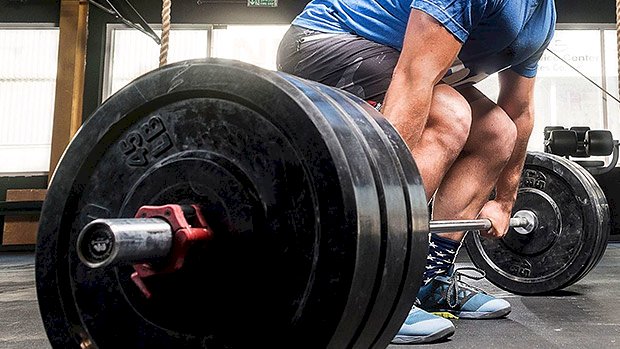 The deadlift plays a massive role in developing strength, power, and – when done correctly – injury prevention and overall resilience. While there’s no denying that the deadlift is a powerful strength builder, the waters become a tad murkier when talking about deadlifts in the context of high-rep sets. Relatively heavy sets done within the 1-5 rep range can create powerful adaptations, but going beyond that threshold is, at best, questionable. The supposed point of high-rep sets is stimulating hypertrophy, improving muscular endurance, and building up work capacity. That means chasing metabolic stress, increasing time under tension, finding ways to extend sets, and imposing maximal muscle damage. But do high-rep deadlifts accomplish any of these noble goals? The answers point in the opposite direction – that performing high-rep deadlifts is playing with fire. Why High-Rep Deads Are a Bad Idea 1 – Who are you kidding? Your technique isn’t good enough. In theory, you can get away with high-rep deadlifts if you can maintain good technique throughout the duration of the set. Unless you were mistaken for the Hulk out of the womb, though, you probably can’t. As Tony Gentilcore says, “The ideal rep scheme to teach deadlifts is in the 3-5 rep range. Anything more and technique goes into the crapper.” When pulling from the floor, it’s hard enough to maintain optimal technique, full-body tension, and a strong brace for 1-3 reps, let alone 10, 12, or 20. Add in the laundry list of cues that accompany the deadlift – chest up, back flat, armpits over bar, neutral neck, vertical shins, etc. – and things get more complicated. So there’s a lot that needs to be dialed in and hardly any room for error. Combine all of that with a couple sets of, say, 12 reps, and things can get ugly quickly. 2 – High-rep sets aren’t that great for building muscle. Assuming you’re past the newbie stage, the deadlift doesn’t do much in the way of hypertrophy in the first place. The downside of the deadlift is that most of the musculature performing the work is in an isometric/static position. There’s minimal time under tension and hardly any eccentric (negative) loading, both paramount for building muscle. Consider that there’s no other exercise (outside of Olympic lifting) where you just drop the weight. As Paul Carter wrote in The Big 3 Suck for Size Gains, no eccentric means no growth. Putting on muscle with the deadlift gets even more unlikely when you go high-rep. 3 – Deadlifts tax the nervous system, especially with high-reps. There’s no other lift that’s as devastating on the nervous system as the deadlift. Deadlifts involve more axial/spinal loading than any other lift, which is arguably the most potent stressor on the CNS. There’s no stretch reflex. Since deadlifts start from a dead stop, the nervous system is forced to fire on all cylinders at the beginning of each and every rep. Unlike most lifts where a breakdown in form means a failed rep, it’s easier to grind out a “successful” deadlift with sloppy technique. On top of hammering the entire posterior chain, deadlifts challenge grip strength more than any other lift. A drop in grip strength is an indicator of CNS fatigue, which makes near-maximal grip requirements an additional contributor to the deadlift’s neural demands. If frequency and volume are kept in check, the systemic fatigue that occurs after deadlifting is a normal (and necessary) part of the adaptation process. In the context of high-rep sets, though, the deadlift takes a lot more than it gives back. If volume skyrockets, the factors above that contribute to a fried nervous system are amplified. Pair some deadlifts with a couple of AMRAP sets and the inevitable sloppy technique, and you’ll wake up the next day feeling as worthless as a pool noodle in a gun fight. 4 – High reps or not, conventional deadlifts aren’t for everyone. When manufacturers began producing standard 45-pound plates, they mapped out the design so that the barbell would sit 8.75 inches off the ground. The rationale? If a lifter missed an overhead lift and got pinned under the bar, 8.75 inches would provide ample room to prevent his skull from being crushed. The problem is, unlike squatting and benching – where range of motion is dictated by an individual’s anthropometrics and movement capabilities – the deadlift’s range of motion is based on an arbitrary manufacturing design. The bench press’s range of motion depends on the length of an individual’s arms and the size of his chest, while squat depth is determined by height, leg length, and an individual’s mobility (or lack thereof). As it applies to deadlifts, though, it doesn’t matter if you’re a hobbit, Sasquatch, or anything in between. You’re pulling from the same 8.75″ as the next guy. The reality is that some people simply lack the ability to pull from the floor with a neutral spine. A lot of lifters can reap ALL the benefits of the deadlift by using a setup like this: More info on
Origin: High-Rep Deadlifts Are Dead
Tip: Block Training For Beefy Abs
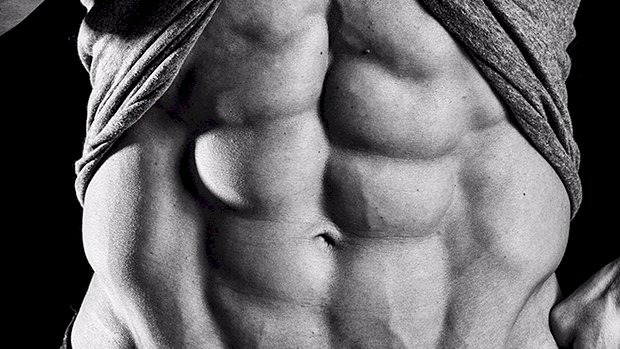 Every Day Abs? My strategy for ab training? Using blocks of intense abdominal training where I hit them every day for 4-6 weeks. You can recover rapidly from pretty much any abdominal exercises except those full range GHD sit-ups you see in CrossFit. (This movement creates a powerful stretch of the rectus abdominis – especially when done with the speed they use – which will cause a lot of muscle damage, and require more recovery time.) Daily ab training at an adequate level of intensity is one of the fastest ways of improving abdominal aesthetics, provided you’re lean enough to show them. The “abs are made in the kitchen” mantra isn’t quite accurate. Abs are simply revealed in the kitchen: you must be lean. Building them through direct training will increase the likelihood of seeing them. It’ll also make it easier to see them at a slightly higher body fat level. For example, even when I’m at around 13-15% body fat I can still see a clear 6-pack because the muscle bellies of the rectus abdominis are so thick they create a contrast between themselves (the “packs” portion) and between the tendinous sections that separate them. In contrast, I’ve known plenty of figure competitors who don’t do loaded abdominal work (or any abdominal work) to avoid “making their waist bigger” who show no abdominal separation even at very low levels of body fat. Training abs with added resistance – so that you fatigue at 6-12 reps – is how you increase the thickness of the muscle bellies and increase abdominal separation. You also need to do your ab work the right way. Use this approach when training abs: Start by flexing the abs as hard as you can before even starting the rep. Imagine getting punched in the stomach. While maintaining the tension, initiate your rep. Don’t go up too fast. Focus on being able to maintain the tension. At the end of the concentric range of motion, once again try to contract your abs as hard as you can. They should already be contracted hard, but you likely can increase the contraction even more. Do the eccentric or negative while trying to maintain maximum muscle tension. I like to superset one loaded ab exercise with an unloaded one. You do 3 sets of one superset every day. A few suggestions: Option 1 Exercise Sets Reps A1 Seated Cable Crunch Facing Machine 3 6-12 A2 Swiss Ball Crunch 3 6-12 Note: The goal is to make each rep so hard that it’s impossible to get more than 12 reps. Option 2 Exercise Sets Reps A1 Seated Cable Crunch Facing Away From Machine 3 6-12 A2 Hollow Body Hold (Max time 30-45 seconds) 3 45 sec. Note: If you have other ab exercises you respond well to, feel free to use them
Origin: Tip: Block Training For Beefy Abs
8 Secrets For Building Your Best Upper Chest
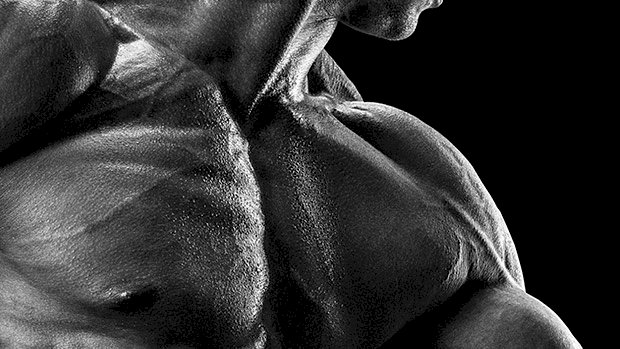 While many lifters get decent mid and low-pec development, it’s rare to see a truly filled-in upper chest. When it comes to aesthetics, the upper pecs are a game changer. Here are eight things you need to know (and do) to build yours. 1 – Check Your Ego at the Door The biggest reason guys lack upper pec development? They turn chest day into ego day. Flat bench pressing gets all the love because they can use more weight. But if you’re serious about reaching your pec potential, you need to put your ego aside and focus on incline movements – even if you train in a public gym and you currently suck at inclines. Upper pecs are a tricky area. Unless you won the genetic lottery, just emphasizing incline pressing may not be enough. 2 – Hit BOTH Parts of Your Upper Pecs When people think about the upper pecs, they only think about the clavicular portion of the pectoralis major. But there are TWO major portions. The clavicular part originates on your clavicles and run almost parallel to your anterior deltoids. When doing incline presses, many lifters mistakenly use the same grip and style they use for flat bench presses. However, research shows that one great way to emphasize the clavicular portion of your pecs is to use a narrower grip when doing inclines (1). This brings your elbows in and gets your shoulders moving in the direction of your clavicular fibers. Note: Don’t bring your elbows in all the way; this will place stress on the anterior delts. If you use a barbell, use a shoulder-width grip and focus on squeezing your hands together as you press the weight to increase the recruitment of your pecs. You can also do this with dumbbells and your arms at a 45-degree angle: This elbow tuck position is so powerful that you may not even need to use an incline. Research shows that simply doing flat bench press with a reverse grip lights up your clavicular fibers (2). The downside of the reverse-grip bench press? You move your arms into external rotation. While it works, it may not be optimal because the pecs assist in internal rotation. As a result, a better approach is to press with dumbbells (off floor or bench). With dumbbells you get the same elbow position at the bottom as a reverse-grip bench press, but you can internally rotate your arms as you press up for max pec recruitment. The other part of your pecs that’s often forgotten is the upper sternal portion. If you look at the pec anatomy, you’ll see sternal fibers running all the way up to the top of your sternum. If you look at the line of pull of these fibers, you’ll see they’re still pulling your arm across your body. If you only press with your elbows tucked, or a steep incline, you might miss this part. To develop the upper sternal fibers, you need a low incline and a wider elbow position. Note: If you have shoulder problems, or experience pain pressing this way, don’t do it! However, if you want to give it a go, here are some tips that’ll help hammer your pecs while sparing your shoulders: Don’t force the elbow flare – maintain a slight elbow tuck. Remember, you’re on a slight incline. Flat bench pressing with wider elbows is riskier for your shoulders because your shoulders are abducted (out to the side) and internally rotated. This puts you in a position of shoulder impingement. But when you use a slight incline, you externally rotate your arms which moves you out of that shoulder impingement position. Stop when your elbows are in line with your shoulders. This is where most people naturally stop anyway. Also note that the distance between the dumbbells and your shoulders will vary depending on your arm length, so stop looking at the dumbbells and start looking at your elbows. 3 – Find YOUR Optimal Bench Angle If you’re trying to build your upper chest, the angle matters. If your bench angle is too high, your upper pecs will drop out and your anterior delts will take over. What’s your optimal angle? Research shows that a bench angle of about 30-45 degrees may be best for hitting your upper pecs (3). However, before you pull out your protractor, you should know that this study was done with only 14 subjects. That leaves us with the question, “What about individual variation?” If you look carefully at a bunch of different people, you’ll notice significant variance in chest cavities (sunken, flat, barrel, etc.). How can people with different chest structures press on the same bench angle and expect the same muscle activation? The optimal angle for you might be higher or lower than the next bro at your gym. To find your best angle, try this test: Attach a light band to a rack or post at about eye level. Keep the band tension very light. Grab the band and raise your hand overhead. Place your opposite hand on your upper pec of the raised arm. Draw your hand in until it’s at or just past the midline of your body. Slowly lower your hand. Stop the movement when you feel your upper pec light up. Turn to a side mirror and
Origin: 8 Secrets For Building Your Best Upper Chest
Tip: How to Really Train Your Forearms
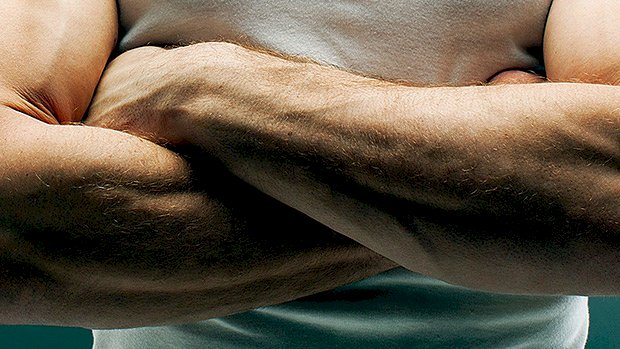 High-Frequency Forearms Want bigger, stronger forearms? Train them often. Forearm exercises don’t cause much, if any, muscle damage, especially for exercises with less eccentric loading like the wrist roller or Thor’s hammer (see video). But even wrist flexion and wrist extension will cause little damage. Furthermore, these exercises have a very small impact on the nervous system because they’re very simple and done with light weights. Energy expenditure is low too since it’s a short range of motion and smaller muscles are involved. None of the factors requiring more recovery time are present with forearm training. Unless you go absolutely crazy with the volume there’s no reason you can’t train forearms every day. Why Do I Want Big Forearms? Because big forearms look cool. Hey, they’re the only thing that’s 100-percent showing in a T-shirt! Having well-developed forearms will do more for you than simply attracting admiration. Bigger and stronger forearms make it easier to build bigger biceps. Coach Charles Poliquin wrote about this phenomenon 20 years ago. The body hasn’t changed since that was written. By building bigger, stronger forearms you’ll be able to handle more weight in both curling and pulling exercises, which will increase the stimulation on the biceps and back muscles. Bigger forearms and a stronger grip also help the bench press. Look at the top bench pressers in the world; they all have thick forearms. To bench heavy weight you need a strong grip. The harder you can squeeze the bar, the less the wrist will tend to cock and get the bar misaligned. (The bar should be directly above the wrist joint. If the wrist is cocked, the bar moves away from that alignment.) On top of that, big forearms create a bigger “body” on which to spread the load of the bar. This can decrease stress on the shoulder joint. One Caveat and a Program You shouldn’t overdevelop one part of the forearms. For example, the wrist flexors tend to be trained a lot more than the wrist extensors (the flexors are involved a lot when curling and pulling) and the forearms supinators are often dominant over the pronators. Just like any other muscle imbalances in the body, this can lead to problems like tendonitis. So if you want to jack up your forearms and train them every workout (or every day) then work on flexion/extension one workout, do supination/pronation on the next, and do grip work on the third. Then just rotate through that. Since forearm exercises have a short range of motion, you’ll need to do either higher reps or use a slower tempo to create enough fatigue and trigger growth. Sets lasting 30-60 seconds should be your target. I actually don’t count reps when doing forearm work. I put a timer on and keep working until I’ve achieved failure or close to it in the 30-60 second range. But I’ll prescribe a number of reps in a couple of the examples below for the sake of simplicity. Workout A – Flexion/Extension Exercise Sets Reps Rest A1 Wrist Roller 3-4 30-60 sec. 1 min. A2 Wrist Curl 3-4 10-12 90 sec. Workout B – Supination/Pronation Exercise Sets Reps Rest A1 Thor’s Hammer Pronation (4 second negative) 3-4 10-12 1 min. A2 Thor’s Hammer Supination (4 second negative) 3-4 10-12 1 min. Workout C – Grip Exercise Sets Reps Rest A1 Pinch-Grip Deadlift (Hold 30-60 sec.) 3 2 min. A2 Fat-Grip Hold (Hold 30-60 sec.) 3 2 min. You can use other exercises if you prefer, but you get the
Origin: Tip: How to Really Train Your Forearms
Take 4 Capsules for Muscle Gain and Fat Loss
 Lazy people all over the world have long awaited the invention of a pill that allows them to enjoy the benefits of diet and exercise without actually having to do any dieting or exercising. Sure. Give them a pill like that, perfect the whole virtual sex thing, and they’ll never have to leave the house except for when the bug man comes to tent the place. Well, we’re not there yet – on either of those scientific milestones – but there is a substance that comes closer to that no-diet/no exercise goal than practically anything else in the supplement world and it’s derived from the herb, coleus forskohlii. The active ingredient is called forskolin and it can do a variety of things for the body that you normally can’t get without dieting and exercising. It does this primarily by stimulating production of an enzyme named adenylate cyclase, which in turn increases levels of a cellular messenger called cyclic AMP, or cAMP for short. In turn, elevated levels of cAMP can have the following physiological effects: Increased thyroid secretion of T4 (increased fat burning). Increased testosterone levels (increased muscle, sex drive, fat burning). Increased production of protein kinase (which leads to increased levels of hormone-sensitive lipases (HSL), which helps break down triglycerides). Increased protein synthesis in skeletal muscles. Increased activation of brown adipose tissue (more fat burning, although through a different mechanism). Lowered blood pressure (healthier cardiovascular system). Inhibited platelet aggregation (less clotting). Increased vasodilation (more blood flow). Increased bronchodilation (more air flow through the lungs). Now if you were to take one of those lazy people I mentioned, put him or her on forskolin for a few weeks, and then give them a physical, he or she might well show improvement on a number of medical parameters, just by taking a couple of capsules a day. But imagine what could happen if somebody combined exercise with forskolin. You might really have something then. Lots of Studies The effects I listed above aren’t just hearsay or conjecture. Much of it’s been tested and validated through various studies, the highlights of which follow: Male subjects in a 12-week trial experienced a 16.77 +/-33.77% increase in total testosterone compared with a 1.08 +/- 18.35% decrease in the placebo group. Female subjects in an 8-week study lost a mean of 9.17 pounds weight, while experiencing gains in lean body mass (without weight training). The total body weight of a mixed group of men and women in a 12-week study decreased from 74.7 kilograms to 73.5 kilograms while experiencing increases in lean body mass (without weight training). The forskolin users in a mixed-sex group of 50 test subjects experienced a 1.78 percent increase in lean body mass (compared with a 0.20 decrease in the placebo group) and a decrease in mean body fat from 35.8 to 34.0 percent (while the placebo group showed an increase in body fat from 38.8 to 39.0 percent). Why Haven’t I Heard of This Stuff Before? That’s an excellent question, Leroy. Even though forskolin’s been around for a few years, it’s never really caught on, either in the bodybuilding world or the health/life extension world. I’m pretty sure that it’s because most companies that decided to produce it didn’t bother to isolate and purify the main ingredient – forskolin. They just collected up the dried leaves of the coleus forskohlii plant, ground them up, and put them in capsules, with or without Italian salad dressing. As lame as that approach is, it mighta/coulda worked in some situations, like maybe they lucked out and found a crop that was particularly rich in forskolin, the same way that one harvest of oranges might be richer in vitamin C than another. Otherwise, they’d be left with a completely ineffective product, thus tainting and damaging the reputation of the product with a whole generation of users. The only way to manufacture a potent forskolin product is by isolating the active ingredient (forskolin). Better yet, you could purify it and esterify it (bind it with a carbonate ester). The end product, forskolin 1,9 carbonate, would then be much more bioavailable and its efficacy in the body would extend from about 4 hours to about 12. That’s exactly what Biotest did in producing Carbolin 19®. Do I Need to Cycle Carbolin 19®? Many supplements and drugs initiate a biochemical reaction by binding to receptors – chemical groups of molecules that receive signals from other chemicals or other stimuli to initiate a chemical reaction. The trouble is, these receptors eventually get desensitized to the original signal. After a while, you need a stronger and stronger dose to initiate the same response, until, ultimately, no dose is large enough to get the chemical ball rolling. This is what docs and scientists mean when they say someone is “insulin resistant.” However, at least as far as fat burning goes, forskolin is what’s known as a
Origin: Take 4 Capsules for Muscle Gain and Fat Loss
6 Hard Truths About Building Muscle
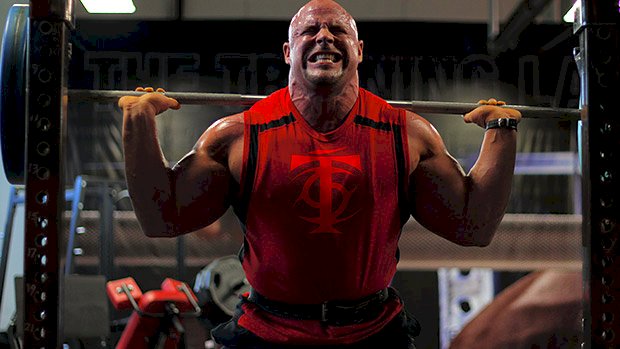 There are a few hard and fast rules about building muscle that everybody knows: You need to be in a calorie surplus. You have to train hard. You need to recover from your training. Yeah, yeah, but beyond those three simple truths are plenty of other lesser-known muscle building truths. Here are six of them that you need to know to maximize muscle growth. 1 – Stop searching for the perfect body part split. One of the most common questions people ask is: What’s the best muscle building split? The answer? There isn’t one. Muscle growth comes down to training frequency and volume, so the more often you can train a muscle with higher volume then, theoretically, the more growth you can achieve. So training a muscle group twice a week should provide more growth than once a week. And three times a week should provide even more growth than twice, right? Sounds like a decent idea in theory, but then again so did communism, and we all know how well that’s worked out. When looking at specific training splits, the number of times you can train a muscle in a given week comes down to the volume you’re using, the load you’re lifting, your training history, sleep, recovery, and nutrition. In other words, it’s complicated. Let’s say your workout split calls for training legs on Monday and Thursday. Sounds great, until Thursday comes around and your legs are still so trashed from Monday’s session that you can barely peel your tender glutes off the toilet seat. The ideal training split comes down to how well you can recover. The better you can recover, the more often you can train a muscle group per week. And the more often you can train a muscle, the higher your weekly volume and the more muscle growth you can induce. Recovery comes down to a few different factors. Calories and food quality are important ones. The more energy you take in, the better your body can repair tissues and manage inflammation (up to a certain point). But calories are only one side of the recovery equation. Sleep also plays a huge role in the recovery process. You can eat all the calories you want, but if you’re not sleeping enough, your body can’t effectively utilize those calories to help you recover. The bottom line? Pick a training split you can stick with consistently and train hard. To become self-sufficient, take notes on the process and observe how you feel. As you educate yourself on what’s best for your body, you’ll be better equipped to optimize your workout split going forward. 2 – Get more sleep. No really. Muscles are broken down when you train. They’re built when you sleep. Sleep is the reset button on our body. When we sleep, our bodies increase the production of hormones like testosterone and growth hormone. Testosterone is obviously important for the growth and repair, as well as staying lean, but growth hormone is also extremely important. Growth hormone stimulates the release of IGF-1 or insulin-like growth factor-1. IGF-1 stimulates systemic growth and has an impact on every single cell in the body – muscle cells included. Sleep also has a big impact on two other important hormones: insulin and cortisol. Insulin gets a lot of hate when it comes to body fat storage, but it’s actually an extremely powerful anabolic hormone due to its nutrient partitioning abilities. And nowhere does this play more of an important role than in and around training. The more sensitive you are to insulin, the more receptive your muscle cells are going to be to carb intake. This means harder, more intense training sessions and better recovery, all of which culminates in more muscle growth. But a lack of sleep decreases your sensitivity to insulin, which means a poorer response to carbohydrates, poorer training sessions, and crappy recovery. (1) A lack of sleep also increases the production of cortisol (as a stress response). Not only does cortisol inhibit testosterone production, but it’s also catabolic – it promotes the burning of muscle tissue. Sleep is also the best stress management tool our body has to combat elevated activity of the sympathetic nervous system (which controls the body’s fight, flight, or freeze response). The more this sympathetic nervous system remains elevated (as opposed to being in a parasympathetic state, which is where we should be a majority of the time), the more cortisol it produces, and the more difficult it is to gain muscle. Make sleep a priority and you’ll notice a significant improvement in body composition. 3 – If you’re not growing, you’re not eating enough. Are you eating enough? Well, if you’re not adding weight to the scale, the answer is no. If you’re gaining muscle, scale weight is going to go up. That’s true of almost every situation. And if it’s not, you’re not eating enough, despite what your nutrition tracker is telling you. If you’re hitting the gym hard but not seeing the gains you think you should, follow this: Multiply your bodyweight x 16. This gives you your daily calorie target. Eat
Origin: 6 Hard Truths About Building Muscle
Tip: Train Like This or Die Sooner
 After 40, Just Give Up After a man turns 40, his muscles atrophy, his strength wanes, and his belly grows. And women over 40? Well, they just wilt like old banana peels. They even have to start buying “mommy swimsuits” at JCPenny, complete with butt-hiding ruffles. At least that’s what a lot of people seem to think. As a T Nation fan, you already know those people are full of shit. Heck, with all we know now about training, nutrition, and supplementation, your 40s and 50s might just be your best years. But there is something that takes a Kamikaze dive in your middle years. After the age of 40 or so, even physically fit men and women start to lose their ability to produce power. And power, not strength, may be the key to longevity. What is Power Exactly? Power is your ability to produce force and velocity. Moving weight fast – be that a barbell or your own bodyweight – recruits a lot of motor units. While strength and power overlap in many ways, power is the rebar in the concrete foundation of athleticism. In the gym, you can get more powerful by doing Olympic-lifting variations, torpedo’ing medicine balls, performing jump squats, and swinging a kettlebell like you’re mad at it. Generally, you use lower loads, but try to move those loads with speed and ferocity. Acceleration is key. Outside the gym, sprinting up a set of stairs relies more on power than strength. “Functional strength” is all the rage, but functional power may be even more important. So what does power have to do with living longer? Let’s ask Mr. Science. The Study Researchers gathered up 3,878 men and women between 41 and 85. This age range was chosen because power starts to diminish after 40. All the participants took a power test, this one involving the upright row. (Maybe not the best exercise choice, but easy enough for non-meatheads to learn.) Then the scientists just sat around for several years. They caught up on Grey’s Anatomy and did some fly fishing. After seven years, they tracked down the study participants to see who died, which must’ve been awkward. The Results In a nutshell, those folks who displayed above-average muscle power in the original test outlived those with below-average muscle power. But those study participants who scored a little below average on the power test were up to five times more likely to suffer an early death. Those who scored WAY BELOW average on the power test were 10-13 times more likely to be chilling out in a coffin or a lovely urn. Researchers concluded that power is strongly related to all-cause mortality. How to Use This Info No, you don’t have to give up your strength or hypertrophy training and become an Olympic weightlifter, a full-time CrossFitter, or a plyo-obsessed skinny guy. The researchers noted that becoming super-duper powerful doesn’t seem to extend your life any further than simply becoming more powerful than the average Joe or Jane. Just be above-average powerful. In the gym, add some power training to what you’re already doing. Try power cleans or some O-lift variations. (I like the easy-to-learn muscle snatch.) Throw some medballs, try to accelerate a lighter bar quickly using the core lifts, and toss in some plyo push-ups, sprints, and jumps. Then tell those people that think life is over after 40 to suck
Origin: Tip: Train Like This or Die Sooner
 All about sport xlsport.club