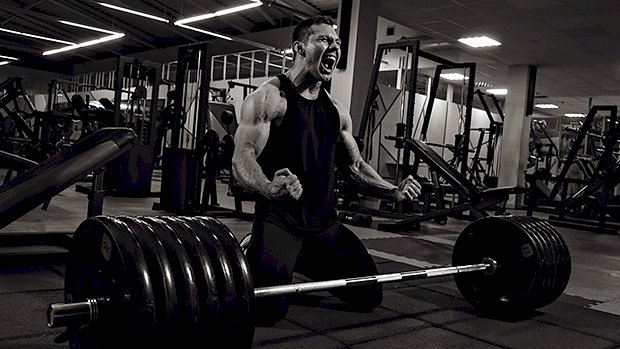
 The Functional Movement Patterns Sports rely on specific movements for performance. Those actions are derivatives of the four main athletic movements and the four main lifting movements. The four main athletic movements are jumping/landing, throwing/striking, locomotion, and rotation. But let’s focus on what you can do in the weight room. The four main lifting movements are: Pushing Pulling Knee Bend Hip Hinge This list of movement patterns should guide your training on a weekly basis. Now sure, the term “functional” is a buzzword, but think of these differently. Functional exercises give you the ability to carry out what you need to do on a daily basis. Having a functional body is about having physical freedom. This means building an all-around stronger, more adaptable body capable of performing at a higher level in any environment… not just inside the gym. That said, strength solves a lot of problems. It provides a better physical foundation to perform the four main athletic movements. So, a focus on the four main lifting movements is needed. Weekly Lifts: Your Checklist Every week do an exercise from each section. This will cover your bases. Since all exercises are merely variations of the main functional lifting movements, and since the categories they’re in are general, then select (and deselect) from each category what you’re capable of doing. Be discerning. Fit exercises to you; don’t fit yourself to exercises. Unless you’re injured, perform at least one of the following lifts each week: For Upper Body Vertical or Diagonal Pushing Lift Horizontal Pushing Lift Vertical Pulling Lift Horizontal Pulling Lift For Lower Body Double-Leg Knee Bend Lift Single-Leg Knee Bend Lift Double-Leg Hip Hinge Lift Single-Leg Hip Hinge Lift Let’s get into these variations and the top three exercises in each category. And if you’re training on the go, you’ll also see the top versions you can do using just bodyweight and bands. Pushing These exercises improve your ability to move something away from you like an object or opponent. These are the two specific types of pushing exercises you’ll want to do each week: vertical or diagonal pushing, and horizontal pushing. The Top 3 Vertical Pushing Exercises 1. One-Arm Dumbbell Overhead Press Overhead pressing with one arm increases core activation. You’re forced to maintain your torso position while dealing with the off-set load. There’s also less of a tendency to cheat by leaning backward, the way you might during two-arm overhead presses. 2. Dumbbell Rotational Overhead Press The rotation adds a little more coordination and control demand on both your shoulders and torso musculature. Plus, the foot pivot allows you to train some hip internal rotation, which is a key element to rotational power generation. 3. One-Arm Band Overhead Press This is a great option when you’re training with minimal equipment. You can increase the intensity by performing the reps fast, as shown in the video. The Top 3 Diagonal Pushing Exercises You don’t have to do both a vertical and a diagonal pushing exercise each week, though doing both can make your workouts more complete. But if time is a factor, choose either a vertical or diagonal exercise. If overhead pressing bothers your shoulders, then stick with diagonal pressing until you get your shoulder issues worked out. 1. Dumbbell Incline Press Incline presses train your pecs differently than horizontal pressing. Trainers often say “train movements, not muscles.” Here’s the reality: Muscles create movements. Muscles, along with your bones and connective tissues, respond to how they’re loaded. So, the only reason it’s important to push from a variety of angles is because they train the muscles differently. 2. Angled Barbell Press This is often called the landmine press. The landmine is really the name of a device (that you don’t even need) used for this exercise. But you just need a barbell and a corner. Because of the offset nature, this exercise also really hits your core musculature. 3. Band Incline Press No gym? No problem! Just pack some bands with you when you travel. And, even if you do have access to a gym, bands allow you to do dynamic effort (speed) work, as shown here. The Top 3 Horizontal Pushing Exercises When you do horizontal pushing exercises like bench presses, push-ups, etc., allow your elbows to go low enough to the point where you begin to feel a stretch in your pecs. Why? Because training at longer (stretched) muscle lengths not only causes muscles to be stronger at long lengths, it can also improves flexibility just as good as static stretching (1, 2). So the best way to prevent “tight” pecs is to do horizontal pressing exercises and other pec exercises in a way that creates some level of a stretch. 1. Barbell Bench Press Every meathead has a love/love relationship with the bench press. So I made sure to include it here because the bench press, to many lifters, is like a baby and its
Origin: The 4 Mandatory Lifting Movements
The 4 Mandatory Lifting Movements

Published
 All about sport xlsport.club