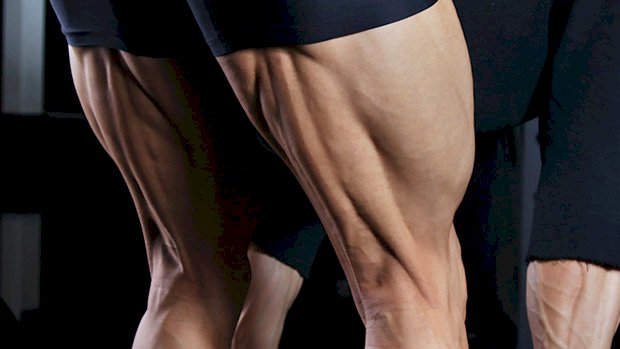
 A great set of hamstrings will always stand out. Building them can even help protect the knees and prevent injuries. Here are some new moves that’ll add more meat to your hamstrings. 1 – Slider Hamstring Curl with Eccentric You’ve probably heard of Nordic curls and the benefits of controlled eccentrics (lowering slowly), particularly for hamstring injury prevention. Well, this is a good alternative that benefits your hamstrings in a similar fashion. Exercises such as these also tend to bias more biceps femoris (both short and long head), which is useful for “outer” hamstring development. The lifting portion is a glute bridge – much easier to do with a heavier weight because you’re at a greater mechanical advantage. On the way down, you do something that resembles a leg curl, which is possible with the use of sliders. During this part, the hamstrings are at a mechanical disadvantage so more work is required from them at the same relative load on the way down. The result of all this? An overload of the hamstrings during the eccentric portion of the lift. Sliders work well here, as does a hockey slide trainer, a Sorinex glute-ham roller, or even just a pair of socks on a slippery surface. Like Nordic curls, these can mess up your hamstrings for days, so watch the volume. Just 2-3 sets of 5-8 reps with a controlled negative work best to start. Add an extra set or two as your hamstrings become more accustomed. 2 – Dumbbell Hamstring Walk This exercise is relatively simple, but deceptively difficult for many. If you’ve got good hamstrings then these shouldn’t be a challenge. If your hamstrings or gastrocnemius (the big meaty part of your calf) are a little out of condition though, cramping is common. Keep your feet as narrow as possible on the dumbbell and point your toes. Having your feet close together will stop the dumbbell from steering off in one direction. You can also use a foam roller. By plantar-flexing your ankles (like a ballerina) you’ll create a co-contraction of your calves and hamstrings. This co-contraction increases activation of the hamstrings. The active insufficiency of the gastrocnemius muscle causes your hamstrings to work harder. Don’t believe it? Just try any ham curl machine with a plantar-flexed position and note the difference. Walk the dumbbell up to the point just before you lose hamstring tension. You’ll know when. You can even palpate your hamstrings during to check engagement. Walk it back down as far as you can, getting as long as you can with toes pointed. That’s one rep of probably around 6-10 steps. Go for 3-5 full reps and don’t let off the tension. Add reps over time, or try it with a bar across your hips for some extra nastiness. 3 – Band Prone Hamstring Curl When choosing exercises, one of your main considerations should be the muscle length you’re training them in. Exercises that train muscles in their longest position (think hips bent with knees straight) do a great job, but so do exercises that train them in their shortened position (think hips straight with knees bent). Banded hamstring curls put your hips in a straightened position, working through knee flexion. With this position and the ascending band resistance, these load the hamstrings most in their shortened position. Because of this, these do a crappy job of training your hamstrings in their lengthened position, but the squeeze and pump you get more than make up for it. Combine them with something more hip-dominant (like RDLs, back extensions, pull-throughs, etc.) to cover all bases. Sets of 20-30 reps work well towards the back end of a workout. Or you could start with them – your squats will feel smoother after you get a hamstring pump using these bad boys. 4 – Landmine Single-Leg (Ipsilateral) RDL Landmine Side-Facing RDL Landmine Front-Facing RDL These work well with a variety of rep ranges. Try both options to find the one you like more. Single-leg RDLs are most commonly done with a contralateral load: planted foot with the load in the opposite hand. Contralateral work mostly relies on using an interconnected line of tissues known as the “posterior functional line.” This line connects the glutes of one hip to the opposite side lats, essentially creating an X-shape that crosses the lower back. Why should you care? Well, think about athletes and their sport. Developing stabilization between hip and shoulder is essential. But if you care more about getting bulging hamstrings, contralateral might not be the best option. Ipsilateral means using the same-side arm and leg. It’s more useful when you’re trying to train the muscles of the lead leg, and that hip “snap” from the lead leg you’ll see in some sports. An ipsilateral RDL tends to be more stable and it emphasizes the lead leg’s hamstring more. A dumbbell or kettlebell can be a good option, but if you’re looking to really load those hamstrings (and glutes), using a landmine offers more stability. The bar stays in contact with
Origin: Hamstring Hammering: 6 New Exercises
Hamstring Hammering: 6 New Exercises

Published
 All about sport xlsport.club