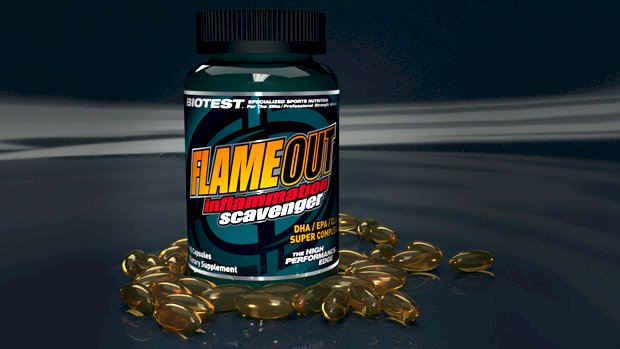
 I’m an advocate of fish oil, so lately I kind of know how Sisyphus felt. For those of you who aren’t up on your Greek mythology, Sisyphus was a king who pissed off Zeus and, as punishment, was condemned to forever push a boulder up a hill, only to have it come crashing down again and again. Frankly, I’m just a little surprised the CrossFit people haven’t appropriated eternal boulder pushing as a WOD and given it some cute girl name, like Sissy. Anyhow, trying to convince people of the merits of fish oil has gotten to be just as frustrating as I imagine pushing Sisyphus’ boulder up that hill would be. Every time I (or anybody else, for that matter) write a positive article about fish oil, or Biotest’s premium fish oil product – Flameout® – some half-baked study comes out and claims that fish oil is overrated. The Latest Fiasco The latest fiasco involved a clinical trial (the VITAL study) that was published in the New England Journal of Medicine. It attracted a lot of attention by purportedly throwing chum on the idea that fish oil reduces the rate of cardiovascular events or other health problems. Yeah okay, but there were a couple of big problems with the alleged findings. For one, the dosages and potencies of the fish oils used in the study were far below what experts recommend. Secondly, the media glossed over some of the relevant data. Despite the woefully inadequate dosages of fish oil used, one sub-group analysis reflected a 28% reduction in risk of heart attack and a 50% reduction in fatal heart attacks, but no reduction in deaths from stroke. Unfortunately, the researchers needed fish oil to check all of the cardiac-related boxes in order to get a passing grade, but the low-dose fish oil failed when it came to strokes. In a way, it was like dismissing a Major League baseball player as sub-par because, in his quest for the Triple Crown, he only hit the most home runs and had the highest batting average, but not the most runs batted in. Loser! Because of fish oil’s “failure,” the media ignored the positive findings of the study and instead focused on some of the study’s under-dosed endpoints to discredit fish oil, and that ain’t right. The Right Dosage Most of the studies that support the use of fish oil found that the greatest degree of protection occurred in people who had the highest percentage of omega-3 fatty acids in their blood. That’s why I, along with other science types who study fish oil, recommend anywhere from 2,200 to 3,000 mg. of DHA/EPA (the two most biologically important omega-3 fatty acids found in fish oil) per day. So how much did the VITAL study use? A measly 840 mg. a day of EPA/DHA. That’s only a third or fourth the amount deemed most effective in combating heart attack or stroke. Put the Fire Out But let’s forget about cardiovascular stuff for a bit. Fish oil does a body a helluva’ lot more good than just preventing heart problems, and volumes of studies have confirmed it. First and foremost, fish oil is a hugely powerful anti-inflammatory and make no mistake about it, cellularly speaking, our bodies are on fire. Quenching that fire can help ward off asthma, arthritis, macular degeneration, autoimmune dysfunction, and a host of other diseases or maladies, along with decreasing muscle soreness and joint pain. Properly dosed fish oil can also lead to significant decreases in body fat levels through increased insulin sensitivity (thus helping prevent Type II diabetes), increases in metabolic rate, and activation of leptin to control appetite. What to Look For In a Fish Oil Supplement The challenging thing about fish oil is in finding one that’s of high quality. You need to find one with the following attributes: The proper dosage of the purest, most highly concentrated DHA and EPA fatty acids available. A product that’s been purified by molecular distillation and stringently tested for PCBs, dioxins, mercury, and other heavy metal contaminants. A product that includes a self-emulsifying delivery system so they’re virtually odorless, better absorbed, and don’t result in a fishy aftertaste or “fish burps.” Biotest’s Flameout® checks all those boxes. It’s so highly concentrated, you’d have to double or triple the dosage of similar products to get even close to one serving of Flameout®. Likewise, it’s meticulously tested for any chemical contaminants, and, unlike most fish oil products, it doesn’t turn you into a social pariah because your breath smells like a tuna cannery. Lastly, it has one little special twist that’s virtually unheard of in the fish oil world. Most Fish Oil Is Made for Women Most fish oil products contain more EPA than DHA because, well, that’s what you find in fish. Companies, by and large, bring in raw fish that’s been cut into pieces. They cook it with steam and then centrifuge it to separate it into fat-free dry solids and liquid (water and oil). This water and oil mixture, called “press liquor,” is then further processed to separate the two
Origin: Beyond Fish Oil
Beyond Fish Oil

Published
 All about sport xlsport.club