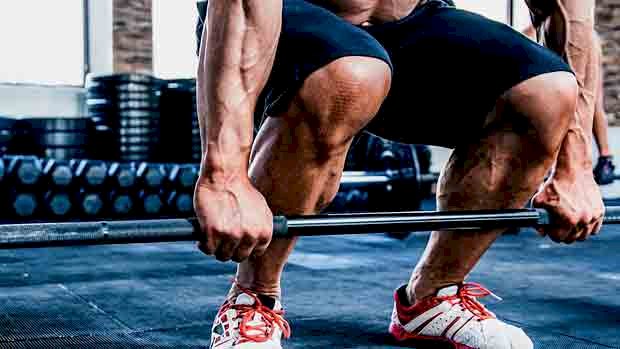
 Building muscle and strength is closely tied to work output per unit of time – the more work you do in a week/month/year, the better results you’ll get. So, let’s review some proven time management and productivity strategies and apply them to weight training. Here are five methods, along with practical suggestions about how to apply them to your training routine. 1 – You Can’t Have Everything on the Menu Whenever I’m asked why I never use a certain exercise or training method, it’s rarely because that exercise or method doesn’t have value. Instead, it’s because I only have so much time and energy, so I’ve got to pick my battles. Pro Tip Although it’s not possible to utilize all beneficial methods simultaneously, you can incorporate a lot more of them by performing them sequentially. Here are a few quick examples: Let’s say you train legs twice per week and you’ve identified 16 exercises that work really well for you. If you wanted to run all 16 exercises within a weekly split, you’d need to do 8 exercises per session. Obviously, this isn’t practical. The solution is to run exercises 1-8 during one 6-week training block, followed by exercises 9-16 on the second 6-week cycle. Although it might seem like you’ll lose ground on an exercise that you haven’t done for 6 weeks, the exercise-specific strength you gain on one cycle will typically be enough to maintain or even improve your strength on the exercises that were put on the back burner. Rather than trying to improve strength and muscle mass simultaneously (within the same training cycle), train these adaptations sequentially, again using 6-week cycles: For 6 weeks use sets of between 6-12 reps, followed by a 6-week cycle where you train in the 3-5 rep bracket. This way, the muscle you gain on the first cycle will support and potentiate greater strength when you return to low-rep sets. Rather than trying to build muscle and lose body fat simultaneously – a physiological stunt that tends to work only for fat beginners taking PEDs – focus on these contradictory goals sequentially. First, you’ll do a “building” cycle where you slowly gain weight (mostly muscle) by lifting hard and elevating your calories. Later, you slowly lose body weight (mostly fat) by lifting hard and reducing your calories. Rinse and repeat. 2 – Do the Important Stuff First If you run your own business and today’s agenda includes a potentially lucrative new client consult and refilling the stapler, you’d tackle that first item when your energy is highest. The stapler could be refilled any time, regardless of your energy levels. Similarly, if your top training goal is bigger arms, you’d ideally train biceps and triceps first in the week or first in a workout. You might even train them by themselves as a separate workout. Additionally, you might consider putting your best muscle groups on maintenance mode by using the minimum amount of training volume required to maintain, but not advance, their current development. Pro Tip Do your most injury-prone exercises last in the workout, rather than first. Here’s why: When you do your most “iffy” exercises last, you’ll have less energy, and therefore you’re less likely to harm yourself further by doing them. Second, your most bitchy joints are usually related to your most well-developed body parts. Let’s say that you’ve got great pecs, but also painful shoulders, from benching. Given that your pecs are now your best-developed muscle, you can afford to back-burner that exercise, allowing your shoulders to heal up. 3 – Batching: Don’t Wash Just One Pair of Socks Batching is a very effective productivity tool that involves completing all similar tasks in a single block of time rather than performing different types of tasks in the same sitting. As Tim Ferris explains, “You wouldn’t do your laundry every time you have a new pair of dirty socks… you wait for a certain critical mass of dirty laundry to accumulate and then you do your laundry.” This is because the time and labor required to do a full load of laundry is the same as you’d need to wash a single pair of socks. Also, switching back and forth between similar tasks requires more time and focus than focusing on a single task. As you consider the best type of training split, think in terms of batching. Although I explained my love of whole-body training splits in The Single Most Effective Workout Split, I can’t dismiss one powerful benefit of bro splits, upper-lower splits, and push-pull-legs splits: they allow you to focus on related tasks during each workout. This type of focus allows you to minimize warm-up time since the warm-up sets you do for your first exercise tends to keep you warm for later exercises as well. You’re also likely to work with greater intensity since you won’t need to “save yourself’ for other body parts later in the workout. Pro Tip Busy trainers often use a related tactic known as “training in the margins.” Rather than completing traditional 60-90 minute
Origin: More Gains in Less Time: 5 Pro Tips
More Gains in Less Time: 5 Pro Tips

Published
 All about sport xlsport.club