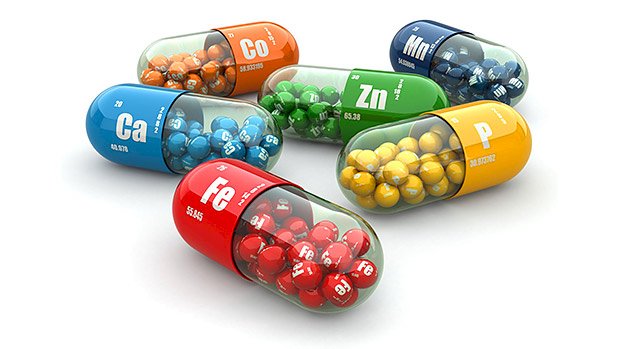
 The 30-billion dollar a year vitamin industry is suffering from existential angst right now. Their collective stomachs are all aflutter because of the publication of a new study in the Annals of Internal Medicine that says vitamin or mineral supplements offer no discernible benefits; that they don’t reduce the risk of death from practically anything and they might, in fact, harm people. (1) Now all those supplement companies are wondering if they should instead start selling roofing materials or something else useful. I’ve got no solace to give. Unfortunately for the vitamin seller, yeah, most vitamins and mineral supplements are a waste of time. Some could actually harm you. And yeah, you’re often better off getting some vitamins, minerals, and other classes of supplements from whole foods. But there are notable exceptions. In those cases, it’s unrealistic or even plain daffy to rely on whole foods to fulfill all your supplement needs. Let’s take a look at some of the most common vitamins, minerals, and supplements and see if we can make some sense of it. Multivitamins – Forget About ‘Em I don’t think there’s a single reputable study that shows they’re effective, but we don’t need studies to come to this conclusion. There are just too many problems with multivitamins: The one-size-fits-all philosophy. The human need for the 24 vitamins identified by science is based on a bell curve and while it may hold true for a 150-pound municipal worker named Phil who lives in Akron, Ohio, they might not hold true for sweaty athletes, bigger (or smaller) people, or you. Giving the same vitamin combo to every man or woman alive is like making only one size of underwear for everybody – fine for some, but uncomfortable, unworkable, and in the case of vitamin-caused skin reactions, even unsightly for others. So many possible interactions. Vitamins A, D, E, and K are fat-soluble and, as such, are best taken with food. Iron shouldn’t be ingested with coffee or tea because the tannins in them interfere with absorption. Likewise, iron blocks the absorption of zinc and copper. Vitamins E and A can gang up on K. Cherry picking and not seeing the big picture. Maybe, just maybe, these nutrients aren’t supposed to be isolated and taken by themselves. Maybe they need to be taken in whole-food form to be truly effective. Maybe the nutrients need to work in conjunction with some (or maybe even all) of the micronutrients and phytochemicals intrinsic to the whole food source for them to work. Calcium – Forget About It Taking too much calcium (more than about 1,000 mg. a day) can be a huge problem. At worst, the calcium starts to accumulate on the linings of your heart and arteries so that they look like the tiled walls of a White Castle restaurant. The excess calcium might also form kidney stones or, on the less severe end of the spectrum, cause constipation. Calcium is one example where people really would be better off getting this crucial mineral from whole food. Here’s the thing: When you get too much calcium from foods (milk-based protein powders, dairy products), a fail-safe system kicks in and the intestines start limiting further absorption of the mineral. Not so with calcium supplements. They have no fail-safe system. The more you take, the more ends up in your urine, blood, kidneys, heart, and arteries. Vitamin D – Take It! The study from the Annals of Internal Medicine found that when people who weren’t deficient in vitamin D took vitamin D supplements, they had higher risks of death from all causes, particularly cancer. It’s important to realize that this study was based on people accurately remembering and reporting what they had eaten over a period of several years, so it’s easy to be skeptical, particularly when several other studies have shown that people who took vitamin D supplements lived longer, on average, than those that didn’t take it. Sure, ideally, we’d all lie naked in the sun like harp seals for at least 20 minutes a day so we could make our own vitamin D, but that just isn’t plausible for everybody, particularly if you live anywhere north of Memphis, Tennessee (about 2500 miles north of the equator) or, for that matter, anywhere south of Santiago, Chile. (2) The sun just doesn’t get high enough during winter months in those areas for all those vitamin-D generating UVB wavelengths to benefit us. Never mind persistent clouds. The Chippewa tribe of Michigan had an old saying: “If the shadow of a groundhog is longer than it is tall, its body isn’t making vitamin D.” Alright, the Chippewa didn’t say that, but if you apply the “longer than tall shadow” thing to yourself, the advice pretty much rings true. If you can’t regularly spend a few minutes in the sun, or you’re a mole-like gym person who rarely see any lights that aren’t fluorescent, you should probably take vitamin D year-round. Vitamin B3 (niacin) – It Depends If you’re over 40 or 50, or if you’ve got cholesterol issues, think about
Origin: Worthy vs. Worthless Vitamins: Your Guide
Worthy vs. Worthless Vitamins: Your Guide

Published
 All about sport xlsport.club