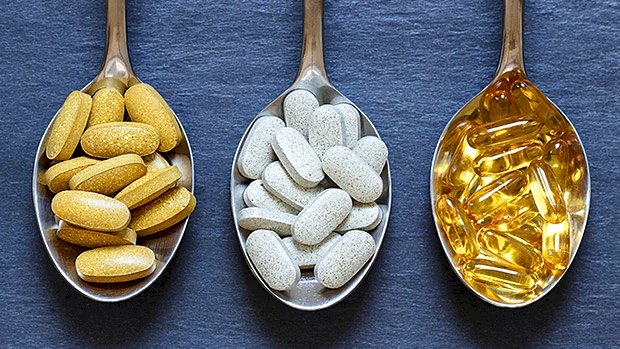
 You know how important calories and macros are to health and performance, but what about all the little micronutrients that rarely get talked about? Is it even important to worry about that crap if you’re pounding a metric ass-load of protein, have your nutrient timing nailed down, and are smashing an adequate amount of fruits, veggies, and healthy fats? It might be. It probably is. Actually, yes, it is. And the major plot hole in the dietary landscape is this: You literally can’t cover your micronutrient needs through food alone. Poor Soil, Poor Food I’ve been guilty of telling people to get all of their micronutrient needs through their diet. And in theory, that’s how it should work. But there are some legitimate issues with this. The food we have access to today isn’t as nutritionally robust as it was decades ago. When the USDA compared nutrient values from the fruits and vegetables from the 1950’s to those available in the late 1990’s, they found significant declines in protein, vitamin C, calcium, phosphorus, iron, and vitamin B12 (1). It’s also been postulated that there have been significant declines in zinc, magnesium, vitamin B6 and vitamin E, but since those weren’t even studied in the 1950’s, there’s no way to know exactly how much they declined. Highly intensive farming has caused a depletion in soil nutrients, which means the crops aren’t as nutrient dense as they were generations ago. Combine that with new breeds of crops that grow larger, have better climate adaptability, and are more pest resistant in nutrient-depleted soil and, well, there you go. So what’s an athlete to do about being micronutrient deficient? And is shoring up your micronutrient gaps really that important? Sorry, But You’re Nutritionally Screwed Even if you’re buying grass-fed, wild caught, cage-free everything, you’re still probably not going to be covering all of the micronutrient bases, especially if you’re a truly hard-charging athlete or lifter. And since you’re probably NOT buying all grass-fed, wild caught, cage-free everything, then you’re almost assuredly micronutrient deficient in some areas, and probably more than you think. Over a decade ago, the Journal of the International Society of Sports Nutrition scanned seventy diets from both active and sedentary people and all of the diets fell short in meeting even the lowly recommendations of the RDA (2). Now consider the case of an athlete that’s actually on a hypo-caloric diet. He or she will be eating less volume of foods that are already lacking in micronutrients. In effect, they’re actually doubling down on creating micronutrient deficiencies. Let’s pretend for a moment that you could get food from 1959 that was far more nutrient dense than the food you have access to today. Even if that was a viable option, you’d still need to choose from a vast array of food selections to cover your bases. That would be very difficult for someone who’s trying to lose fat and also trying to meet their macro needs while also staying in a hypo-caloric state. Round and round we go. The point is, relying on foods to eliminate micronutrient shortcomings isn’t really viable and certainly isn’t going to be efficient. In short, this is an area where supplementation really wins over food. True story, boss. Just Take a Multivitamin? I honestly can’t believe people still take multivitamins. Without citing a zillion studies that show multivitamins really offer up zero health or performance benefits, can we just use some common sense here? Do you really believe one horse pill is going to magically shore up all of your micro deficiencies? Taking high quality vitamins and minerals separately could be an answer. That would also require that you get blood work done to see where you’re lacking and then figuring out an amount to fix your particular deficiencies. But who are we kidding? You’re not going to do that. The next best and easiest course of action is to just assume you’re deficient in the following nutrients. Most of us are. Vitamin D Virtually everyone is lacking in this hormone. Yeah, I wrote “hormone” because by definition, that’s what Vitamin D really is. And there are a lot of reasons why the great majority of people are deficient in it. Most foods don’t contain very much of it, and everyone is scared as shit of the sun. Apparently, they think if you’re out in it for more than a few nanoseconds, your skin bursts into a carpet of melanoma. That’s truly unfortunate because, well, it’s not true and second, your body needs sunlight in order to synthesize Vitamin D. That’s kind of important because your body uses it to regulate your immune system and produce insulin. Ideally, you’ll get both regular sunlight exposure (at least 15-20 minutes a day) and Vitamin D through the diet, but even if you do, you’ll still most likely need to supplement with it as well. Go with at least 1000 IU every day (3,4), probably more in the winter. Iron Note that I’m not talking about full-blown
Origin: Where Food Fails Us
Where Food Fails Us

Published
 All about sport xlsport.club