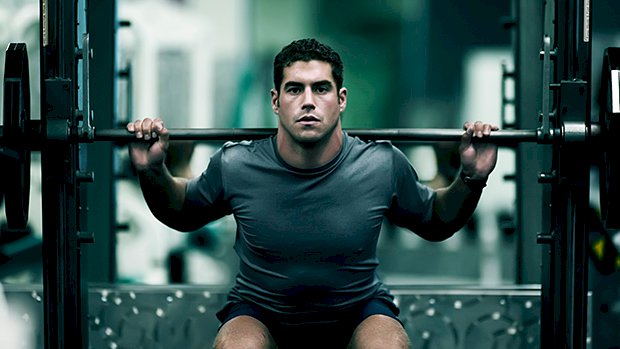
 Here’s what you need to know… The rate of shoulder injuries rises with excessive reps, excessive machine use, and often bodybuilding-style programming. Lower back injuries increase when flexing or extending the lower back under heavy loads. Keep the spine neutral. Knee injuries are high when the knees don’t track properly throughout the lifts. Keep the knees from collapsing inward if you want them to be healthy. Upper back and neck injuries occur with poor posture. Fix a hunched over back to prevent cervical spine injuries. Lifting Isn’t Dangerous Not inherently at least. And not compared to a number of other types of athletic endeavors. Resistance training is actually pretty safe. What makes lifting unsafe are the missteps, and sometimes just plain idiocy, many individuals bring to the practice. From bastardizing technique and butchering form to pumping ego instead of muscles, some people have given weight training a black eye. If lifting is dangerous in the eyes of the ignorant, we better figure out what exactly “lifting” entails so we can be sure to keep these lifting-phobes a safe distance from the squat rack, bench press, and other physically catastrophic environments. What’s Considered Lifting? We can break lifting down into four major categories: Traditional weight training – bodybuilding The sport of lifting weights – powerlifting, Olympic lifting Sport performance training – athletics Crosstraining – classes and boot camps There’s more, but these are the major players. The Four Most Common Lifting Injuries 4 – Cervical Spine Injury The cervical spine – upper back and neck – is most notably vulnerable to injuries in both the soft tissue and joint structures such as the discs and ligaments due to heavy bracing techniques, poor spinal posture and loads of ugly repeated flexion and extension movements. Soreness and joint stiffness due to bracing in a neutral cervical position under heavy loading is part of the iron game, but flailing your head around and putting undue stresses on intricate body structures is just plain stupid. If you don’t know what I’m referring to, just think of turning the dumbbell shrug movement into a mosh pit at a Slip Knot concert. Don’t be that guy. The most innocent of all just may be transferring poor spinal posture from your daily sedentary life into the gym and not realizing you’re putting yourself at risk. The average American has a forward head posture which causes hyperextension of the upper segments of the cervical spine, and lower segmental flexion. That’s a recipe for a nasty neck tweak on your next squat or deadlift if not corrected. Prevent It Fix your posture. Get a neutral spine. For the cervical spine, I can’t think of a single position that is of more importance than the braced and neutral neck position. Drive your chin directly backwards towards your spine and create a slight downward gaze with your eyes. This position holds true for every single movement, no matter if it’s upper body or lower body specific. 3 – Knee Injury Most assume the knee is highly injurious. There is some truth to this joint being more vulnerable than others due to its anatomical properties and orientation relative to the ankle and hip complexes. But there’s more to the story. First, the structure of the knee joint is very immobile by nature, as it is a hinge joint with only two true degrees of freedom, meaning it only moves into flexion and extension. Less relative motion from the knee in combination with poor gross movement through joints that are supposed to be highly mobile – like the many synergistic joints of the ankle complex in addition to the ball and socket type hip joint – put undue stress over non-contractile tissues like ligaments and cartilage. This kink in the kinetic chain is most notable for lifters in quad-dominant movements like squat and lunge variations. While global instability of the knee joint may be a chicken-or-the-egg argument with the co-morbid factors like stiff and immobile joints above and below the level of the knee, many chronic natured injuries also become symptomatic over the front side of the knee at the patella. Increased tone and tightness through the quads can increase compressional and shear forces through the kneecap, causing increased rates of patella-femoral friction and irritation. Functionally shortened and stiff quads in combination with poor patellar movement is exacerbated with poor squat mechanics such as anteriorly drifting knees and valgus drop, and also in lunge-type movements when the knee joint is forced into terminal flexion. If this sounds like a pretty big problem that most lifters need to address, it is. Pay attention, this simple cue below can clean up your movement and give those pissed-off knees just enough of a break to recover for good. Prevent It Pay attention to knee tracking. There are loads of different lower body movements that involve both the squat and lunge variations. Though each
Origin: The 4 Most Common Injuries for Lifters
The 4 Most Common Injuries for Lifters

Published
 All about sport xlsport.club