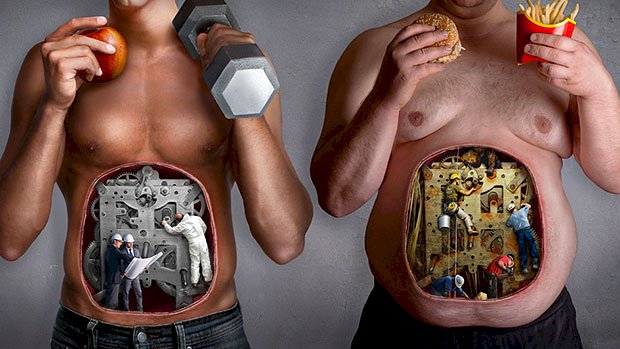
 Here’s what you need to know… If you’re an athlete or a lifter trying to gain muscle and get strong, then you need carbs. Fat people have poor nutrient partitioning abilities. The carbs they eat are more likely to be stored as fat. If you’re relatively lean, your carb intake can be higher because leaner people have better nutrient partitioning abilities. People cling to the diets that initially gave them good results. Bad idea. Your metabolic condition changes. Lower-carb diets may be the best approach for improving body composition. Shoot for 100-125 grams per day. Serious lifters and athletes need 1-3 grams of carbs per pound. The Carb War The carb war has been raging in gyms, kitchens, classrooms, and nutrition conferences for decades, and will continue to do so in perpetuity. There’s religious-like passion and cult-like followings on both the low-carb and high-carb sides of the fence. The pendulum of popularity seems to swing back and forth between the two. Regardless, both sides of the battle can be right. Both approaches can work. The answer lies in this simple recommendation: Match your carbohydrate intake to your individual activity levels, metabolic condition, and physique or performance goals. It seems simple and logical enough, but it’s surprising how often that advice gets ignored when it’s applied to real-life diets, even when it comes to intelligent athletes and coaches. So how do you decide whether you should be following the food pyramid, the fitness freaks, or the paleo geeks? How about you stop following any dogmatic and inflexible system, and have the balls to find what works for you. There are four variables you should consider in your quest to customize your carb intake. 1 – High Intensity Activity Levels Carbs are the primary fuel for high-intensity activity. While the body can use fatty acids as fuel during rest, and even those who train only in the aerobic zone can become “fat adapted,” high intensity activity requires glucose. If you perform strength-training sessions on a regular basis, or compete in intermittent sprint sports, then you need carbohydrates. Perhaps you need a lot of carbohydrates. Those carbs will be used to optimally fuel your body and help you recover from your training sessions. This of course isn’t true for the sedentary individual. Muscle-energy reserves fuel muscular activity. If you’re not depleting muscle energy reserves through activity, you don’t need to refill them, thus you don’t need to consume a lot of carbs. The Car Analogy If your car has been sitting in the garage, it doesn’t need gas. Loading up on carbs is like trying to fill up a full tank. It just spills over the side. In the human body, that overspill equates to sugar backing up in the bloodstream (high blood glucose). This in turn leads to body fat storage and a host of other negative effects like elevated triglycerides and cholesterol, insulin resistance, and type II diabetes. However, if you drive your car around every day, sometimes for long mileage, you have to fill it up often. If you don’t, you’ll run out of gas. An empty tank in the human body equates with fatigue, depression, lethargy, impaired performance, muscle loss, stubborn fat, insomnia, low testosterone, impaired thyroid production and resting metabolic rate, foul mood, and frustration over your body not changing despite dieting and training. No diet is worth developing a lifeless noodle or its female equivalent, the dusty papaya, and then being an ass to everyone around you because of it. So give your body the fuel it needs when it needs it and you’ll be good to go. 2 – Current Shape We all have different physiological responses to food based on our individual metabolic condition, which is a combination of a couple of things. The first is just the general shape you’re in. If you’re overweight or are someone trying to go from out of shape to decent shape, your carbohydrate intake should lean towards the lower side. That’s because, in general, overweight individuals have poor nutrient partitioning abilities, meaning the carbs they eat are more likely to be stored as fat. At the very least, they have a damaged capacity to burn fat. If you’re normal weight, relatively leaner, or trying to go from good shape to great shape, your carb intake can be higher, or at least moderate, even in dieting phases because leaner individuals have better nutrient partitioning abilities. That means the carbs they eat are more likely to be stored as glycogen and less likely to be stored as fat. 3 – State of Insulin Sensitivity/Insulin Resistance The second side of the metabolic condition coin is your state of insulin sensitivity or insulin resistance. This is basically a term that describes how easy or difficult it is for your body to properly store nutrients (particularly carbs) in its cells. In an otherwise healthy person, your insulin sensitivity is related to the physical shape you’re in. Leaner individuals tend to have good
Origin: How Many Carbs Do You Need?
How Many Carbs Do You Need?

Published
 All about sport xlsport.club